



The atmospheric concentrations of carbon dioxide (CO₂) reached a new historical high in 2024 largely due to wildfires, according to the latest report from the World Meteorological Organization (WMO).
CO₂ reached 423.9 parts per million (ppm), while methane reached 1942 parts per billion (ppb) and nitrous oxide reached 338 ppb, marking an unprecedented increase in the three main greenhouse gases.
Accelerated Growth: What is Driving the Increase?
In the 1960s, CO₂ grew at a rate of 0.8 ppm per year. Between 2011 and 2020, that rate tripled to 2.4 ppm annually, and between 2023 and 2024 it soared to 3.5 ppm, the largest increase since modern measurements began in 1957.
This increase is not solely due to economic activity. In fact, carbon intensity —emissions per dollar of GDP— has steadily decreased since 1968, indicating a progressive decarbonization of the global economy.
“The world economy is producing more and more with fewer emissions,” the report notes. However, rapid economic growth can neutralize efficiency gains if decarbonization does not outpace GDP expansion.
Wildfires: The Hidden Factor Behind the Emissions Record
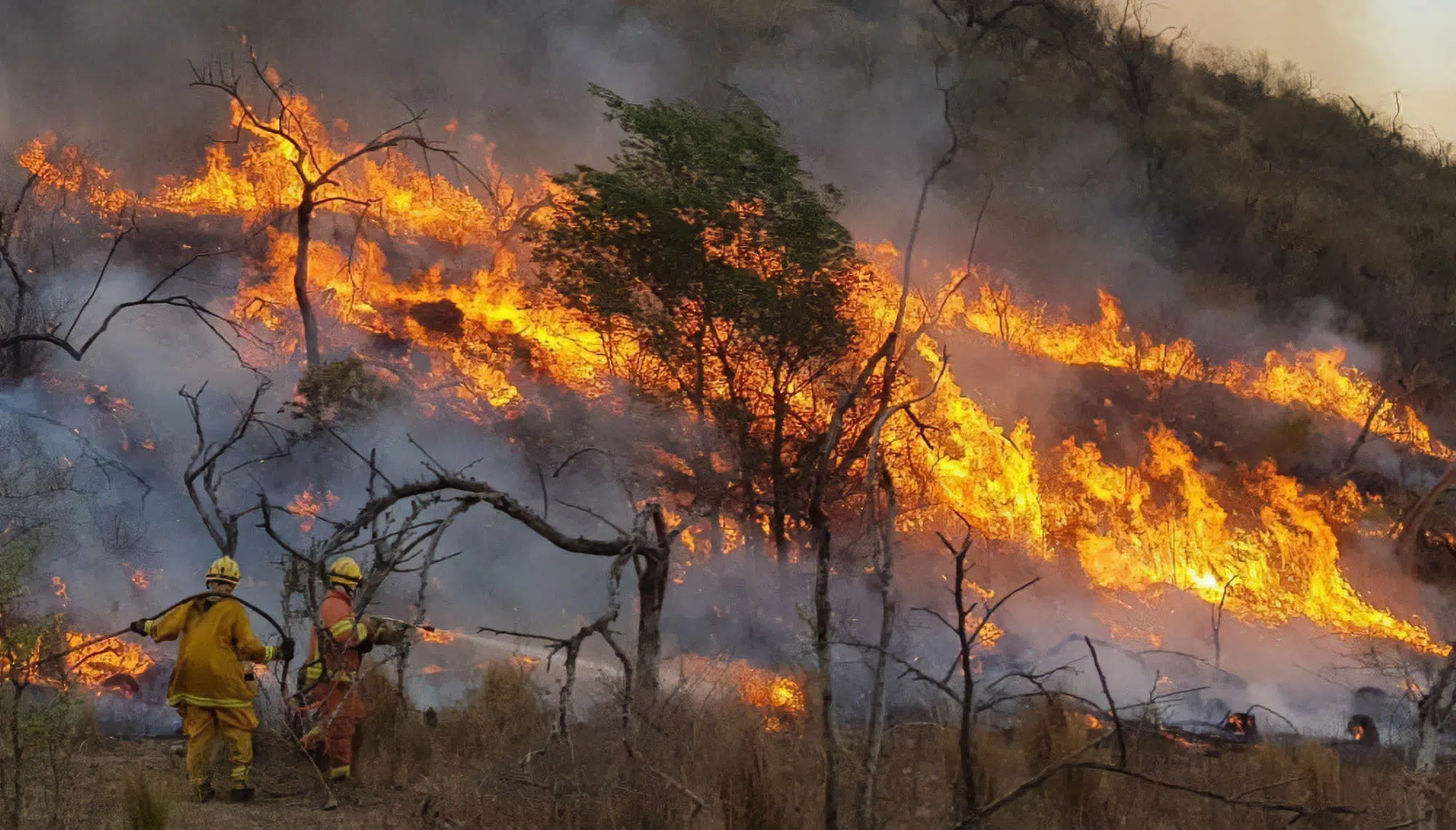
The WMO report identifies megafires as the main driver of the emissions increase in 2024. In Canada, 15 million hectares burned in 2023, generating more CO₂ than any country except China, the USA, and India.
In 2024 and 2025, fires in Brazil, Bolivia, and Spain also reached critical levels. In Spain alone, an estimated 19 million tons of CO₂ were emitted, approaching emissions from electricity generation (25 Mt).
Prolonged Effects: Less Vegetation, Less Absorption
Fires not only release stored carbon: they also reduce the absorption capacity of ecosystems. Burned areas are left with sparse vegetation, limiting photosynthesis and turning former sinks into carbon sources.
This phenomenon creates a vicious cycle: climate change intensifies fires, which in turn exacerbate global warming.
Decarbonization and Forest Management: Two Inseparable Fronts
While economic decarbonization is essential, it will not be enough if not accompanied by large-scale forest management. According to experts, it would be necessary to intervene in at least 5% of forest territory to prevent high-intensity fires.
“The era of fires that cannot be extinguished is already here, but we can still avoid it,” the report warns.
Forest engineering has proven effective in multiple regions and must become a strategic priority alongside emission reduction policies.
Key Recommendations
- Active land management: restoration, firebreaks, monitoring, and prevention
- Accelerated decarbonization: energy transition, efficiency, and clean transport
- Fire prevention: forest planning, education, and alert systems
- Evidence-based governance: replace ideology with science, technology, and humanism


