



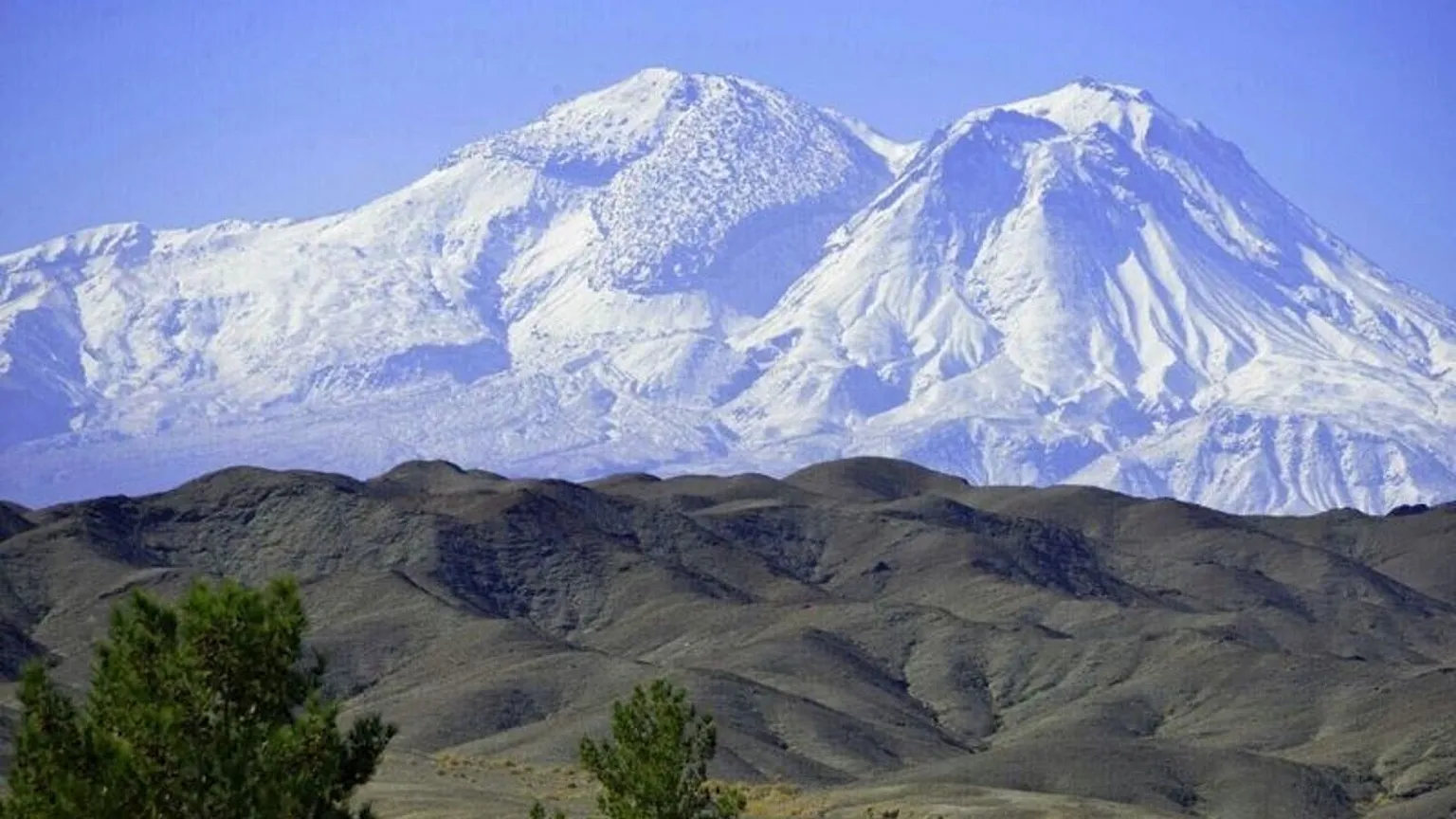
For more than 700,000 years, Mount Taftan, located in the southeast of Iran, was considered an extinct volcano. However, recent research has begun to change that perception.
A study published in the journal Geophysical Research Letters reveals that this 3,940-meter stratovolcano, situated between the provinces of Sistan and Baluchestan, has shown signs of geological activity in recent years.
Ground deformation and underground pressure
Between July 2023 and May 2024, scientists detected a growth of nine centimeters in an area near the volcano. This sustained elevation suggests an increase in gas pressure beneath the surface, possibly linked to the movement of magma or the activity of the hydrothermal system.
“This pressure must be released in some way in the future, either violently or more gently,” explained volcanologist Pablo González, from the Institute of Natural Products and Agrobiology, in an interview with Live Science.
From extinct to dormant: a new classification
Until recently, Taftan was classified as inactive, as it had not recorded eruptions since the beginning of the Holocene, more than 11,700 years ago. However, new data have led experts to redefine it as a dormant or semi-active volcano, which implies the need for constant monitoring.
In 2020, student Mohammad Hossein Mohammednia, a collaborator of González, analyzed satellite images without finding signs of activity. But in 2023, reports began to circulate about gas emissions noticeable 50 kilometers away, in the city of Khash.
Images from the European Space Agency’s Sentinel-1 mission confirmed a slight ground deformation near the summit.
Source of activity: between 490 and 630 meters underground
The findings suggest that the source of the elevation is located half a kilometer deep, and could be related to the accumulation of volcanic gases.
Although there are no signs of an imminent eruption, experts warn that the volcano must be monitored more closely, as it was not previously considered a risk to the population.
Science for prevention: a call to authorities
“The aim of the study is not to generate panic, but to serve as a wake-up call to the region’s authorities,” emphasized González. The researcher proposes to allocate resources for monitoring volcanic gases and strengthen international scientific collaboration.
The case of Mount Taftan demonstrates how satellite technology, geological research, and interdisciplinary analysis can anticipate changes in volcanic systems considered inactive.
In a context of increasing climatic and geological vulnerability, scientific vigilance becomes key to protecting communities and ecosystems.



