



Almost half of the indigenous peoples who chose to live in voluntary isolation could disappear in the next ten years. This warning comes from an international organization dedicated to the defense of their rights, which points to the expansion of logging, mining, and tourism as the main threats.
The latest report from Survival International warns about the lack of effective protection by governments and the growing invasion of the territories where these communities live. Their ways of life, preserved for centuries, are now on the brink of collapse.
It is estimated that there are around 196 uncontacted tribes distributed across ten countries, mainly in the Amazon rainforest, where more than 90% of them live. There are also isolated groups in remote regions of Indonesia and India, where tropical ecosystems still protect populations that avoid all external contact.
The NGO warns that, without immediate measures, almost half of these communities could disappear forever, devastated by deforestation, illegal mining, and large infrastructure projects. The organization calls for the urgent creation of protected areas to ensure respect for their right to live without interference.
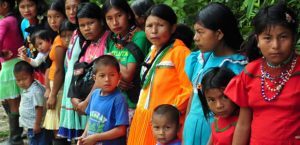
Communities at risk: a global urgency
One of the most concerning cases is that of the Kakataibo people, in the Ucayali region, Peru. Their territories are being invaded by illegal coca plantations and by the indiscriminate logging of the Amazon forests. The situation has led to conflicts and displacements, endangering the survival of the families that still remain in isolation.
This threat is compounded by the weakness of national laws, which in many countries do not ensure the effective enforcement of land rights. Although international treaties recognize the autonomy and rights of indigenous peoples, local policies are often insufficient or ignored.
In Peru, Brazil, Bolivia, and Colombia, the economic interests of extractive industries encroach on ancestral territories, backed by state permits or the lack of environmental control. This destroys ecosystems and fragments the communities that depend on them for survival.
The impact of unregulated tourism has also become a growing threat. In regions of the Amazon, groups of travelers seek “sightings” of uncontacted tribes, which endangers their health and safety. Contact with outsiders can lead to outbreaks of diseases against which these communities have no natural defenses.
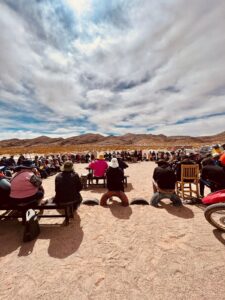
Indigenous peoples and their current situation in the world
Globally, indigenous peoples represent about 6% of the world’s population, but occupy around 25% of the Earth’s surface. These territories hold 80% of the planet’s biodiversity, highlighting their key role in environmental conservation.
However, they face disproportionate levels of poverty, displacement, and violence, in addition to the loss of their cultural identity and native languages. Many continue to lack access to education, health, or political participation, while their territories are subject to plunder or privatization.
In countries like Brazil, Canada, or Australia, indigenous peoples demand the return of lands and compensation for the damages suffered during decades of colonization and exploitation. New generations are driving projects of reforestation, food sovereignty, and intercultural education, seeking to balance tradition with contemporary needs.
The defense of isolated peoples is not only an act of historical justice but also an indispensable environmental strategy. Their territories act as natural barriers against deforestation and climate change, and their ancestral knowledge is vital for the restoration of degraded ecosystems.



