



The ocean represents one of the largest reserves of renewable energy on the planet, and wave energy, which harnesses the movement of the waves, is emerging as one of the most promising alternatives for the global energy transition.
Unlike the sun or wind, wave motion is more stable and predictable, and since water is 800 times denser than air, it offers a very high energy density in small spaces.
Kaizen WEC: efficiency and resilience in extreme environments
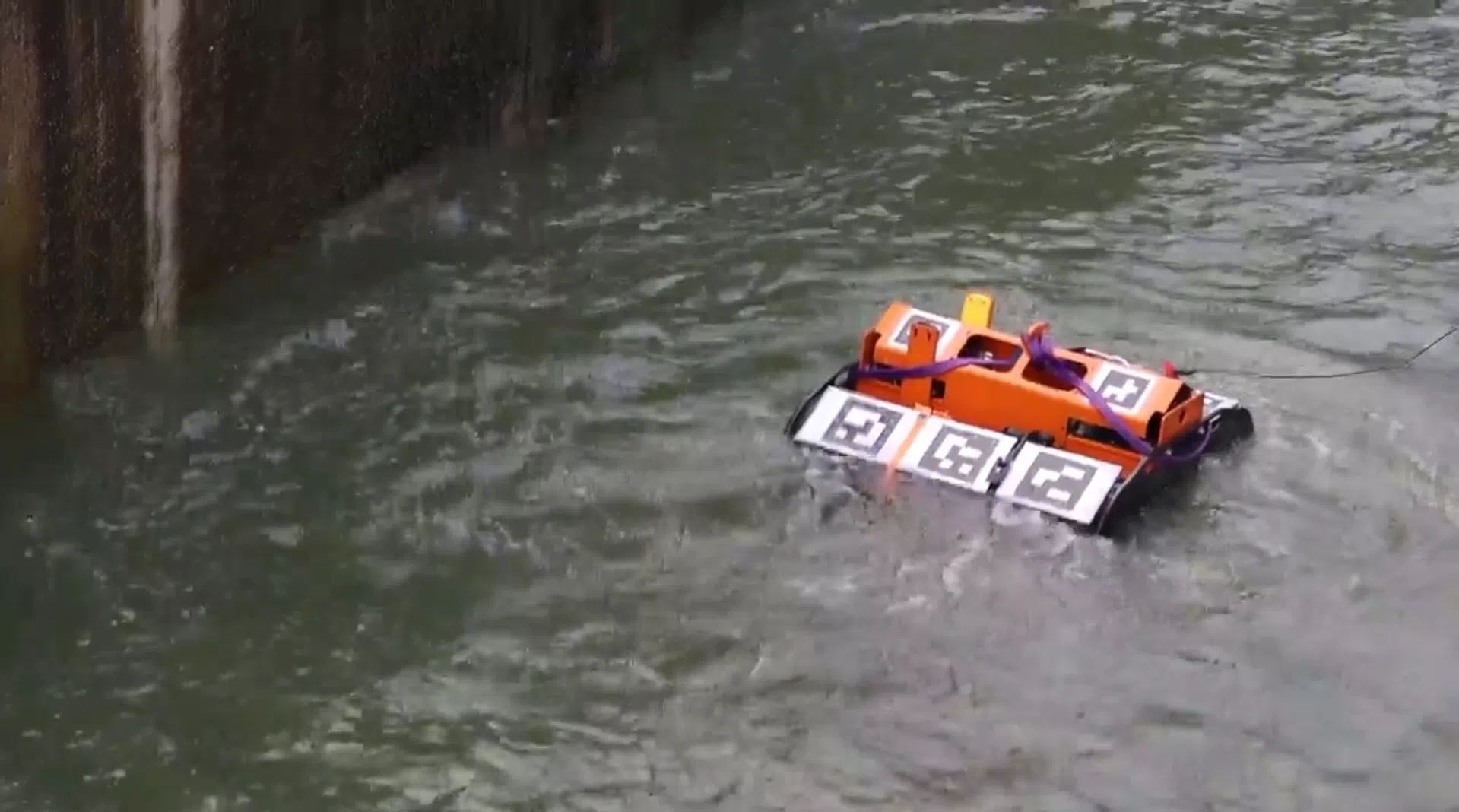
In this context, the Dutch company Wave Energy Company (WECO) has developed the Kaizen WEC, a lightweight, silent, and highly efficient wave generator, designed to capture the horizontal movement of the waves.
Unlike traditional designs that focus on vertical movement, the Kaizen WEC uses a system of floating belts anchored to the seabed, which directly drive a generator without the need for hydraulic systems or gearboxes.
This architecture reduces wear, eliminates risks of contaminant leaks, and extends maintenance intervals, all encapsulated in a corrosion-resistant watertight casing.
Intelligent control and dynamic adaptation
The true advancement of the Kaizen WEC lies in its reactive control system, which uses sensors and machine learning algorithms to predict wave patterns and adjust the generator’s resistance in real-time. This allows:
- Maximizing energy capture
- Adapting to the strength and speed of each wave
- Entering survival mode during storms, dissipating energy without damaging components
Technical validation and rapid deployment
The prototype was tested in facilities like Delta Flume at Deltares and Holland Shipyards Group, and then deployed off the coast of Scheveningen, where it began generating energy in just 32 minutes thanks to the drop-and-pull technique.
- 25 times lighter weight than other platforms
- 5 kW power per unit, scalable according to demand
- Immediate applications in offshore aquaculture, remote islands, and coastal communities
Kaizen Philosophy: continuous improvement to reduce LCOE
The device’s name comes from the Japanese concept of Kaizen, which means continuous improvement. WECO has optimized each subsystem to reduce the Levelized Cost of Energy (LCOE), aiming to compete directly with floating offshore wind.
It is estimated that before 2030, the Kaizen WEC could achieve an LCOE below 0.10 €/kWh.
Blue energy for a fair and decentralized transition
- Decarbonization of transport and industry
- Energy autonomy in isolated areas
- Sustainable desalination through reverse osmosis
- Marine bioengineering applied to energy efficiency
Wave-generated energy is no longer a distant promise. With developments like the Kaizen WEC, the sea becomes a strategic ally to build a distributed, resilient, and environmentally friendly energy model. A firm step towards a blue transition that harnesses the ocean’s power to generate the future.



