



A flood event that in 2022 was considered exceptional in the Maldives could become a recurring phenomenon every two or three years by 2050, according to a study conducted by scientists from the United Kingdom and published in the journal Cambridge Prisms: Coastal Futures.
Although the research focused on the Maldives, experts warn that its conclusions can be extended to other low-lying islands around the world, which face similar risks due to rising sea levels.
The vulnerability of low-lying islands
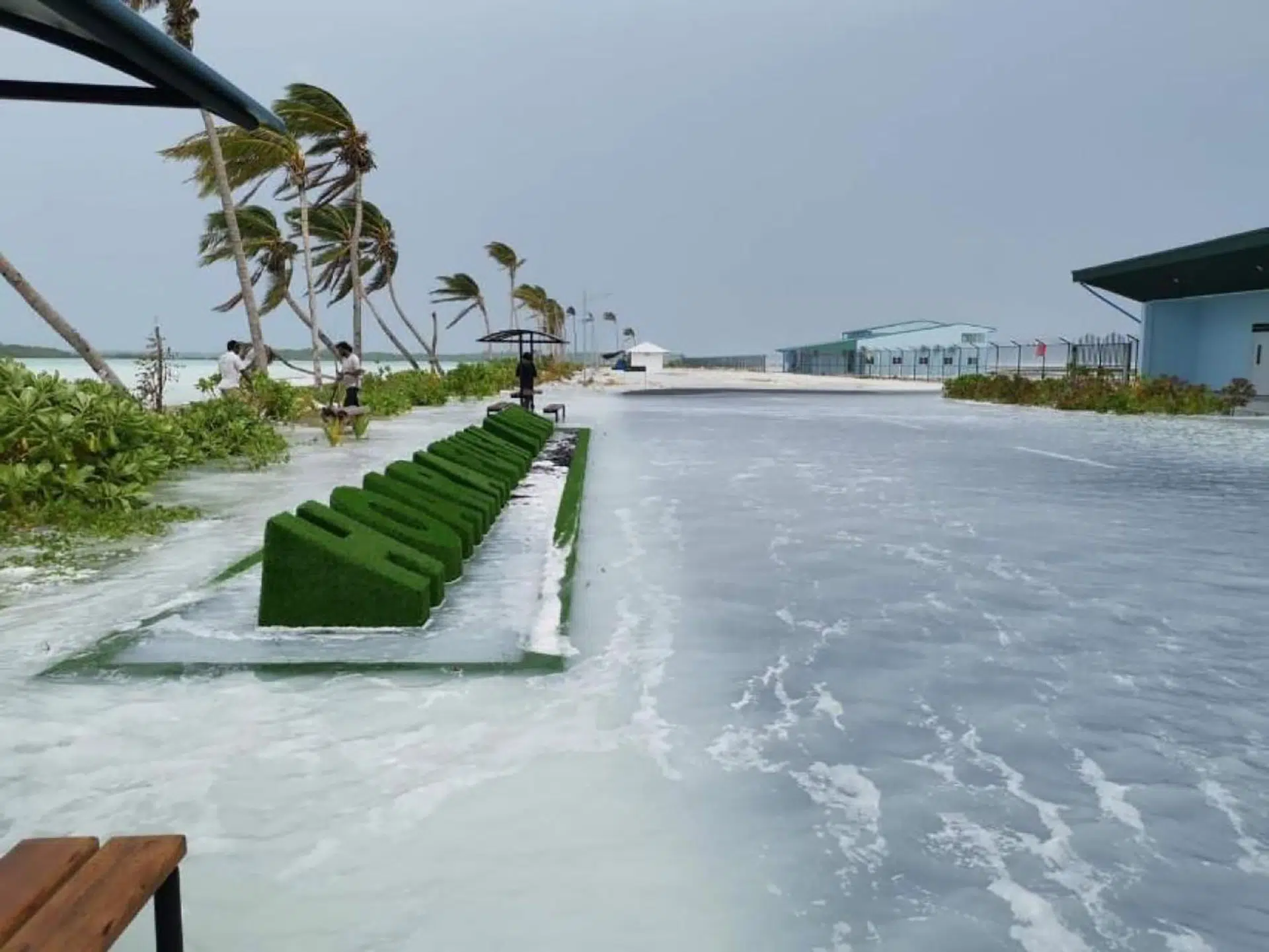
The analysis warns that the rising sea level directly threatens the safety of island communities. Episodes like the one recorded on the island of Fiyoaree, in the Huvadhoo atoll, could cease to be rare and become part of the new climate normal.
“Low-lying atoll islands are among the most vulnerable places on the planet due to rising sea levels, and when they flood, it is disruptive and potentially dangerous,” said Professor Gerd Masselink, a researcher at the University of Plymouth.
The study was conducted by a team from the University of Plymouth and Deltares, a Dutch applied research institute, under the direction of Masselink and Dr. Robert McCall, as part of the ARISE project, funded by the UK’s Engineering and Physical Sciences Research Council.
The 2022 event: a turning point
The 2022 flood was the worst since the 2004 tsunami. A distant swell in the Indian Ocean coincided with an extraordinarily high tide, causing flooding on 20 islands.
The main objective of the study was to understand the frequency and causes of flooding on atoll islands, as well as to project how they might evolve in the coming decades.
Models and projections
The team conducted field observations in Fiyoaree in January and July 2022, collecting data on wave height and the extent of flooding. They also used the XBeach computational model, developed by Deltares along with international partners, which allows for the simulation of flooding and coastal erosion.
The results were revealing:
- With the current sea level, only the July 2022 episode caused flooding.
- With the projected increase for 2050, nine more historical storms would have caused similar flooding.
- What happens today every 25 years could occur every two or three years in the future.
Adaptation and resilience
Dr. McCall noted:
“Low-lying atoll island nations are going to face an increasing risk of coastal flooding as sea levels rise.”
The study also reveals that islands can naturally rise when waves deposit sand and coral debris on their surface, which could increase their resilience to future flooding.
Masselink emphasized:
“Our study showed how waves passing over an island can deposit coral sand and debris, raising its height and potentially making it more resistant to rising sea levels.”
Urgent recommendations in the face of exceptional floods
Scientists urged the authorities of the Maldives and other island countries to implement coastal adaptation strategies without delay. Among the measures highlighted are:
- Designing protection and mitigation solutions.
- Differentiated management of lakes and rivers, which respond differently to the dispersion of pollutants and the impact of swells.
- Continuous monitoring and additional studies to understand the real adaptive capacity of the islands.
The situation of atoll islands in the face of rising sea levels is complex and requires decisive action. What was once considered an exceptional event could become a recurring phenomenon, putting communities, infrastructure, and ecosystems at risk.
The future of the Maldives and other island nations will depend on the ability to combine scientific research, public policies, and international cooperation.



