



The Wildlife Conservation Society (WCS by its English acronym) requested the adoption of the proposal presented by the Government of the Democratic Republic of the Congo (DRC) to include the okapi (Okapia johnstoni) in the Appendix I of the Convention on International Trade in Endangered Species of Wild Fauna and Flora (CITES).
If approved, the measure would ban all international trade of okapis or their parts, granting this species the highest level of international protection. Currently, the okapi already has national protection in the DRC, but the pressure from illegal trade and habitat loss necessitates global action.
The proposal at CITES COP20
The initiative will be examined by the 185 member governments of CITES during the CoP20, which will be held from November 24 to December 5, 2025, in Samarkand, Uzbekistan.
“The reduced and declining population of the okapi, along with its increasingly restricted range, makes it exceptionally vulnerable,” stated Dr. Susan Lieberman, Vice President of International Policy at WCS. “Inclusion in Appendix I will help ensure the protection of the okapi for future generations. We urge all CITES Parties to vote in favor of Proposal 5.”
The okapi: a unique treasure of the DRC
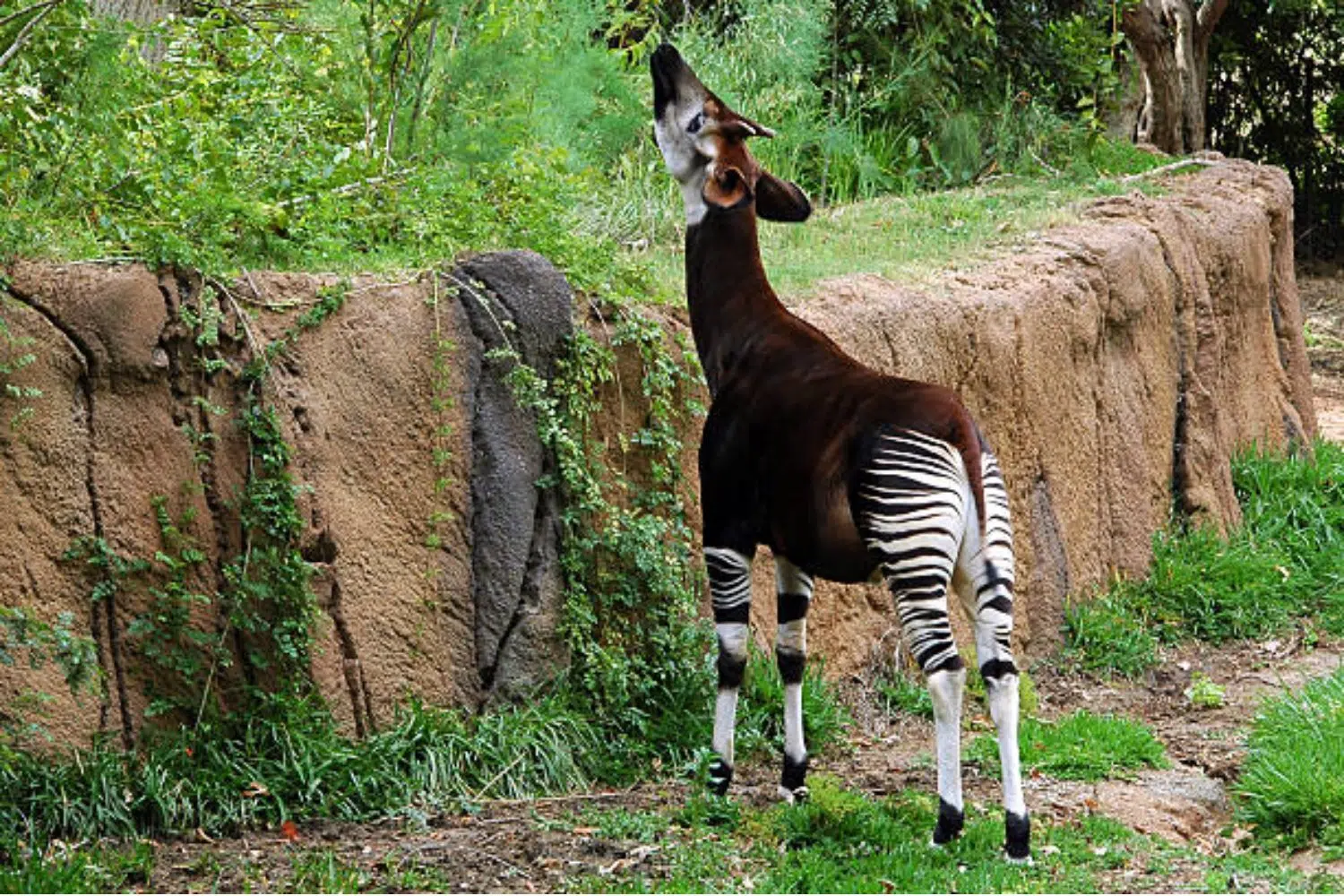
The okapi is the only living relative of the giraffe and is found exclusively in the forests of the DRC. Its survival is threatened by:
- Poaching.
- Illegal wildlife trade.
- Habitat loss due to deforestation and extractive activities.
Its inclusion in CITES Appendix I would represent a decisive step to strengthen law enforcement and protect it from overexploitation.
Scientific support and ongoing conservation
The proposal is supported by the Endangered status on the IUCN Red List and data from the Institut Congolais pour la Conservation de la Nature (ICCN) and its partners.
For more than 30 years, WCS and ICCN have worked together in the Okapi Wildlife Reserve (OWR), a UNESCO World Heritage Site spanning 14,000 km², which hosts the largest population of okapis on the planet and other threatened species.
The okapi also inhabits the Lomami National Park, the Maiko National Park, and other protected areas of the Congo Basin.
“For the inhabitants of the Ituri forest, the okapi is not just a national symbol, but also a source of pride and identity,” stated Dr. Jean Paul Kibambe, director of WCS in the DRC.
The role of CITES in global protection
At COP20, WCS will support various proposals to strengthen the protection of endangered species, including:
- All Galapagos iguanas.
- African hornbills.
- Hip turtles.
- Eels.
- More than 70 species of sharks and rays.
At the same time, it will oppose initiatives seeking to reopen the trade of elephant ivory or saiga horns, currently banned by CITES.
WCS, present at all Conferences of the Parties since CoP7 in 1989, will send a team of experts to Samarkand to provide science-based recommendations and support governments, indigenous peoples, and local communities in the regulation of wildlife trade.
The proposal to include the okapi in CITES Appendix I represents a crucial step to ensure the survival of this unique and emblematic species of the DRC.
International support will not only protect the okapi from commercial exploitation but also reinforce the conservation work that local communities, scientists, and organizations have been carrying out for decades.
COP20 will be a historic opportunity for the world to recognize that protecting the okapi is protecting biodiversity, cultural identity, and the resilience of Congo’s ecosystems.


