



The European Parliament approved delaying by one year the implementation of the new law aimed at ensuring that European consumption of livestock, cocoa, coffee, soy, wood, and other products does not cause deforestation at the source. The measure, which was supposed to come into effect on December 30, 2025, will now be applied from December 30, 2026.
With 402 votes in favor, 250 against, and 8 abstentions, the plenary of the European Parliament aligned with the Council of the EU, which had already advocated for the extension. It is the second time in a month that far-right parties and the European People’s Party (EPP) have joined forces to modify environmental regulations, after also lowering sustainability and corporate responsibility requirements for companies.
Political Debate and Parliamentary Fracture
The vote reflects the failure of negotiations among popular, social-democratic, liberal, and green parties to reach a common stance.
- Green MEP Marie Toussaint harshly criticized the EPP: “Their goal is to dismantle the text on deforestation by allying again with the far-right and refusing to defend the Commission’s proposal”.
- On the other hand, Christian Democrat negotiator Christine Schneider defended the decision: “It ensures effective prevention of illegal deforestation while reducing unnecessary burdens for operators, farmers, and foresters”.
The group of European Conservatives and Reformists celebrated avoiding “a situation where thousands of companies would have been pushed into legal and administrative chaos.”
Objectives of the Anti-Deforestation Law
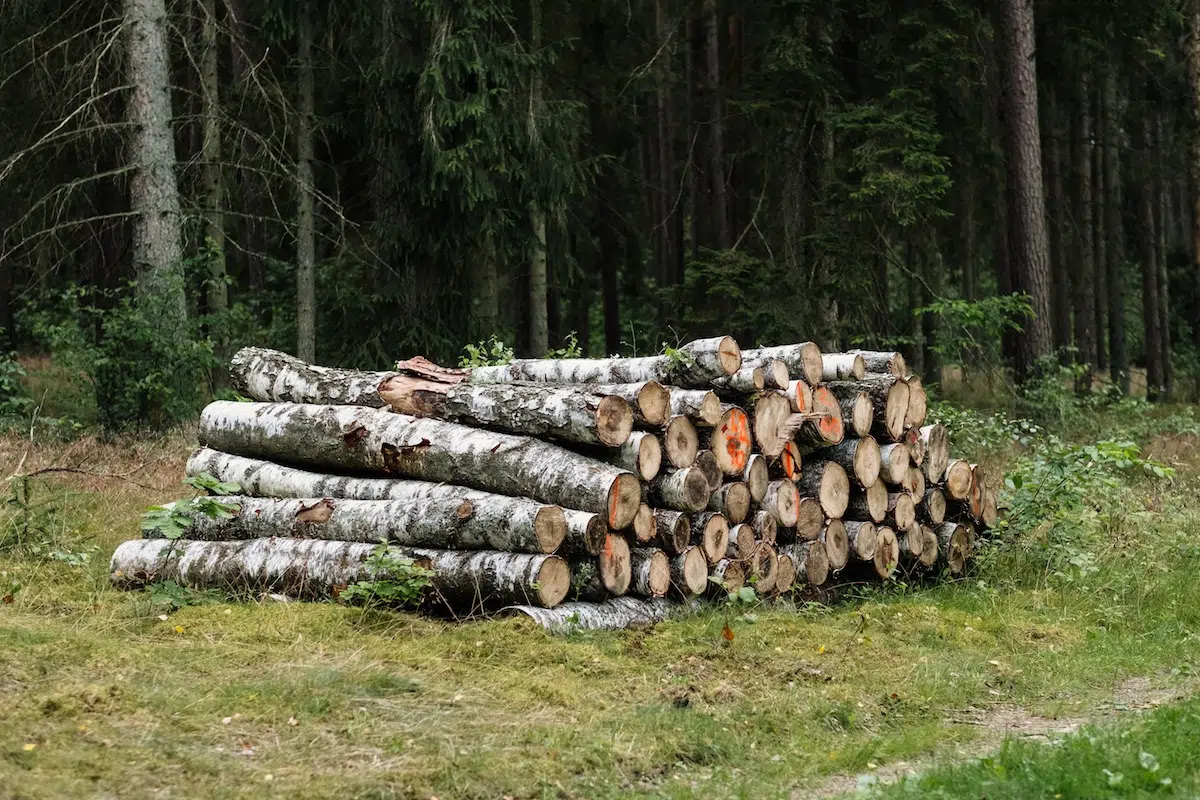
The European Union Deforestation Regulation (EUDR) aims to prevent raw materials and derived products consumed in the EU from being linked to forest destruction.
The regulation covers:
- Livestock and leather.
- Cocoa and chocolate.
- Coffee.
- Palm oil.
- Soy.
- Wood and furniture.
- Rubber.
Companies will need to demonstrate, through geolocation systems, that their supply chains have not caused deforestation or degradation of forest masses.
International and Business Pressures
The text has faced criticism from the start from countries like Brazil, Colombia, Indonesia, Malaysia, and Canada, as well as from the timber and livestock sectors. The U.S. administration under Donald Trump also expressed its opposition.
However, it received support from major chocolate producers like Nestlé, Mars Wrigley, and Ferrero, as well as the scientific community and environmental organizations.
Background of the Delay
In September 2024, the European Commission had already announced a first one-year delay, arguing that companies had not had time to adapt. In 2025, it requested another extension, this time due to a computer problem.
Finally, Brussels proposed maintaining the application from December 2025 with some flexibilities in fines and bureaucracy. But the Council of the EU, with the favorable vote of 24 capitals, defended the second extension under the argument of “simplification.”
Impact on SMEs and Future Review
The Council established that the regulation will not apply to SMEs until June 30, 2027. Additionally, the European Commission must conduct a simplification review in April 2026 to assess the administrative impact on small and micro-operators.
For the social-democratic parliamentary group, this review is a “red line” as it introduces uncertainty and could open the door to new delays in the coming years.
The delay of the European anti-deforestation law reflects the tension between environmental protection and economic and political pressures. While environmental organizations and part of the industry support the regulation, conservative sectors and exporting countries question its impact.
The decision to postpone its application until 2026 represents a setback for the EU’s green policies, in a global context where European consumption is responsible for about 10% of global deforestation.


