



The National University of Río Cuarto (UNRC) has launched a proposal that already functions as a tangible example of circular economy. Through the Create Environment program, the eco-bottles project turns disposable plastics into infrastructure elements that are incorporated into the university campus itself, demonstrating how environmental commitment can translate into concrete actions.
Origin of the initiative
The idea originated in the School Hospital of the Faculty of Agronomy and Veterinary Medicine, where teachers and staff observed the large amount of clean plastic waste that was discarded daily. This concern motivated the search for a sustainable alternative to reuse the material and reduce its environmental impact.
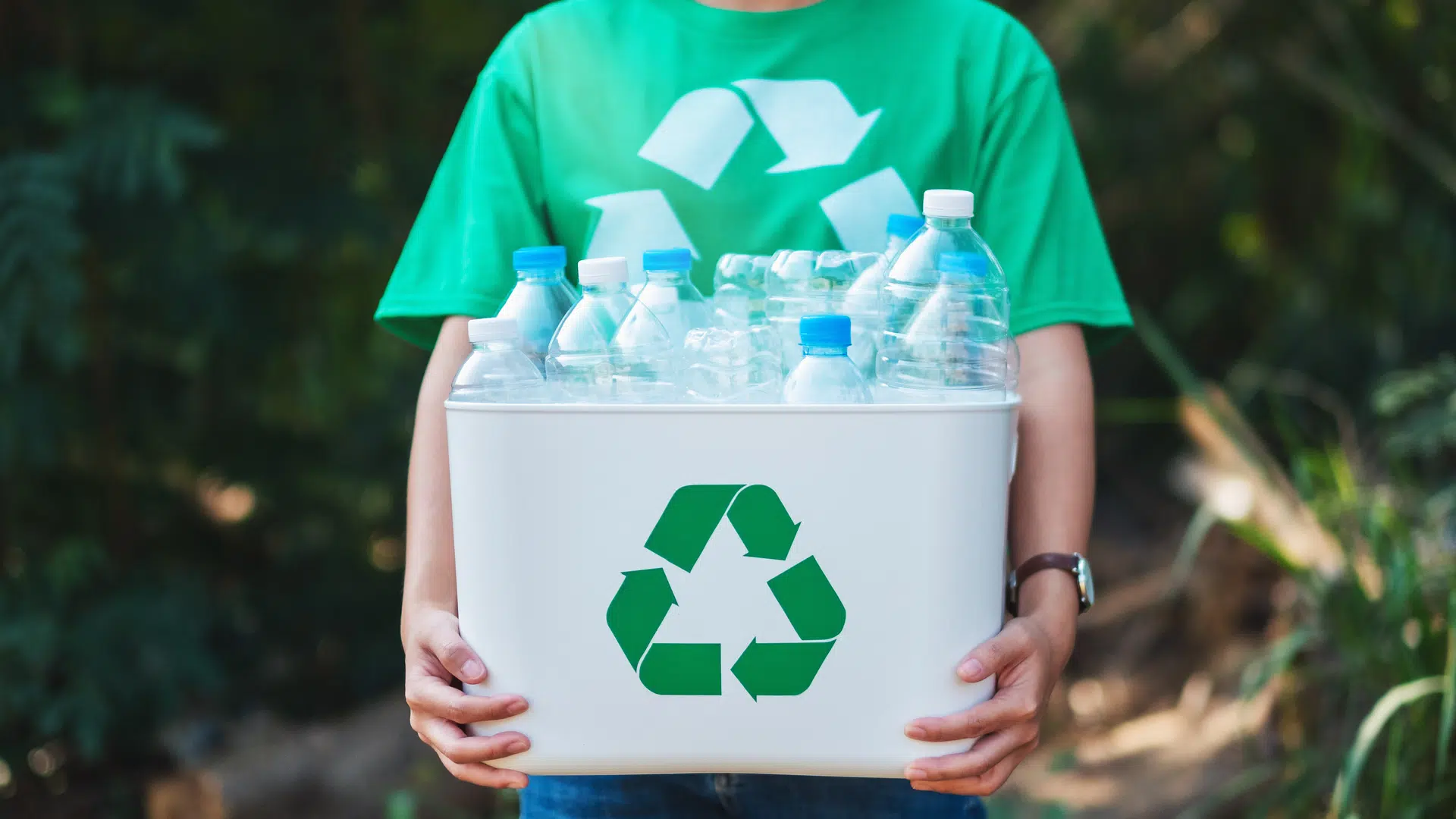
With funding from the UNRC’s Secretariat of Science and Technology, aligned with the Sustainable Development Goals, eco-bottles with uniform measures were developed, designed as genuine “eco-bricks”. Thanks to them, the first eco-bench was built within the university environment.
Concrete impact
The project’s reach is reflected in figures:
- 340 eco-bottles were used, equivalent to between 120 and 170 kilos of plastic that ceased to be waste.
- Crushed glass was reused, in collaboration with a cooperative from Alcira Gigena, replacing part of the traditional sand in the construction mix.
Beyond the achieved infrastructure, the central value lies in the path traveled: students, student centers, and various faculties actively participated, receiving training to correctly make the eco-bottles.
Projection towards 2026
The next goal is to continue and scale up the experience. The opening of a second eco-site and the expansion of collection points within the campus are projected. The initiative confirms that the public university can be a driver of collective learning and sustained action in environmental matters.
Transversal environmental agenda
In 2025, the UNRC consolidated an environmental policy with international support, marked by the recognition of UNESCO for interdisciplinary sustainability projects. The Create Environment program, initiated in 2023, works on five axes:
- Energy efficiency.
- Urban solid waste management.
- Green infrastructure.
- Transversal environmental education.
Among the most visible changes is the elimination of single-use disposables in the university dining hall, reducing hundreds of plastic containers daily and promoting new habits. Smart meters were also installed to detail energy consumption in campus buildings.
Testimonials and articulation
- Mauricio Toledo, Secretary of Technical Coordination and Services: “First, we need to know how we use energy to then be more efficient and think about renewables.”
- Cristian De Angelo, Deputy Secretary of Science and Technology: “There were many scattered environmental projects. Today we are mapping them, applying them on campus, and projecting them towards the city and the region.”
Concrete examples include the development of eco-benches built with eco-bricks from laboratory plastic waste, replicated in different university spaces.
International recognition
The inclusion of the UNRC among five Latin American universities recognized by UNESCO allowed access to training instances and strengthened a comprehensive view of sustainability. “It helps us think about environmental policies that transcend administrations and have a real impact on the territory,” agreed the representatives.
With a university community moving between classrooms, laboratories, and green spaces, the UNRC aims for these changes to multiply outside the campus. Surrounded by natural reserves and closely linked with the city and the region, the university seeks to establish itself as a central actor in building an environmental agenda with a local perspective and global projection.


