



Japan launched an assistance program to combat illegal Chinese fishing in South American waters, which will help Argentina.
In particular, the Japanese nation will equip both Argentina and three other countries with surveillance drones and advanced technology.
To this end, the Japanese Ministry of Foreign Affairs will allocate 300 million yen (USD 1.9 million) to strengthen maritime patrols in Ecuador, Peru, Argentina, and Uruguay.
Currently, there is concern about Chinese fishing fleets operating with GPS transponders turned off in international waters near these countries.
This illegal practice makes it difficult to track vessels and raises suspicions of undeclared fishing and seafloor mapping.

Cutting-edge technology to identify vessels of illegal Chinese fishing
The initiative, implemented through the United Nations Office on Drugs and Crime, includes inflatable patrol boats and specialized equipment.
These systems analyze images taken by drones to identify vessel registration, crew size, and the routes followed by the ships.
When a fishing fleet deactivates GPS tracking, determining the trajectory and number of vessels involved becomes extremely difficult.
Enforcement measures require superior capabilities from coast guards, which many South American countries lack.
What is the Chinese presence like in South American waters
Chinese fleets maintain an active presence in waters around Ecuador’s Galapagos Islands.
With their GPS transponders apparently turned off, these fleets sail south off the coasts of Peru and Chile.
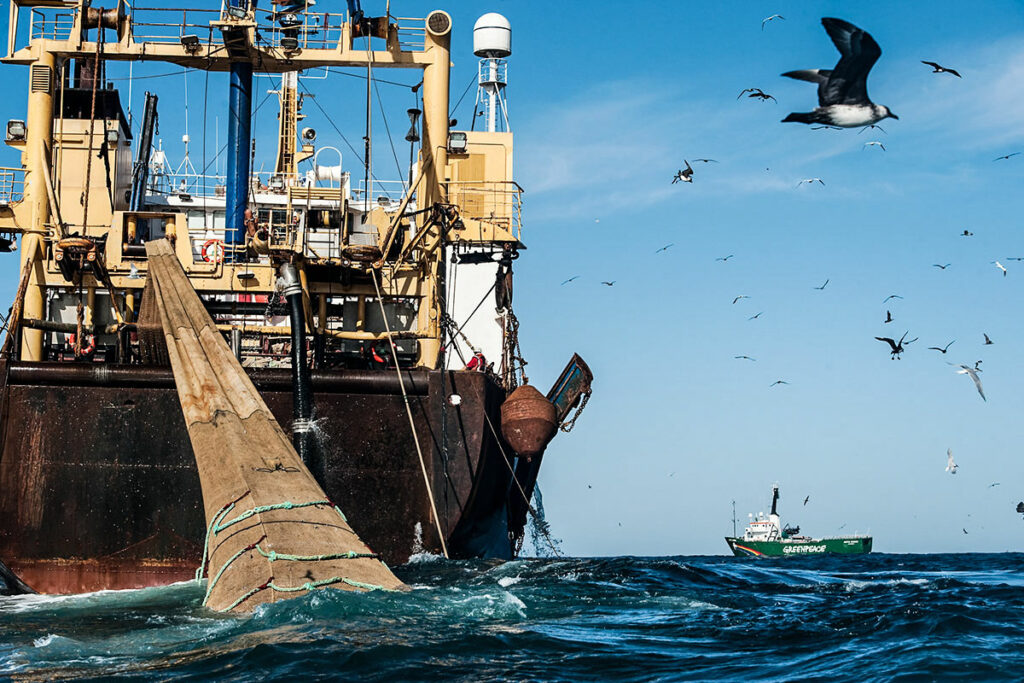
In the Atlantic, fleet activity by Chinese vessels has been confirmed in waters near Argentina and Uruguay.
In Argentina, fishing activity increased from 61,727 hours per 500 square kilometers in 2013 to 384,046 hours in 2023 in the area known as “Mile 201,” according to Global Fishing Watch data.
The Argentine Naval Prefecture recently reported that it reinforced monitoring of “more than 500 foreign fishing vessels that will arrive at Mile 201 in the next squid season.”
The majority come from China, South Korea, and Taiwan.
Suspicious activities and labor abuses
Local researchers reported suspicious activities of mapping the Argentine Continental Shelf by Chinese vessels.
The trawler Lu Qing Yuan Yu 205, which in 2016 conducted illegal fishing within the Argentine Sea, was detected this year performing grid movements suggesting seafloor prospecting.
In Ecuador, the most tense episode occurred in 2017, when authorities captured the Chinese freighter Fu Yuan Yu Leng 999 within the Galapagos marine reserve loaded with 6,623 sharks of various species.
Concerns also arose about possible human rights abuses of workers on illegal fishing vessels.
These workers, many from Southeast Asia, face long hours in difficult conditions on ships without temperature control.
The Japanese government seeks to support countries facing similar problems. Chinese fishing vessels also operate illegally in the Yamato Bank of the Sea of Japan.
Intensifying enforcement measures against illegal fishing fleets in South America could help protect those workers, providing an opportunity for Japan to strengthen relations with countries in Southeast Asia.


