



Last year, Uruguay marked another milestone in renewable energy: 98% of its total electricity was generated sustainably.
Thus, the small South American country positions itself as a regional and global leader in environmental sustainability.
According to preliminary data from the Ministry of Industry, Energy and Mining (MIEM), the total electricity production delivered to the National Interconnected System (SIN) was 13,040 GWh last year.
Although the figure represented 10% less than the record 14,290 GWh registered in 2024, the level of renewable generation remained historically high.
The report prepared by the National Energy Directorate (DNE), dependent on MIEM, reflects Uruguay’s role in sustainability.
Hydroelectric and Wind Power Dominate the Matrix
Among renewables, hydroelectric power once again led the generation matrix in Uruguay.
This accounted for 46% of the total, slightly reducing its impact compared to 2024.
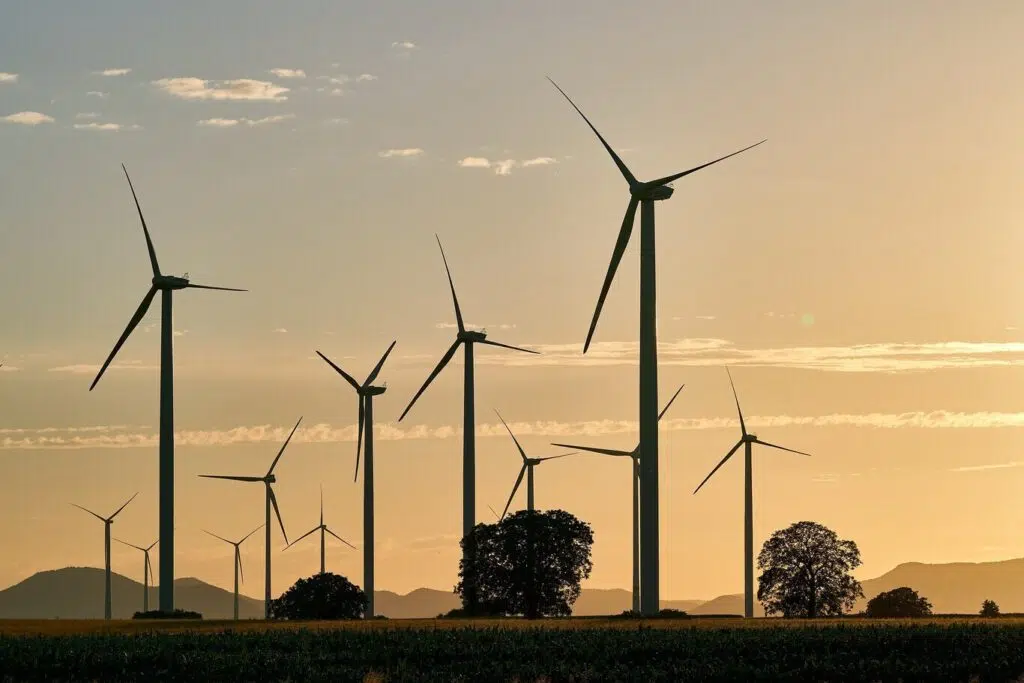
On the other hand, wind power represented 34% of production, with a slight year-on-year increase, consolidating it as the second most important source of renewable energy in Uruguay.
To a lesser extent, energy generated from biomass reached 14%, while solar energy reached 4%, both with an increase in their impact compared to the previous period.
Finally, and the best news for Uruguay, production based on fossil fuels was only 2%.
However, this implies that its share doubled compared to 2024, although maintaining a minimal presence in the matrix.
How Was Electricity Generation in Uruguay in 2025
With a strong predominance of renewable energy, Uruguay’s energy matrix last year was composed as follows:
- Hydroelectric: 46% of the total
- Wind: 34% of production
- Biomass: 14% of the matrix
- Solar: 4% of supply
- Fossils: 2% of generation
8% of the total generated was destined for export, mainly hydraulic energy, with a 79% share of external sales.
Regarding monthly generation, the average was 1,080 GWh, with August as the peak (1,353 GWh) and April as the minimum (801 GWh).

This monthly variation responds to climatic factors and demand that characterize the Uruguayan energy sector throughout the year.
On the other hand, it was recorded that the carbon dioxide (CO2) emission factor of the SIN was 11.2 tCO2/GWh, with significant variability throughout the months of the year.
January and February were the months of highest consumption of fossil fuels.
Meanwhile, towards the end of the year, the incidence was quite lower, with progressive improvement.
Uruguay, Example in Renewable Energy
In recent years, Uruguay has managed to maintain a balance between renewable energy generation, export of surpluses, and supply.
These are all fundamental aspects for the sustainability of the system.
In this line, MIEM data consolidate Uruguay as a leader in renewable energy, with levels exceeding 95% clean generation for several consecutive years.
This performance positions the country as an international benchmark in the fight against climate change and in the implementation of sustainable energy policies in the long term.
This was recently highlighted by the British chain BBC, which pointed out Uruguay as the country that would most delay the date when the annual demand for natural resources exceeds what ecosystems are capable of regenerating in that year.
In this way, Uruguay’s energy matrix continues to be a model not only for the region but for the world.



