



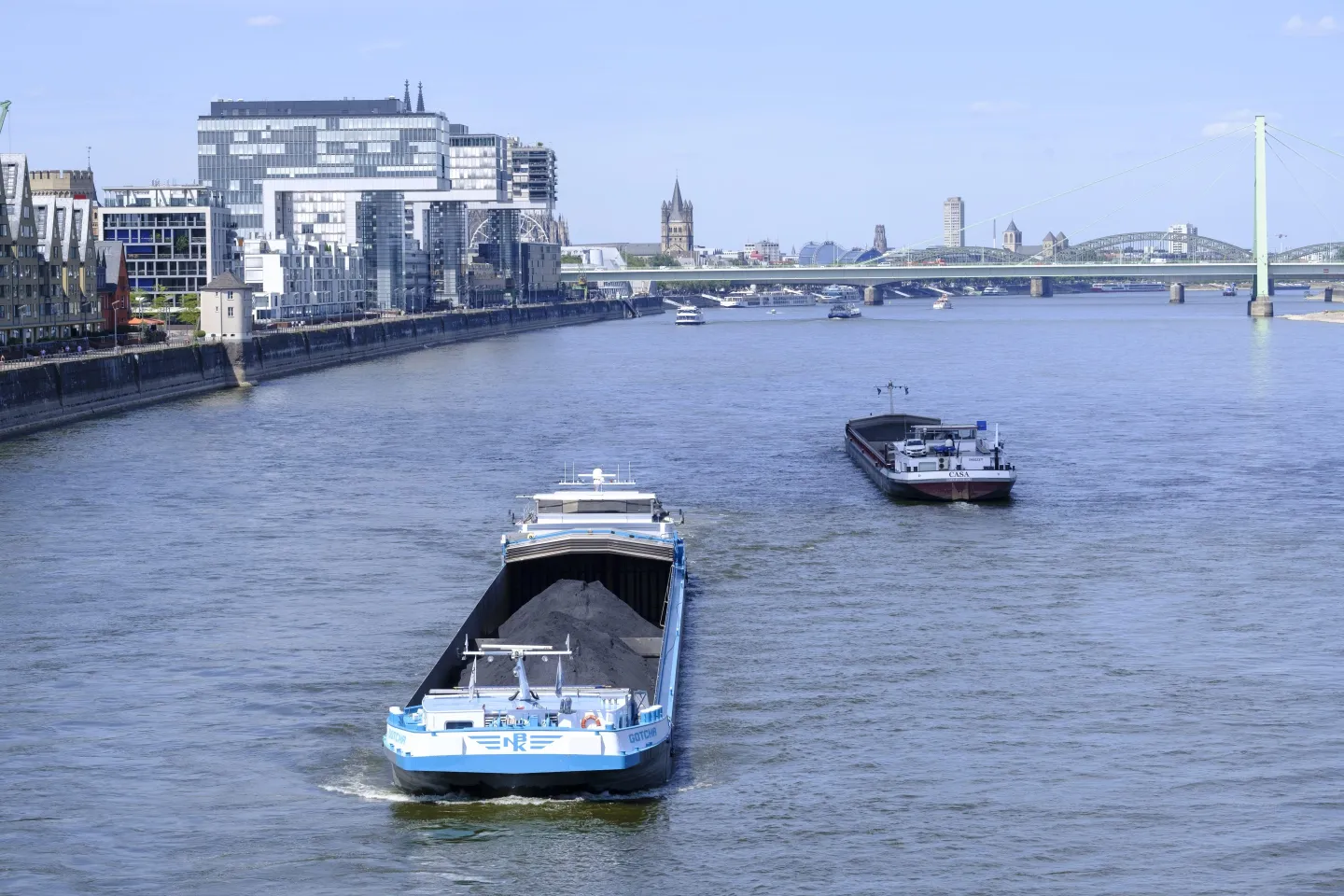
The German city of Cologne has begun the construction of an unprecedented infrastructure: a 150 MW river heat pump that will harness the thermal energy of the Rhine River to provide renewable heating to about 50,000 homes.
The project, developed by Everllence and RheinEnergie, will come into service in 2028 and will allow for a reduction of about 100,000 tons of CO₂ per year, equivalent to removing tens of thousands of combustion vehicles.
How the technology works
Industrial heat pumps use thermodynamic cycles to multiply the useful energy obtained. In simple terms, for each unit of electricity consumed, several units of usable heat are generated.
- The Rhine’s water, even in winter, maintains sufficient temperatures to feed heat recovery systems.
- The installation will feature three modules of 50 MW each.
- It will use ammonia as a natural refrigerant, avoiding high-impact climate fluorinated gases.
- It will incorporate digital monitoring systems to optimize performance and reduce maintenance costs.
This approach turns rivers into a kind of natural thermal battery that continuously flows through cities.
European context
While heat pumps are common in single-family homes, scaling them to urban levels represents a technological leap. Similar projects are already operating in Denmark, Sweden, Norway, and Finland, leveraging renewable thermal sources from seas, lakes, wastewater, and industrial processes.
What distinguishes the case of Cologne is the scale achieved: with 150 MW, it far surpasses previous installations and becomes a strategic infrastructure for the urban energy transition.
Relevance for decarbonization
Heating represents a huge part of European energy consumption and still largely depends on fossil fuels like natural gas. Therefore, the decarbonization of the thermal sector is a strategic priority.
Renewable urban heating networks offer advantages:
- They act on thousands of homes simultaneously.
- They prevent each homeowner from having to install individual systems.
- They are especially useful in densely urbanized neighborhoods.
Thermal planning in Germany
The construction of this infrastructure coincides with new municipal thermal planning strategies:
- Geothermal energy.
- Sustainable biomass.
- Industrial heat recovery.
- Solar thermal energy.
- Large river and coastal heat pumps.
Cities like Mannheim, Hamburg, Flensburg, and Kiel are already developing similar projects. The Rhine in Cologne, the Seine in Paris, the Thames in London, the Elbe in Germany, and the Danube in Central Europe represent enormous reserves of thermal energy still underutilized.
The river heat pump in Cologne demonstrates that the most powerful solutions for the energy transition do not always come from futuristic technologies but from resources that have always been available.
Harnessing the heat of rivers can be key to advancing towards a more resilient energy model, less dependent on imported fuels, and aligned with the climate goals of 2030 and 2050.


