



The fire in Chubut is just a sample of what can happen in the rest of the country, as at least 16 provinces are under maximum alert for extreme risk of forest fires, including Buenos Aires.
According to the National Meteorological Service (SMN) and the National Fire Management Service (SNMF), the provinces with “extreme” level are Santiago del Estero, Tucumán, Córdoba, Mendoza, San Luis, La Rioja, Neuquén, Río Negro, Chubut, Santa Cruz, Santa Fe, Tierra del Fuego, Entre Ríos, and Buenos Aires.
These provinces represent the central and southern strip of the country, with the Pampas region, Cuyo, and Patagonia being the most affected areas. For this reason, national and provincial authorities have called for extreme caution and to avoid any action that could start fires, given that the climatic context favors their spread.
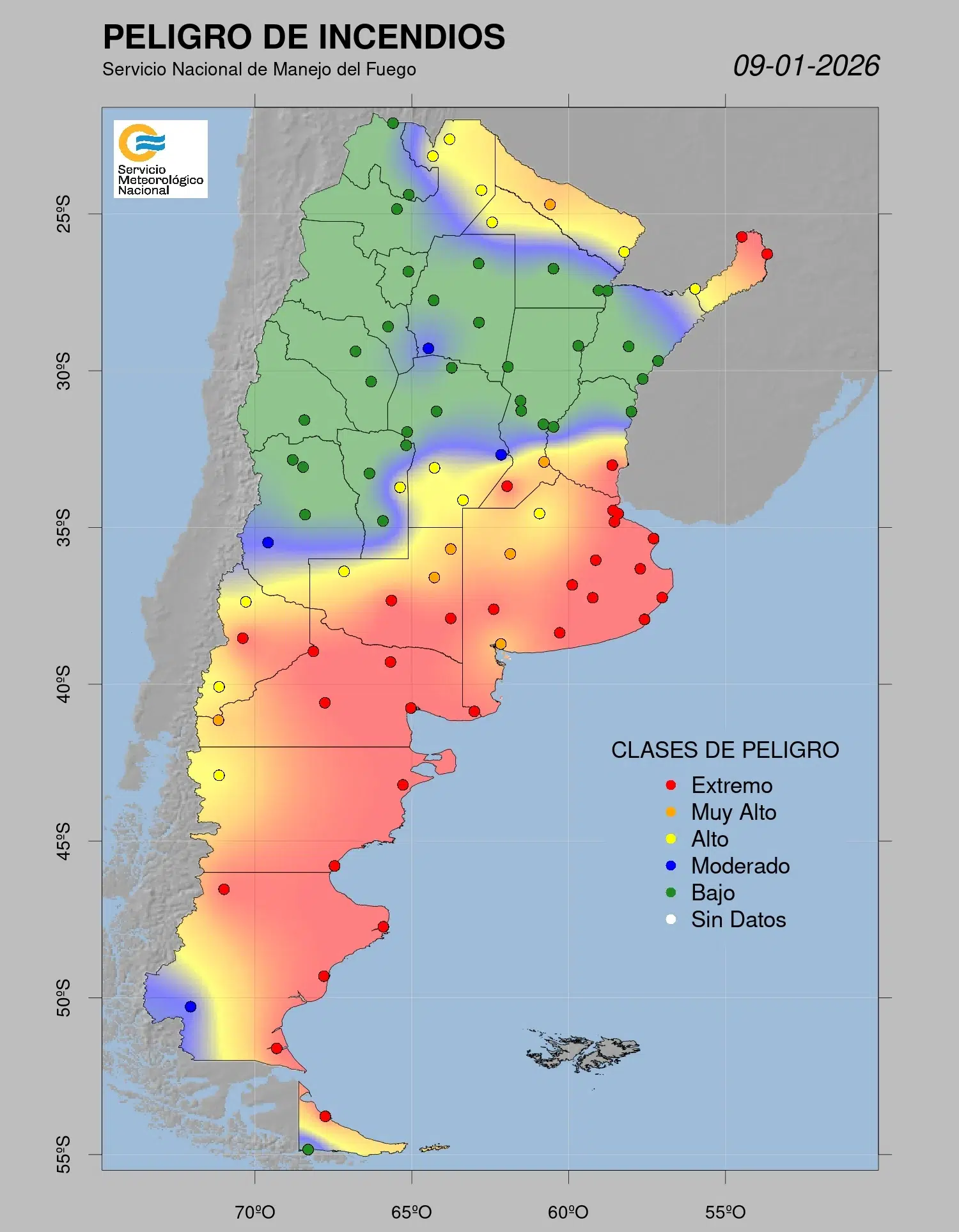
More than half of Buenos Aires, in critical level
Buenos Aires is among the most compromised areas, as half of the province is under “extreme” risk, while the rest of the Buenos Aires territory presents “high” and “very high” risk.
In fact, the most sensitive areas include the south and southeast, the Paraná Delta, and the sectors near the Salado basin. Additionally, official reports have indicated that the risk could shift towards the northeastern Buenos Aires, approaching the Federal Capital and the Conurbano.
What does the “extreme” fire level mean?
According to the SNMF, the alert level is defined based on the FWI (Fire Weather Index). This is a tool designed in Canada that has been adopted in Argentina to assess the danger of forest fires.
To use this index, data on temperature, relative humidity, accumulated precipitation, and wind speed from the last 24 hours are calculated daily. The value obtained from this calculation represents the potential behavior of a fire at the most critical time of the day, estimated around 4 PM.
Faced with the “extreme” level, the SNMF has warned that the situation should be considered potentially explosive or extremely critical, due to the difficulties in controlling the fire.
They also announced that for the months of January and February, the fire will remain above normal, especially in the center and north of Patagonia, the west of Buenos Aires, east of San Luis, Córdoba, La Pampa, and the west of Santa Fe.
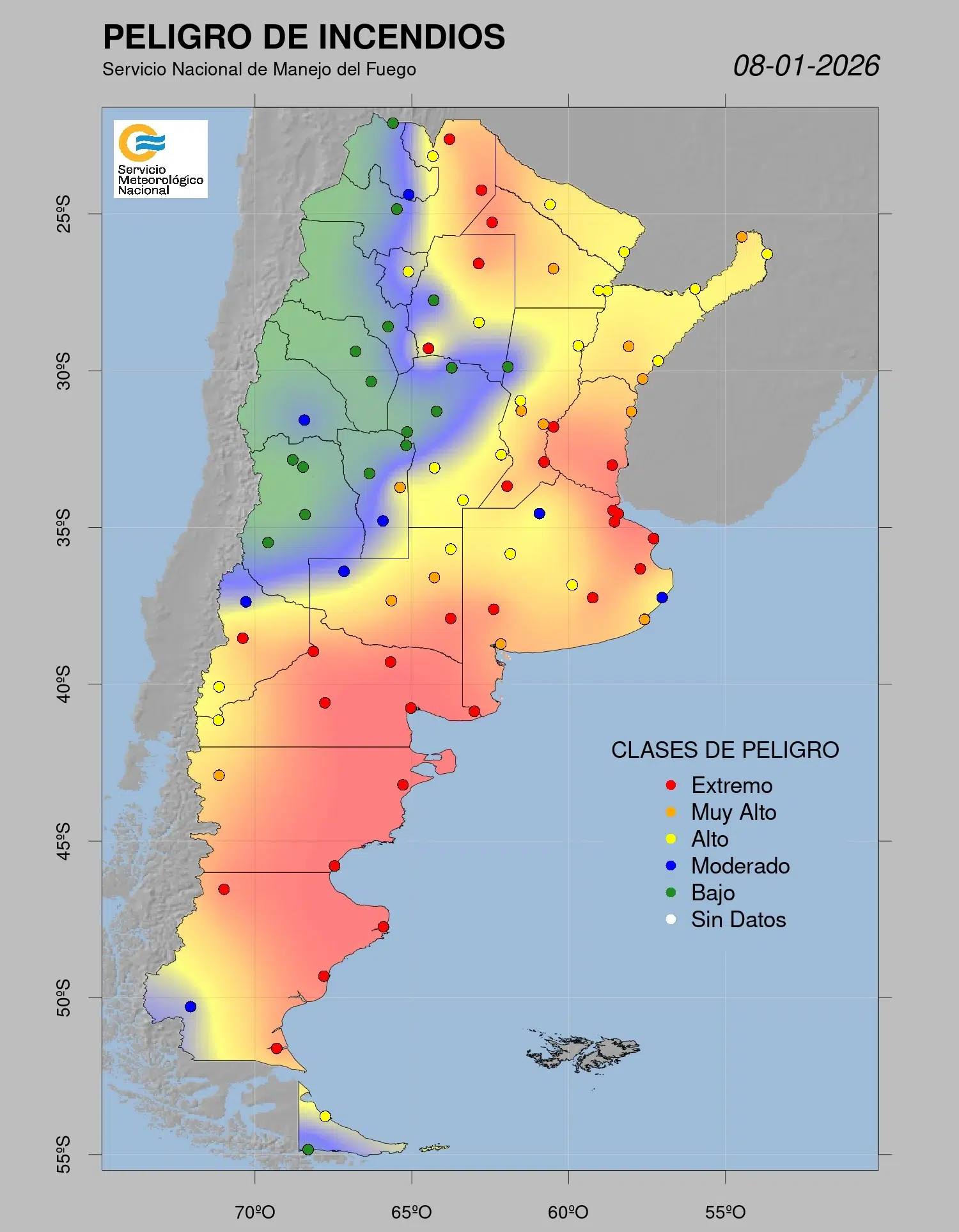
Key measures to prevent forest fires
The prevention of forest fires begins with proper land management. Therefore, maintaining firebreaks, cleaning dry plant material, and controlled management of fuels reduce the spread of fire. Additionally, these actions decrease the intensity of fires when they occur.
At the community level, environmental education is essential. In this regard, informing about the responsible use of fire, the prohibition of burning during critical periods, and the correct disposal of waste prevents many human-originated fires. Thus, prevention becomes a shared task between authorities and citizens.
It is also crucial to strengthen early detection systems. The combination of ground surveillance, satellite monitoring, and weather alerts allows for quick action. This way, environmental impact is reduced, biodiversity is protected, and forests are preserved as allies against climate change.


