



With more than 8.3 billion people on the planet, feeding the world’s population is an increasingly complex challenge. The debate usually focuses on agriculture and livestock, while the ocean —historically a food source for human communities— remains in the background.
A new study by the Smithsonian Tropical Research Institute, in collaboration with international centers, reveals that restoring coral reefs could play a crucial role in global food security, not through futuristic technologies, but by recovering healthy fish populations.
The Diagnosis: Overfishing and Loss of Potential
Researchers analyzed reef fisheries in different regions and found that fish populations are well below their productive capacity due to decades of overfishing.
The conclusion is clear: if managed sustainably, reefs could provide many more fish servings each year, especially in countries where hunger and malnutrition are everyday problems.
The Value of Reef Fish
For millions of people in coastal areas, reefs are not exotic landscapes but daily pantries. Reef fish offer:
- High-quality protein.
- Essential micronutrients.
- A hard-to-replace source of income.
When fishing pressure exceeds certain limits, systems break down: populations decrease, ecological balances are altered, and reefs cease to fulfill their food function.
The Potential for Recovery
The study quantifies the margin for improvement:
- Reducing fishing pressure and allowing fish to reproduce can increase annual production by up to 50%.
- This translates into millions of additional meals per year in countries highly dependent on fish.
- The impact would be greater in regions with extensive reefs and a long history of overexploitation, such as Indonesia, Southeast Asia, and Africa.
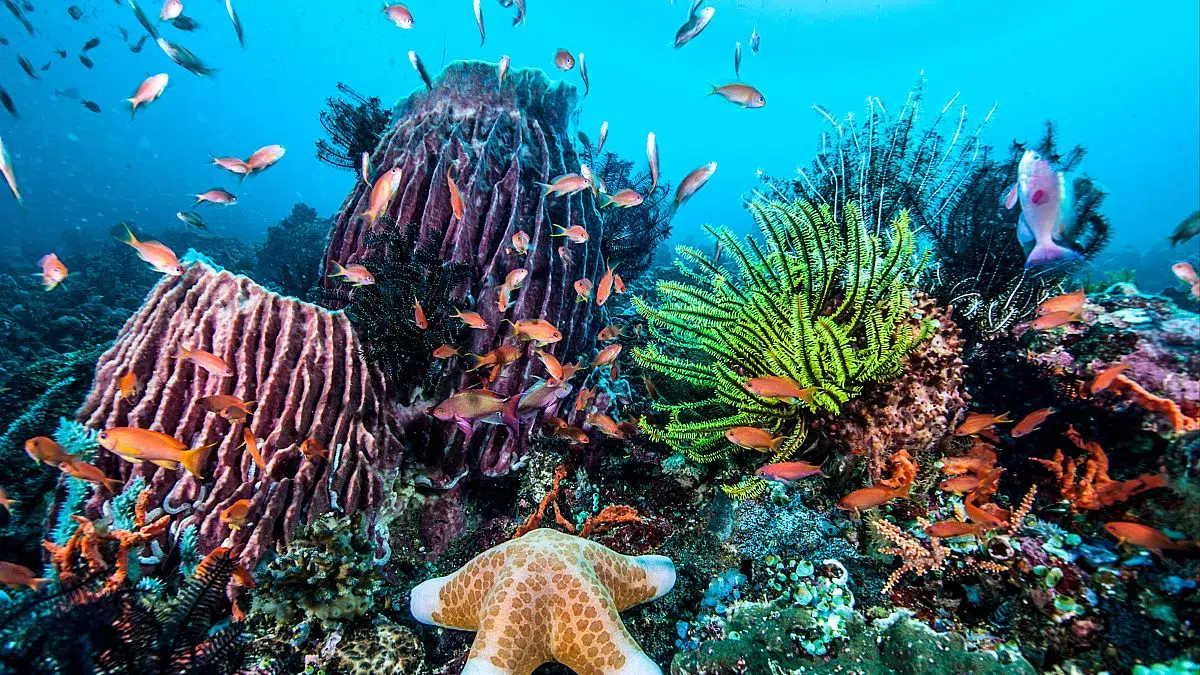
Coincidence Between Hunger and Fishing Potential
One of the most relevant findings is the geographical correlation: areas with the greatest potential for fishing recovery coincide with places where malnutrition is highest.
There, strengthening sustainable artisanal fishing can make a real difference in diet and public health.
Challenges of the Transition
Recovery is not immediate: it can take between six years and several decades, depending on the level of fishing pressure. Additionally, reducing catches today means less income tomorrow, so strategies must include:
- Active management and clear limits on fishing.
- Effective monitoring systems.
- Economic support and food alternatives for communities during the transition.
More Than Environmental Conservation
The benefits of managing reefs go beyond biodiversity:
- They improve nutrition and public health.
- They strengthen community resilience.
- They sustain the local economy and the cultural identity of millions of people.
Restoring coral reefs is not just an ecological measure: it is a strategic decision for human well-being. Recovering fish populations means more food available, more complete diets, and more stable coastal communities. It doesn’t happen overnight, but it does happen.



