



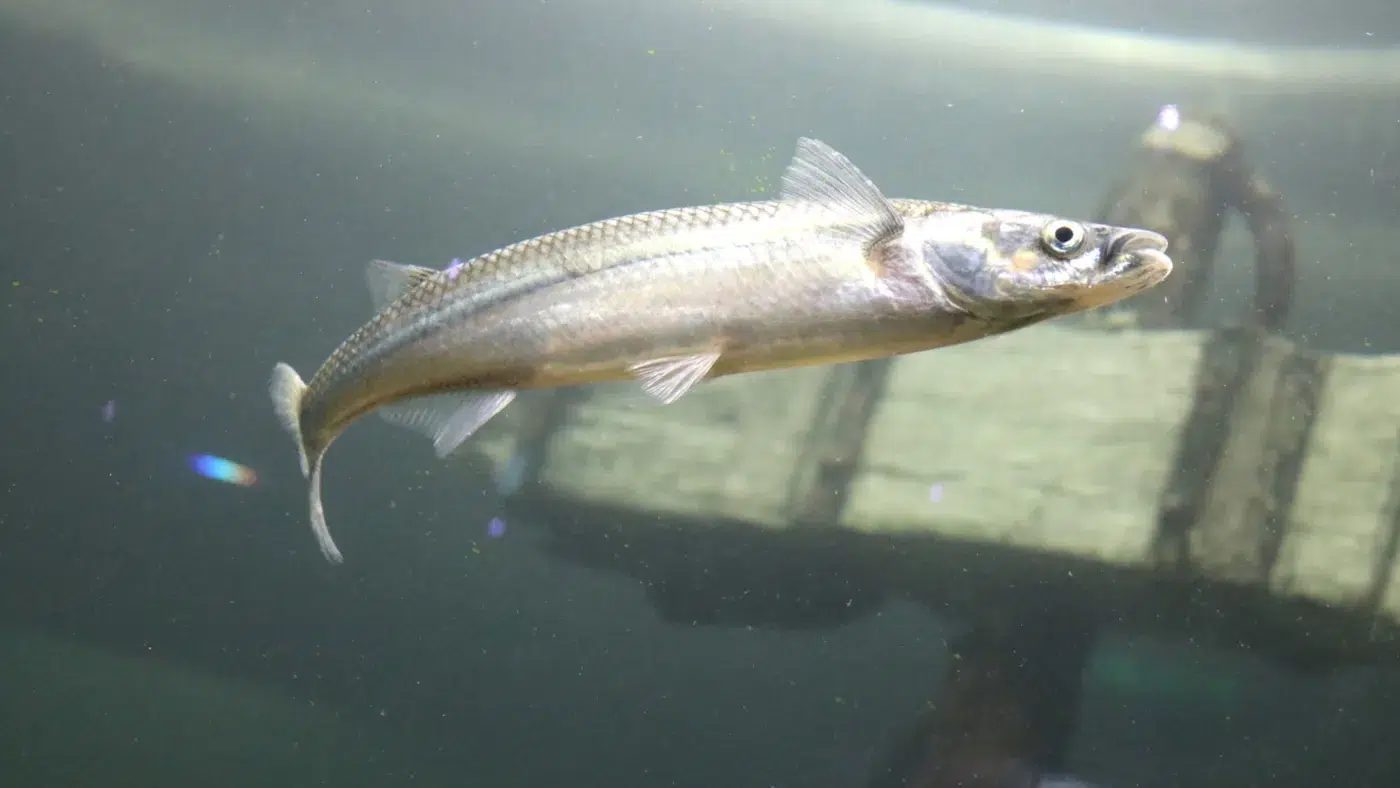
In the match of Lezama, province of Buenos Aires, a restocking campaign of silversides was carried out in three lagoons of the Salado River basin: Las Barrancas, La Tablilla, and Chis Chis.
The action was driven by researchers from the CONICET at the Institute of Limnology of La Plata (ILPLA, CONICET-UNLP-CICPBA), in conjunction with the Secretariat of Culture and Tourism Promotion of Lezama, the Association of Sport Fishermen of Lezama (APDL), and private investors.
The main objective is to compensate for the extractions caused by sport fishing and gastronomy, ensuring the continuity of the species in its natural habitat and promoting a sustainable aquaculture model.
The seeding process
The campaign extended over four months of sustained work. The procedure began in September, coinciding with the period of greatest availability of zooplankton, the natural food of the silverside.
- Floating cages of 4 meters on each side by 1.5 meters deep were installed.
- Each cage contained between 10,000 and 20,000 silverside larvae, just 3 millimeters long, provided by the Hydrobiological Station of Chascomús.
- The cages, designed with a floating frame and a fine net, allowed for water exchange and the entry of zooplankton, preventing the escape of fish and protecting them from predators.
During the process, periodic checks were conducted on:
- Condition of the cages and nets.
- Growth of the fish.
- Water quality and food availability.
At the end, thousands of juvenile fry between 5 and 10 centimeters were obtained and released into the lagoons.
Ecological aquaculture: a sustainable model
The initiative is framed within the paradigm of ecological aquaculture, which seeks to optimize fish reproduction without negative impacts on ecosystems.
“The cultivation system we propose does not use artificial food. The fish feed on what circulates in the lagoon, mainly zooplankton, abundant in the Pampean region,” explained Javier García de Souza, CONICET researcher and member of the Fish Ecology Laboratory at ILPLA.
This approach ensures that restocking is done naturally, taking advantage of the optimal conditions of the Pampean lagoons.
Origin of the project
The method was developed in the late 1990s by Darío Colautti, a CONICET researcher and current director of ILPLA.
Inspired by international experiences of breeding in floating cages, Colautti adapted the technique to the local context, taking advantage of the richness of zooplankton and the water quality of the Salado lagoons.
With funding from CONICET and the National University of La Plata (UNLP), specific cages and methodologies were designed for the silverside, creating a “criollo” model of sustainable aquaculture.
Impact on tourism and biodiversity
From the Secretariat of Culture and Tourism Promotion of Lezama, they highlighted that these actions are fundamental for:
- Preserving natural resources.
- Enhancing biodiversity.
- Consolidating the lagoons as references for sport fishing and sustainable tourism.
The initiative reinforces the importance of integrating science, public management, and citizen participation in projects that promote environmental care and sustainable development.
The restocking of silversides in the lagoons of Lezama is an example of how public-private collaboration can generate environmental, social, and economic benefits.
The combination of scientific research, community commitment, and institutional support ensures that these ecosystems remain healthy, strengthening both biodiversity and the region’s tourism and recreational activities.


