



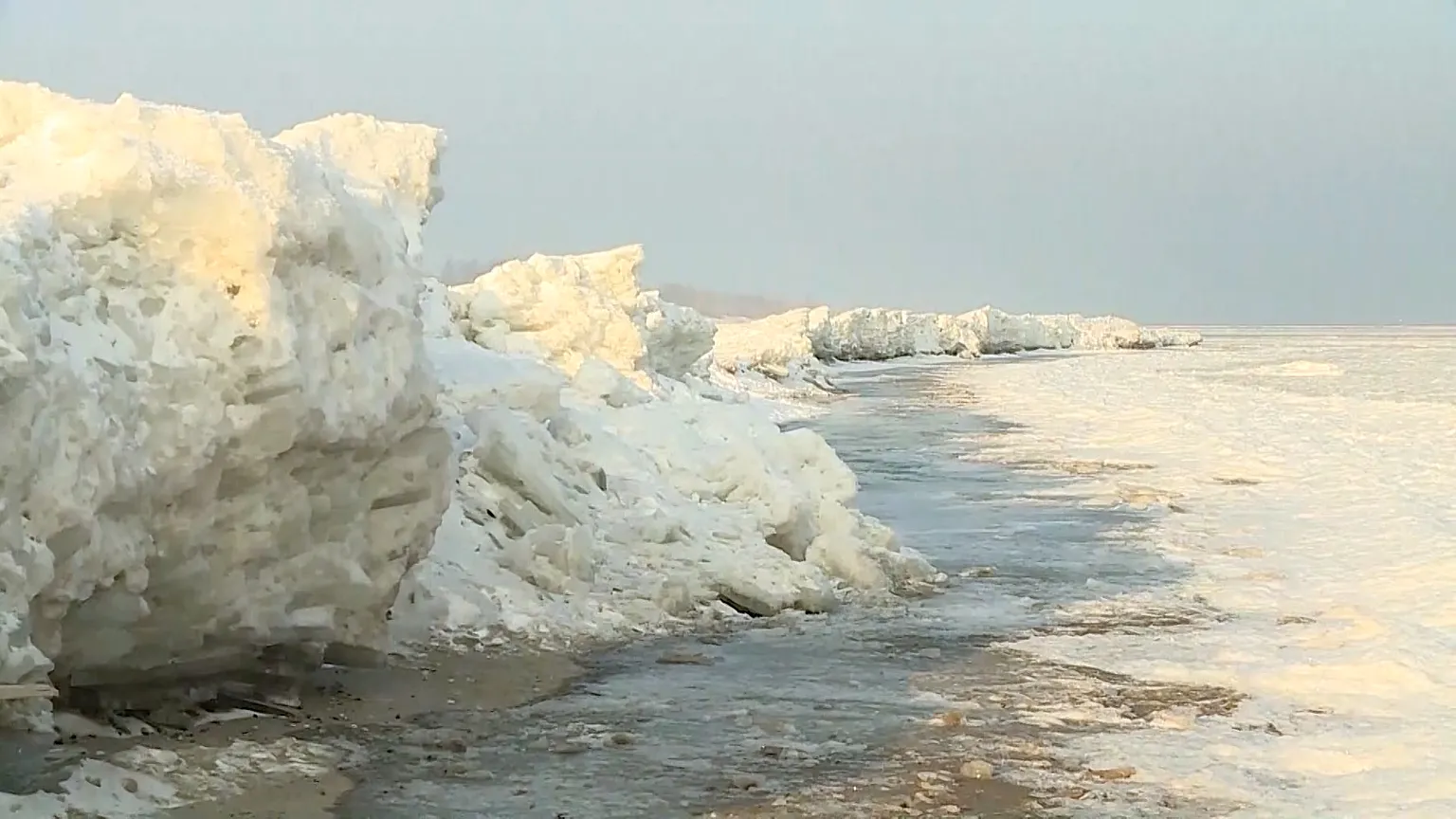
An extremely unusual phenomenon surprised residents and scientists on the coast of the Baltic Sea: the formation of “ice ridges” or “hummocks”, accumulations of plates pushed towards the shore by wind and tides.
This event was observed on beaches of the Vistula Spit, especially in locations such as Mikoszewo and Rewa, where some ridges exceeded two meters in height.
Authorities warned the public not to climb these structures, as the ice can be fragile and break easily. Although striking, the Baltic hummocks are smaller than those recorded in other regions of the world, where they reach several meters in height.
What are ice ridges?
Ice ridges are accumulations or elevated humps formed when sea ice plates collide, compress, and stack. They can appear in different forms:
- Pressure ridges (sea): lines of broken ice that rise upwards (sail) and downwards (keel).
- Coastal ridges or ice tsunamis: plates pushed towards the shore by winds and tides, known as “hummocks”.
- Sastrugi: ridges shaped directly by the wind on hardened snow surfaces.
New ridges have sharp edges and sloping sides, while older ones round out over time.
Significance of their appearance
The presence of these formations indicates:
- High pressure and collision: sea ice is under great pressure, generating movement and collisions.
- Extreme weather conditions: strong winds and very low temperatures that allow the freezing and displacement of ice.
- Coastal risk: accumulations that can invade areas near the coast, posing a danger due to breakage or displacement.
- Scientific value: their study in regions like the Arctic reveals key information about climate change and the health of sea ice.
A rare and valuable phenomenon for science
The Baltic ice hummocks are infrequent, and their appearance in 2026 offers a unique opportunity to study the dynamics of sea ice under unusual winter conditions.
These events help to understand how global warming and climate variability affect the formation, displacement, and pressure of ice in seas and coasts.
The sighting of ice hummocks in the Baltic is a reminder of the power of nature and the importance of monitoring extreme phenomena.
Beyond their visual spectacle, these ridges are indicators of climatic and oceanic processes that provide valuable data for scientific research and for understanding the effects of climate change on polar and coastal ecosystems.


