



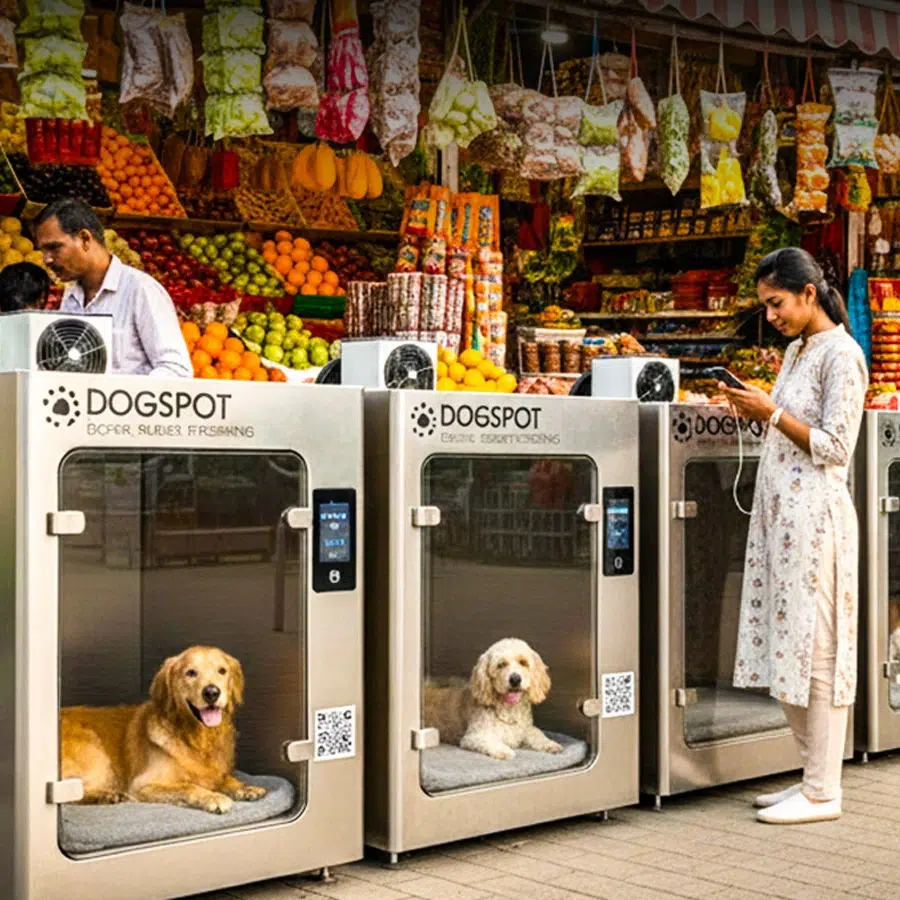
With a market of 33.9 million pets in Germany, retail is transforming the shopping experience for pet owners. Companies like DogSpot have started installing smart shelters at the entrances of supermarkets in cities like Berlin and Hamburg.
These climate-controlled and secure spaces prevent dogs from being tied up outside or left inside parked vehicles, reducing risks and improving animal welfare.
How “dog parking pads” work
The smart shelters feature:
- Automatic ventilation and constant climate control to ensure comfort.
- Exclusive digital access via mobile app or code, ensuring only the owner can open the unit.
- Integrated cameras that allow real-time monitoring of the animal from a smartphone.
- Transparent panels that maintain visual contact with the surroundings, reducing anxiety and stress.
These hygienic spaces aim to replace the practice of leaving animals tied up on the street, exposed to the weather or potential theft.
Social and cultural context
Germany reports that 44% of the population lives with pets, reflecting the trend of humanizing animals.
This phenomenon, which reached a global market of 197.6 billion dollars in 2024, drives the integration of animals into daily routines, including shopping in supermarkets and retail stores.
Controversies and benefits
One of the main functions of these shelters is to prevent owners from leaving their pets inside parked vehicles. Although in regions like Bavaria this practice is not illegal under certain conditions, it generates strong social disapproval.
In many cases, citizens intervene by calling the police or breaking windows when suspecting heat risk.
Smart shelters offer a safe alternative that:
- Protects animal health against extreme temperatures.
- Reduces social conflicts associated with temporary abandonment in cars.
- Integrates pets into urban life more responsibly.
Expansion and evaluation
The smart stations are already operating in Hamburg and Berlin, where their impact is being evaluated to expand the initiative to more supermarket chains.
This model redefines the standard of animal welfare in cities and is emerging as a new layer of service in the retail sector.
The creation of smart shelters for dogs in Germany represents an urban and social innovation that responds to the growing humanization of pets.
By offering safety, comfort, and technology, these modules are consolidating as allies of animal welfare and responsible consumption in modern retail.



