



The defense of glaciers once again took center stage in the environmental agenda in Argentina with a plurinational day that was replicated in different provinces.
Socio-environmental organizations, indigenous communities, unions, students, and scientific collectives took to the streets to warn about the risks faced by strategic freshwater reserves in the face of advancing extractive projects and the effects of climate change.
Mendoza, epicenter of the protest
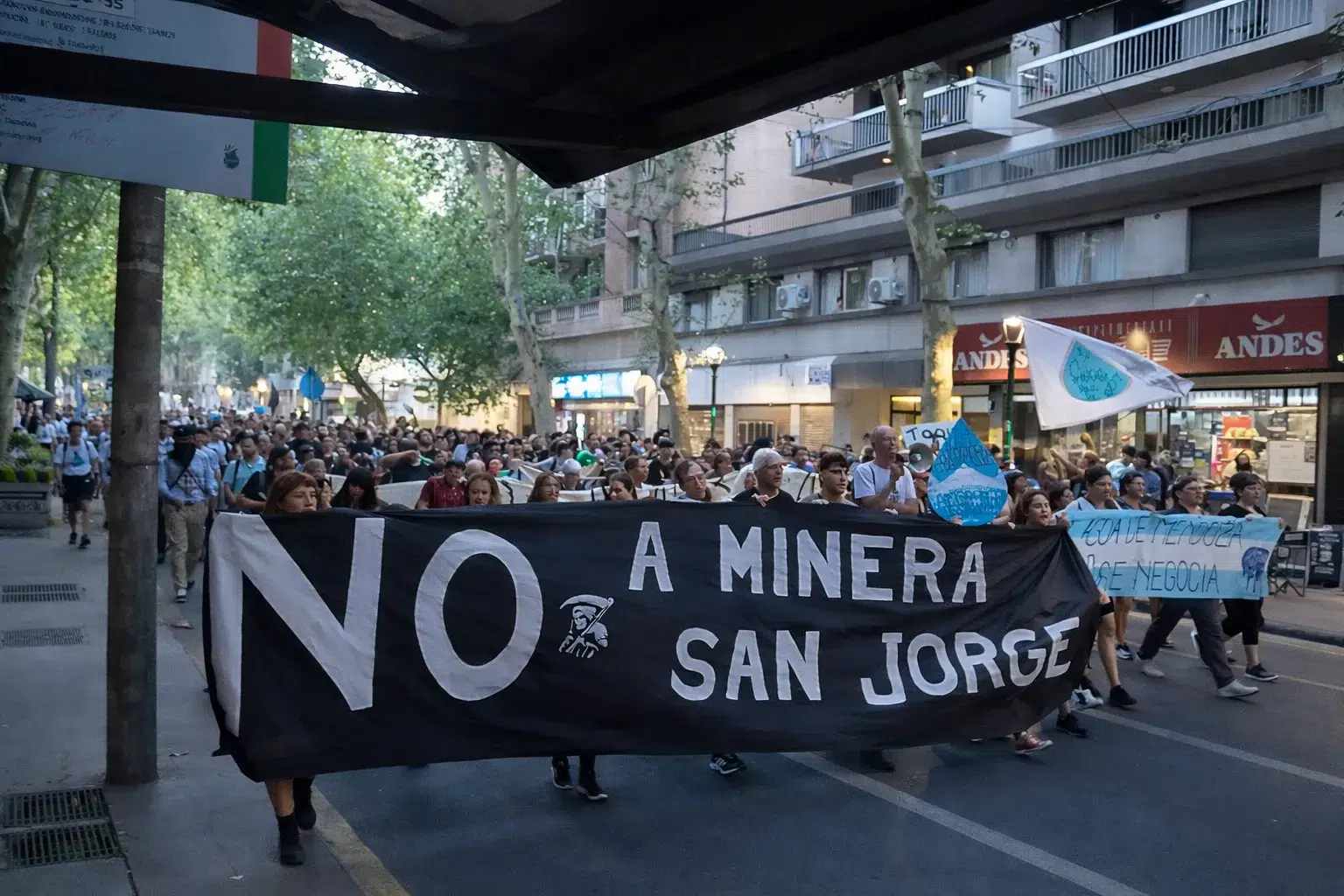
The largest gathering was recorded in Mendoza, where thousands of people marched through the center of the provincial capital and in different parts of the territory. The slogans demanded:
- Effective compliance with the National Glacier Law.
- Strengthening of environmental controls.
- Halt to mining initiatives in periglacial zones.
The mobilization took place in a climate of high political and social tension, marked by the prolonged conflict over the province’s productive development model.
Diversity of actors present
The call brought together:
- Rural producers, concerned about water access.
- University students and teachers.
- Health professionals.
- Representatives of indigenous peoples.
The central slogan was clear: “without glaciers, there is no water”, linking the protection of mountain ecosystems with the future of employment, quality of life, and water security.
Repression and detentions
The provincial government deployed a security operation that resulted in direct repression against the demonstrators:
- Use of police force to disperse the mobilization.
- Beatings and detentions.
- Transfer of several people to a building of the Ministry of Tourism, used as a temporary detention center.
Among the detainees were Nahuel Rodríguez, Hueique Rodríguez, Walther Rodríguez, Pablo Pérez, Nahuel Basualdo, Mauricio Abate, Federico Echeverría, Leandro Ruiz, and Mario Lara. Environmental and human rights organizations demanded their immediate release and questioned the legality of the procedure.
Legal alerts and violated rights
The use of a state dependency to house people deprived of liberty outside the usual circuits raised alarms among specialists in public and constitutional law.
Warnings were issued about possible violations of basic guarantees, such as the right to protest and due process.
Climatic and social context
The day reflected the sustained growth of territorial mobilization around the climate agenda. For young people, the defense of glaciers is directly linked to future access to water and resilience against extreme phenomena such as:
- Prolonged droughts.
- Forest fires.
- Extreme weather events.
Glaciers and high mountain ecosystems are perceived as strategic to face the impacts of global warming.
Political consequences
Following the events in Mendoza, human rights organizations and environmental collectives announced that they will push for judicial presentations and requests for reports to clarify political and administrative responsibilities for the repressive operation and the use of public buildings as detention spaces.
The day left a high-impact political postcard:
- A citizenry mobilized in defense of common goods.
- An open conflict between social sectors and the provincial government regarding the extractive model and the limits of state action in the face of social protest.
The plurinational day for glaciers exposed the tension between environmental protection and extractive interests, showing that the defense of water and mountain ecosystems has become a central banner of social mobilization in Argentina.



