



The Chamber IV of the Federal Criminal Cassation Court unanimously annulled the decision that had eased the suspension of deforestation in the province of Chaco. The ruling reaffirms the full validity of the precautionary principle, the jurisdiction of the federal court in the face of interjurisdictional significant environmental damage, and the State’s duty to protect native forests as a collective good.
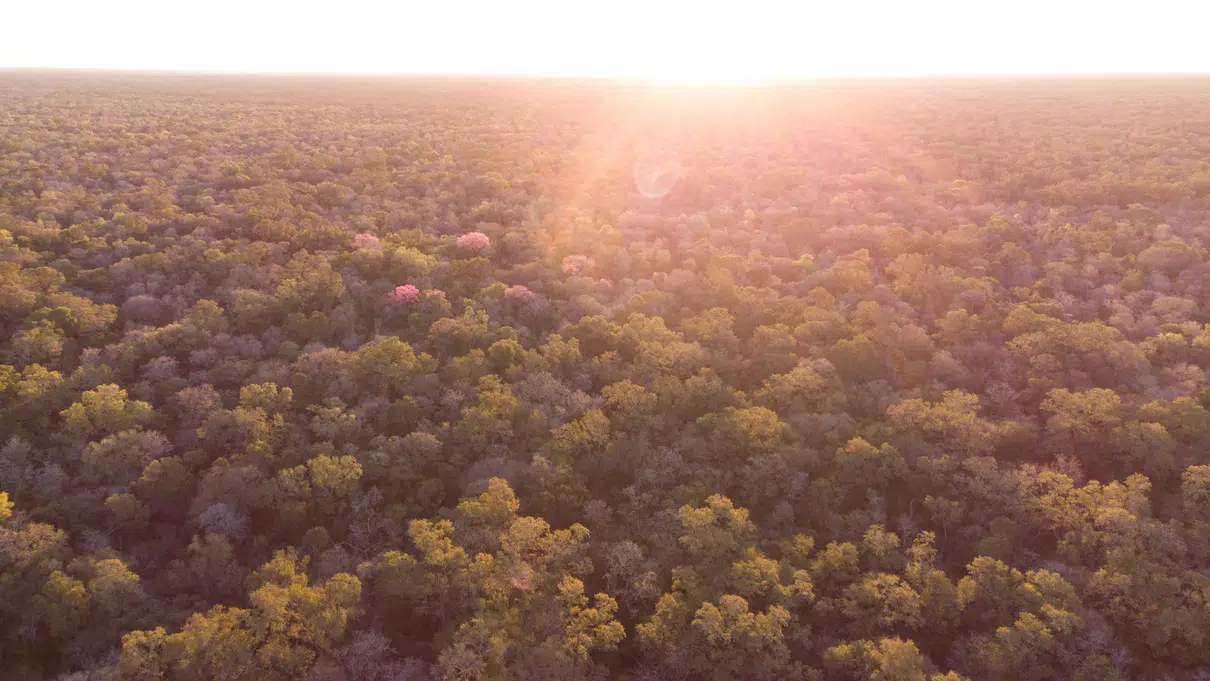
The organization Aves Argentinas celebrated the resolution issued on May 15, 2026, highlighting that it constitutes a precedent of enormous relevance for the conservation of the Gran Chaco Argentino, the second-largest forest ecosystem in South America and one of the most threatened on the continent.
Principles reaffirmed by the ruling
The judgment strengthens the concrete application of environmental principles such as:
- Precautionary and preventive: courts must intervene before the damage is done.
- Non-regression: protection levels achieved cannot be rolled back.
- In dubio pro natura: in case of doubt, nature should be prioritized.
- Effective judicial protection: the Judiciary must guarantee the environmental rights enshrined in Article 41 of the Constitution.
Three central definitions
- The enactment of new provincial regulations does not automatically justify lifting environmental precautionary measures if they do not guarantee the same level of protection.
- The intervention of the criminal judge in irregularities of deforestation permits does not invade provincial competencies but fulfills the constitutional role of protecting collective rights.
- Delegating oversight to agencies whose officials are under criminal investigation is incompatible with the effective protection of the State.
The false dilemma: forest vs. development
The ruling also questions the idea that forest protection hinders development. In the last two decades, the expansive model of land-use change has not improved Chaco’s social indicators, which remains among the provinces with the highest structural poverty.
The standing forest is a productive asset:
- Sustainable forest management.
- Organic beekeeping.
- Livestock with conservation guidelines.
- Non-timber forest products.
- Nature tourism.
- Ecological restoration and payments for ecosystem services.
Structural causes of illegal deforestation
The judicial file exposes factors that perpetuate the destruction of the Chaco forest:
- Weak sanctioning regime, internalized by companies as an operational cost.
- Administrative controls by agencies investigated for corruption.
- Gaps in the traceability of the forest chain.
- Satellite monitoring that documented illegal deforestation even during the validity of precautionary measures.
The regressive OTBN
Aves Argentinas questioned the Territorial Land-Use Planning of Native Forests (OTBN) sanctioned by Provincial Law No. 4152-R, which reduces areas of maximum conservation and reopens the possibility of land-use change in protected areas.
The organization demands participatory and technical processes, compatible with the National Law 26.331 and the Escazú Agreement.
Recommendations for Chaco
The ruling encourages progress in four strategic lines:
- Production of pending environmental expert reports, including the one requested from CONICET.
- Comprehensive review of the provincial OTBN under technical and participatory standards.
- Strengthening the sanctioning regime and effective penalization of the destruction of native forests.
- Investment in productive chains based on the standing forest, with an emphasis on indigenous peoples and peasant communities.
The Cassation ruling sets a national standard in environmental judicial protection: when there are serious doubts about the legality or impact of deforestation, the institutional response must prioritize the protection of the environment and the rights of present and future communities.
The conservation of the Gran Chaco is not an obstacle to development but its condition of possibility.



