



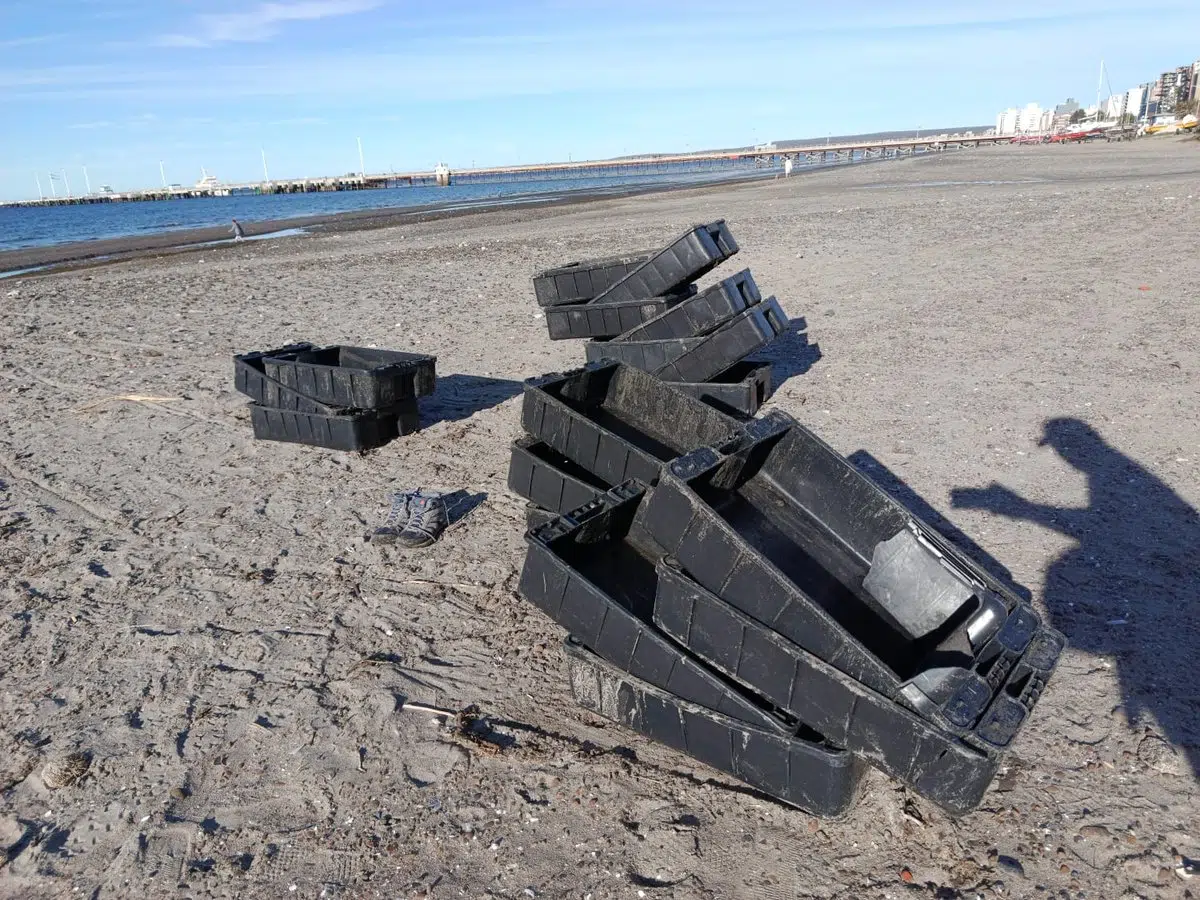
The appearance of more than 700 fishing crates on the beaches of Puerto Madryn once again exposed the fragility of controls over the environmental liabilities of the maritime industry in the Golfo Nuevo. The removal of 750 plastic containers over two days by the municipal Secretariat of Ecology and Environment highlighted the contrast between corporate secrecy and citizen effort.
The incident worsens upon discovering that two weeks earlier, a similar incident occurred in the southern part of the city, where more than double of these wastes were removed without sanctions or official explanations.
The neighborhood effort in the face of state inaction
The first response came from neighbors who went into the water to rescue the crates before the tide carried them away. Shirley, one of the volunteers, recounted: “When we looked up and saw there were hundreds of crates, it made us feel very powerless”.
The citizen operation took place in front of the Coast Guard and the port, without official assistance. The neighbor complained: “It outraged me that no one did anything”, and lamented the lack of solidarity from passersby who watched without helping.
Visible marks and nonexistent traceability
The crates were not anonymous: they were identified with insignias and commercial brands. Wooden pallets were even seen floating, suggesting failures in port handling or on the ship decks.
Despite the visual evidence, the opacity of the fishing circuit prevents companies from assuming environmental costs. Shirley questioned: “It’s incredible that a ship is missing 700 crates and there’s still no one responsible”.
From tourist impact to microplastic risk
Citizen indignation also pointed to social hypocrisy: “It was outrageous to see the number of people who passed by and didn’t help us, and then you see them uploading videos with the whale”.
Beyond the tourist postcard, the biological damage is severe. The plastics fragment due to the waves and end up in the food chain. Shirley warned: “If you eat fish, you know you’re consuming plastic”.
Environmental organizations’ demands
The foundation Sin Azul No Hay Verde agreed with the neighborhood diagnosis. Its coordinator, Juan Coustet, recalled that the MARES project revealed that 90% of plastic pollution on the coasts of Chubut comes from fishing activity.
Coustet demanded sanctions for those responsible and warned about the contradiction of the community bearing this environmental liability a few kilometers from Península Valdés, a World Heritage Site.
Contradictions and lack of oversight
The case reflects a contradiction: while the province promotes the creation of parks and natural monuments, fishing waste continues to impact the Chubut soil. The absence of effective sanctions perpetuates industrial impunity and turns municipal cleanups into mere patches.
The discovery of the 700 fishing crates in Madryn is not an isolated event but part of an environmental crisis that persists and worsens. The lack of traceability, sanctions, and operational protocols turns each spill into a reminder of the urgent need for strict controls and corporate responsibility.
The citizens showed commitment by acting in the face of state inaction, but the problem will only be solved if the State progresses in identifying, sanctioning, and preventing these environmental liabilities that threaten both biodiversity and human health.



