



While large areas of the country continue to be affected by forest fires, the national government is moving forward with an adjustment plan that could involve the dismissal or forced retirement of around 400 workers from the National Parks Administration. The measure is causing great concern among firefighters and technical staff, who warn that they are already facing the fires with insufficient teams.
Currently, four provinces remain under fire emergency, with active outbreaks or weather conditions that favor the reactivation of fires. In this context, national parks play a central role: they are vulnerable areas and serve as operational bases for fire prevention and fighting.
Concern among workers
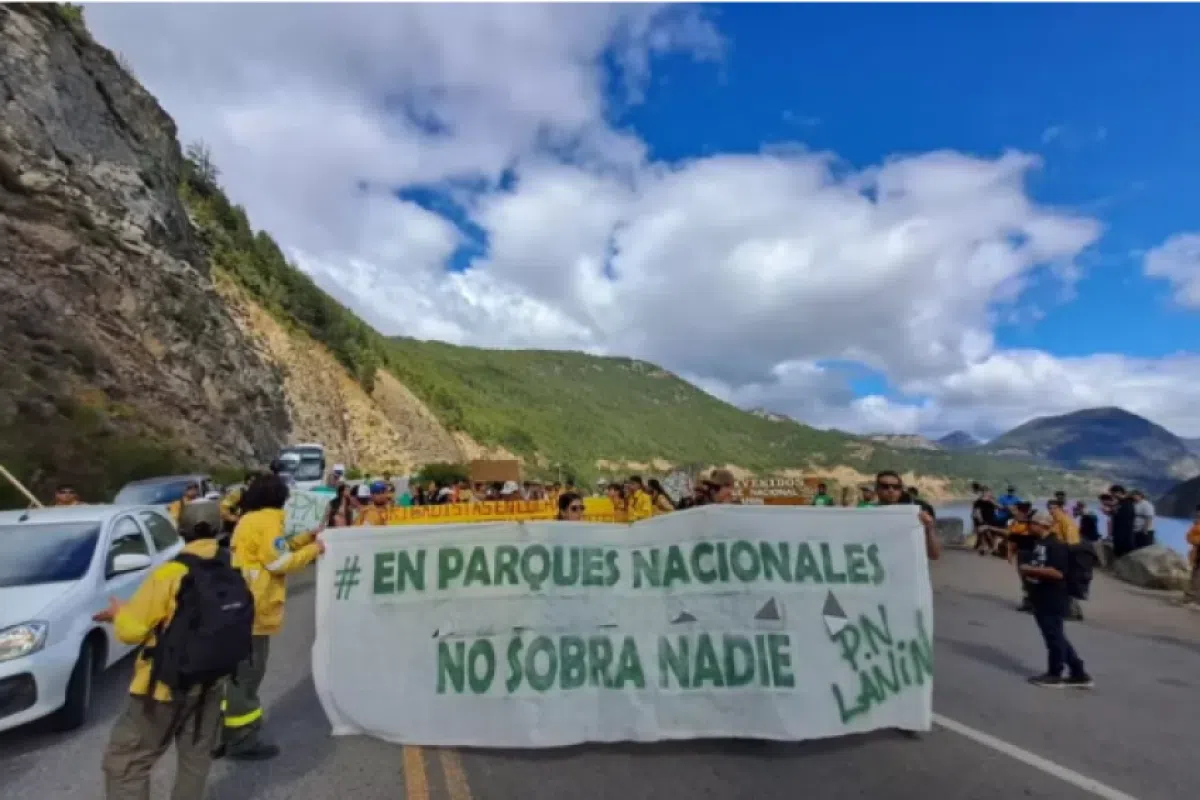
“In National Parks, no one is superfluous,” said Leonardo De Gennaro, Secretary of Organization of the Internal Board of ATE, following statements by Chief of Staff Manuel Adorni, who proposed reducing the workforce by 20%. According to the union, the plan includes voluntary retirements that effectively function as disguised dismissals.
The workers question the contradiction between this policy and the urgent needs of the system. They point out that the government allocated 14 billion pesos to finance the retirements but does not strengthen the fight against fires or improve salaries. The firefighters have been earning below the poverty line for two years.
A weakened structure
The National Parks Administration has about 2,000 employees in total. The firefighters form the first line against the fire, supported by technical and administrative teams that ensure the operation of the country’s 39 national parks.
De Gennaro warned that only half of the staff have permanent positions, while the rest depend on annual contracts. The average salary ranges between 600,000 and 900,000 pesos, while a family needs at least 1,300,000 pesos to cover the basic basket, a figure even higher in Patagonia.
Fire emergency in Argentina
The fire situation is mainly concentrated in Patagonia, where a fire emergency state has been declared by the national government. Although recent summer rains and snowfalls brought relief, critical outbreaks persist and there is a meteorological alert for adverse conditions.
Status of main outbreaks (as of 02/12/2026)
- Chubut: The fire in Puerto Patriada was declared 100% controlled, but the outbreak in Los Alerces National Park (16,000 hectares affected) remains under containment. Other active points are reported in Cholila and Epuyén.
- Río Negro and Neuquén: Active outbreaks and ash guards remain in mountain areas.
- La Pampa: More than 170,000 hectares burned in plain areas.
Key data
- Affected area: more than 1,260 fire outbreaks detected in 2026. In the Andean-Patagonian region, the fire has ravaged more than 46,000 hectares since December.
- Meteorological alert: the National Fire Management Service maintains an alert level for Mendoza, Neuquén, La Pampa, and Río Negro until February 13.
- Operation: more than 500 firefighters and about 15 aerial means (water bomber planes and helicopters) deployed in critical areas.
The adjustment in National Parks occurs at a time of maximum environmental vulnerability. Workers warn that the reduction of staff not only threatens jobs but also the state’s ability to prevent and fight fires, with direct consequences for the environment and nearby communities.


