



In daily life, batteries power remotes, clocks, and toys. However, when they run out, their improper disposal becomes a serious problem.
Specialists warn that unused batteries are hazardous waste. They contain mercury, cadmium, lead, manganese, nickel, and zinc. If they end up in landfills or dumps, they can deteriorate. Then they release toxic substances that contaminate soil and groundwater.
It is estimated that a common battery can affect up to 3,000 liters of water. An alkaline one could reach 175,000 liters and a button-type 600,000 liters.
Moreover, 80% of the mercury present in waste comes from batteries. Therefore, their proper management is a priority on the urban agenda.
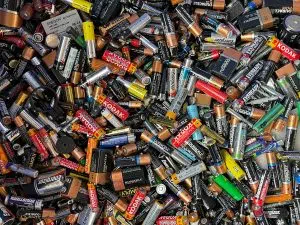
Collection points for safe disposal
In this scenario, the Bahía Blanca Municipality renewed the collection points. The goal is to prevent them from mixing with household waste.
Residents can bring them to the North Ecopoint, at Castelli 2741. Also to the Ingeniero White Ecopoint, at Harris 3651.
Branches of the Cooperativa Obrera are added. Likewise, Shell service stations at O’Higgins 401, Avenida Alem 2095, and Bahía Blanca Plaza Shopping, Sarmiento 2153.
These spaces have special urns for safe storage. Then, the waste is sent for specific treatment. Before taking them, it is recommended to store them in plastic bottles. In the case of lithium batteries, cover the terminals with adhesive tape.
A complex but necessary recycling
The recycling varies according to the composition of each battery. Button types are heated to recover mercury by condensation.
In contrast, conventional ones are crushed and processed with hydrometallurgical techniques. This way, zinc, nickel, copper, manganese, and graphite are recovered.
The reuse of these metals reduces the extraction of natural resources. Additionally, it strengthens the circular economy.
However, out of every 100 batteries, only about 15 are selectively collected. And less than one actually gets recycled. Manufacturing them also involves a high energy cost. Up to 50 times more energy is invested than they generate.

Environmental and social benefits of the initiative
The expansion of collection points reduces contamination risks. Consequently, it protects water sources and air quality.
Moreover, it promotes responsible habits at home. Separating and transporting batteries is a simple gesture with a great impact.
The initiative strengthens the community’s environmental awareness. Each individual action contributes to the collective well-being.
In a context where an average consumer uses between 30 and 50 batteries a year, proper management becomes key. Thus, Bahía Blanca moves towards a more sustainable city committed to its environment.


