



In early March 2026, fishermen from northern Veracruz reported the presence of tar in the sea and on beaches near the municipality of Pajapan. Mayor José Luis González confirmed it was an oil spill of unknown origin.
Ten days later, the black stain expanded towards the municipality of Alvarado, severely affecting fishing activities.
Extent of the Oil Spill
Municipal authorities reported that the spill already affects about 230 kilometers of coastline, from Veracruz to the north of Tabasco.
The Gulf of Mexico Reef Corridor Network reported 39 impacted locations, including communities such as Tatahuicapan, Mecayapan, and Pajapan, as well as the Laguna del Ostión, where nine fishing communities depend directly on maritime activity.
The oil also reached tourist and ecological destinations like Carrizal, famous for its hot springs, and areas of the Los Tuxtlas Biosphere Reserve, such as La Barra de Sontecomapan and Roca Partida.
Impact on Fauna and Communities
In Punta Puntilla, a turtle covered in oil was found, while in Jicacal, the fishermen themselves organized to clean the beaches. Jaime Santiago Rojas, president of the Alvarado Federation of Fishing Cooperative Societies, reported that the stain already invades fishing areas: “Everything is full of oil, an immense thing, it’s 4 or 5 miles long.”
Residents express frustration over the lack of solutions and warn that pollution exacerbates the low fishing production, creating an economic and social crisis.
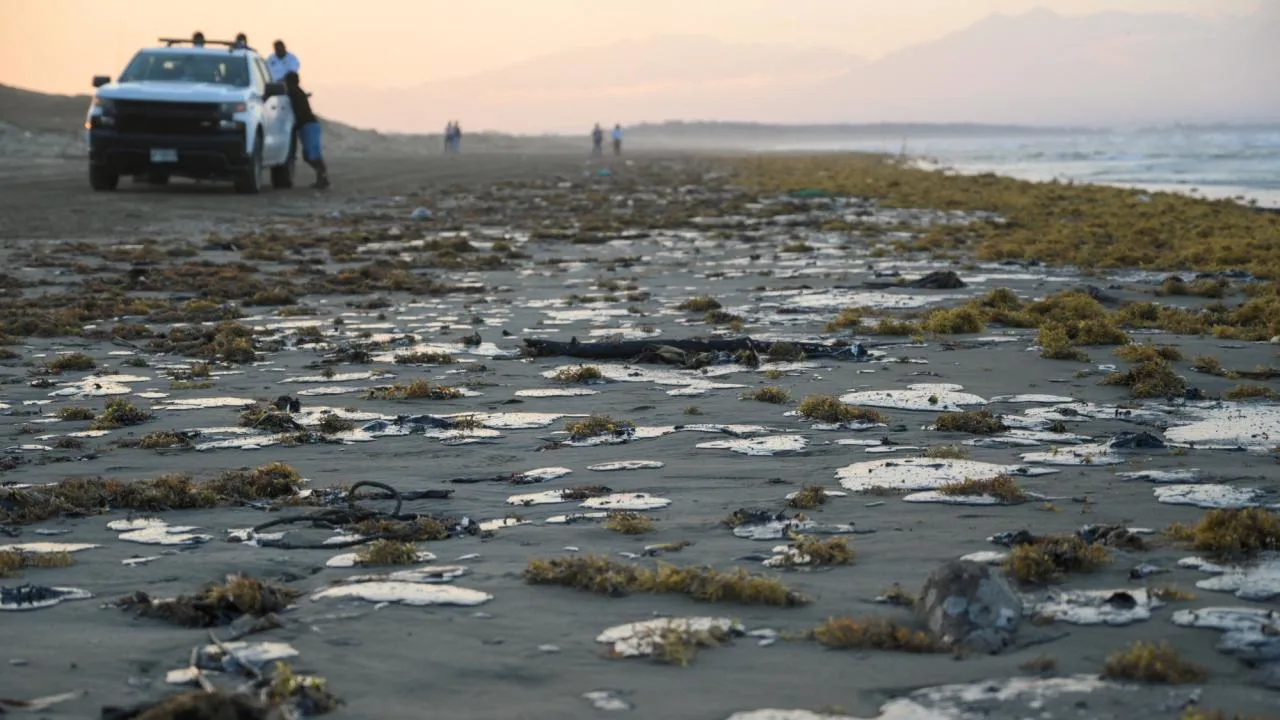
Affected Areas
- Veracruz: Tatahuicapan, Mecayapan, Pajapan, Punta San Juan, Playa Linda, Zapotitlán, Tecuanapan, Jicacal, Laguna del Ostión, Catemaco, La Barra de Sontecomapan, Roca Partida, Playa Barrillas (Coatzacoalcos).
- Tabasco: Paraíso and Sánchez Magallanes.
- Other points: Los Arrecifes, El Salado, Peña Hermosa, Mirador Pilapa.
Historical Background
The Gulf of Mexico has been the scene of large-scale spills:
- Ixtoc I (1979-1980): explosion at a Pemex well in Campeche, one of the largest spills in history.
- Deepwater Horizon (2010): BP disaster in the U.S., with 4.9 million barrels spilled.
- Taylor Spill (2004-2022): continuous leak for 18 years after Hurricane Ivan.
- Ek-Balam (2023): spill detected by satellite images, affecting the coasts of Veracruz and Tamaulipas.
Socio-Environmental Emergency
The current spill in Veracruz and Tabasco represents a socio-environmental emergency:
- Ecological: affects reefs, lagoons, and natural reserves.
- Economic: impacts fishing and tourist communities.
- Social: generates discontent due to the lack of official response.
The March 2026 spill in the Gulf of Mexico highlights the vulnerability of Mexican coasts to oil pollution. The expansion of the black stain and the authorities’ omission put ecosystems, local economies, and the health of thousands of people at risk.
The history of spills in the region shows that without prevention, transparency, and immediate action, environmental and social costs are repeated and deepened.


