



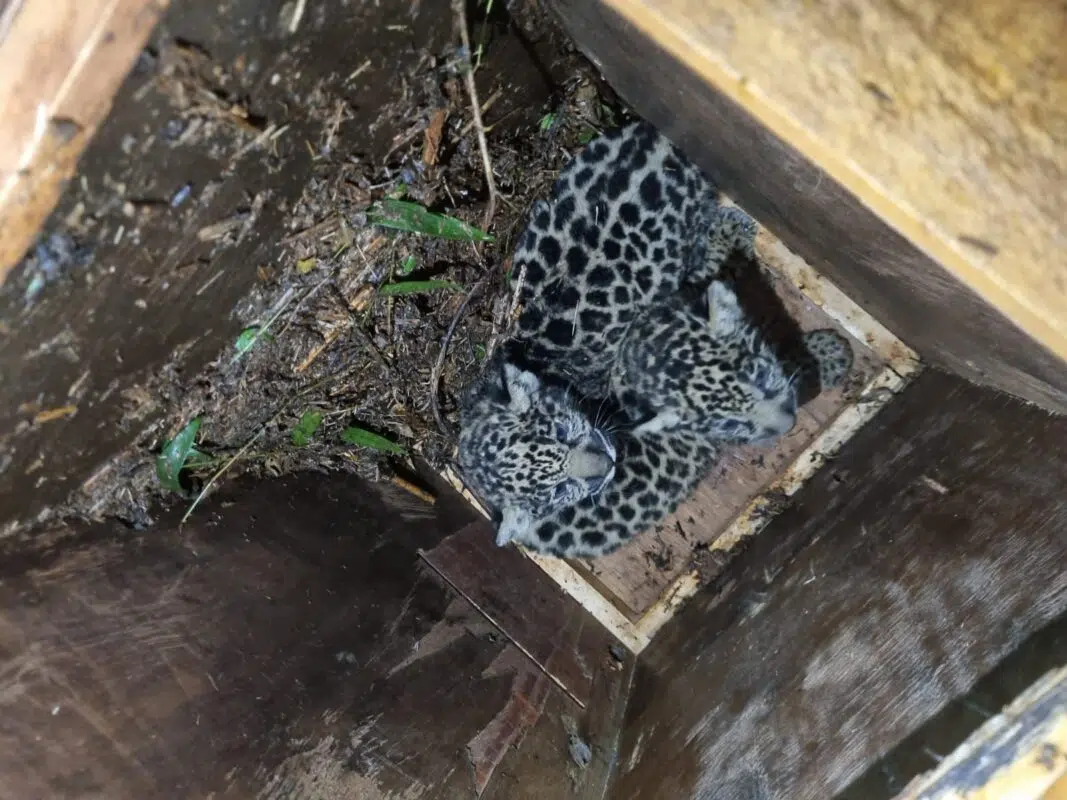
In October 2025, an official operation relocated Pará, a female jaguar (Panthera onca), along with her two cubs from a military housing complex in Puerto Iguazú to the Esmeralda Provincial Park, within the Yabotí Biosphere Reserve. The measure aimed to avoid conflicts with the urban population, where traps and baits had been detected to kill her.
The procedure was coordinated by the Ministry of Ecology of Misiones, the Yaguareté Project of Conicet, and the National Parks Administration. However, after the release, the satellite collar showed that the mother moved away from the site, while the cubs remained nearby and have not been recorded since.
Criticism and Questions
The Red Yaguareté submitted a document of more than 30 pages to the Ufima (Federal Unit for the Investigation of Environmental Crimes), questioning the translocation and pointing out past failures in relocating jaguars and pumas in Misiones.
National and international experts also expressed their opposition to such procedures, warning that the cubs, being nursing, had no chance of survival without the mother.
The Ministry of Ecology defended the decision, stating it was a “family reunification” supervised by park rangers and organizations like the Azara Foundation and Güirá Oga. However, it acknowledged that “it is not possible to determine with certainty the current situation of the cubs.”
Pará, a Survivor
Pará’s story was already marked by violence: in 2023, she was a victim of illegal hunting, lost an eye, and suffered pellet impacts. Therefore, a satellite collar was placed on her, which still allows monitoring of her movements.
She currently remains in the Esmeralda Park, but her condition and the fate of her offspring continue to be uncertain.
Ecological Role of the Jaguar
The conservation of the jaguar in Misiones is key to the balance of the Paranaense Jungle:
- Apex Predator: regulates herbivore populations and prevents overgrazing.
- Umbrella Species: by protecting its habitat, many other species are indirectly conserved.
- Cultural Identity: more than 50% of the people in Misiones consider it the most emblematic animal of Argentina.
- In situ Conservation: Misiones hosts about 90 individuals, making it essential to create ecological corridors and curb threats such as illegal hunting and roadkill.
- Ecosystem Benefits: its presence ensures forest health, climate regulation, and carbon storage.
Ongoing Investigation
The Ufima maintains an open federal investigation to determine if the procedure was appropriate and to clarify the fate of the cubs.
The case has become a symbol of the challenges facing jaguar conservation in Argentina: how to reconcile the protection of an endangered species with coexistence in urban and rural areas.
Pará’s case reflects the tension between the conservation of emblematic species and conflicts with human communities. The absence of news about her cubs generates concern and criticism, but also highlights the need for more rigorous protocols for the translocation of large felines.
Protecting the jaguar not only means saving an animal but also preserving the biodiversity and cultural identity of Misiones.


