



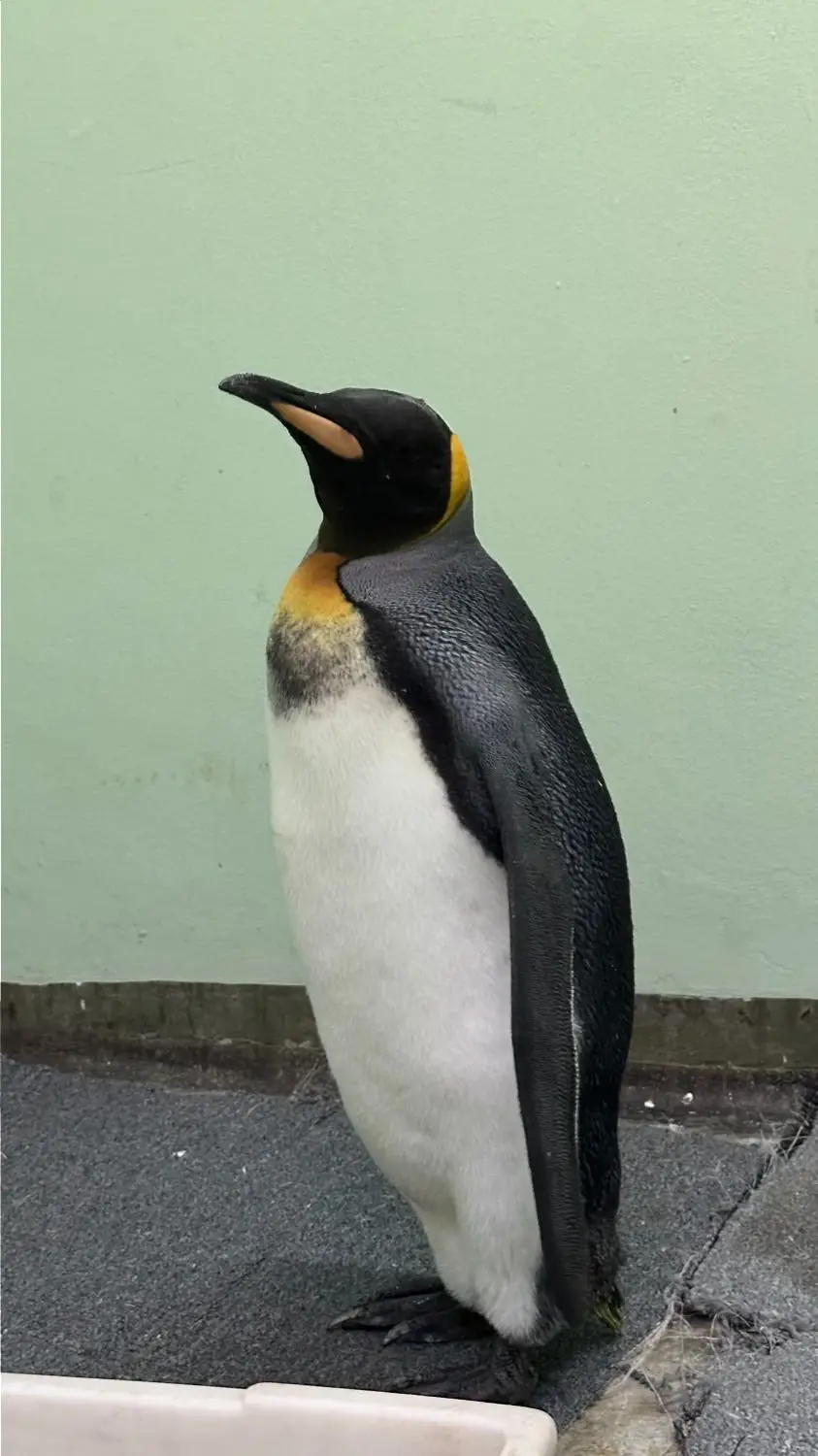
A king penguin specimen was rescued in the Río de la Plata after appearing outside its natural habitat on the coast of the Buenos Aires district of Vicente López. The discovery mobilized emergency personnel who responded after receiving a notice about the presence of the marine bird on the shore.
The operation was carried out by teams from the Civil Defense, who transported the animal to a specialized center for evaluation.
Currently, the specimen is located at the Species Recovery Center of the Temaikén Foundation, located in Belén de Escobar.
There, a veterinary team began to monitor its health status and initiate the rehabilitation process necessary before a potential release.

A species accustomed to the cold southern seas
The king penguin is a subantarctic species that primarily inhabits cold islands in the southern hemisphere. Among its main colonies are those located in South Georgia Islands, Falkland Islands, and South Sandwich Islands.
There are also records of its presence in the southernmost tip of South America, especially in Tierra del Fuego. These marine birds undertake long journeys in the ocean in search of food.
During these trips, they often follow areas of high biological productivity in the Argentine Sea. Occasionally, these routes bring them close to the Buenos Aires coast, where some specimens may appear temporarily.
The condition of the found specimen
The specialists who examined the animal detected that it had recently gone through its molting process. During this stage, penguins replace their feathers and usually experience a significant weight loss.
This condition makes them more vulnerable to exhaustion or deviations in their usual travel routes. Additionally, ocean currents can influence their trajectory when they are weakened.
In this case, experts believe that these currents may have pushed the bird inland into the Río de la Plata. The veterinary team’s goal is to achieve its recovery to release it back into the sea later.
What the presence of marine wildlife in urban areas implies
The appearance of marine species in urban areas can be an indicator of multiple ecological processes. In some cases, it is due to natural movements during feeding or migration routes.
However, it can also reflect changes in the ocean’s environmental conditions. Factors such as food availability, ocean currents, or climate change can alter the routes of many species.
Moreover, encountering urbanized areas implies new risks for these animals. The water pollution, vessel traffic, and contact with people can affect their survival.
For this reason, specialists recommend avoiding direct intervention when wildlife is detected and notifying the authorities. These rescues allow for the evaluation of the animals’ condition and facilitate their safe return to the marine ecosystem.
Plan for its recovery and release
The team at the Species Recovery Center of the Temaikén Foundation will continue observing the bird over the coming weeks. During this period, its weight, feeding capacity, and overall health status will be monitored.
If the progress is favorable, the plan includes releasing it on the southern beaches of the province of Buenos Aires. This region is part of the areas the species uses for feeding in the Southwestern Atlantic.
From there, the penguin will be able to resume its natural cycle and gradually return to the open ocean waters. The episode also reinforces the importance of rescue centers and marine wildlife monitoring for the conservation of species that travel long distances in the South Atlantic.



