



The Historic Sanctuary of Machu Picchu was the setting for the launch of the “One Million Trees” campaign, promoted by the Ministry of Environment (Minam) of Peru. The proposal aims to recover areas affected by forest fires, loss of vegetation cover, and soil degradation through the planting and maintenance of native species.
The Minister of Environment, Nelly Paredes del Castillo, led the event and highlighted the importance of joint action between the State, private sector, and citizens: “The protection of our forests is a collective task that requires coordination and sustained commitment.”
Multisectoral Participation
The event brought together national, regional, and local authorities, community representatives, and social organizations. Among the attendees were:
- Paull Palma, district mayor of Ollantaytambo.
- Yeni Baca, president of the Choquellusca Community.
- José Carlos Nieto, executive president of Sernanp.
- Vladimir Ramírez, head of the Historic Sanctuary of Machu Picchu.
- José Luis Mancilla, representative of the Regional Government of Cusco.
- Dayana Córdoba, representative of the BTS fan club.
The diversity of actors reflects the need for public-private and social articulation to ensure the success of the campaign.
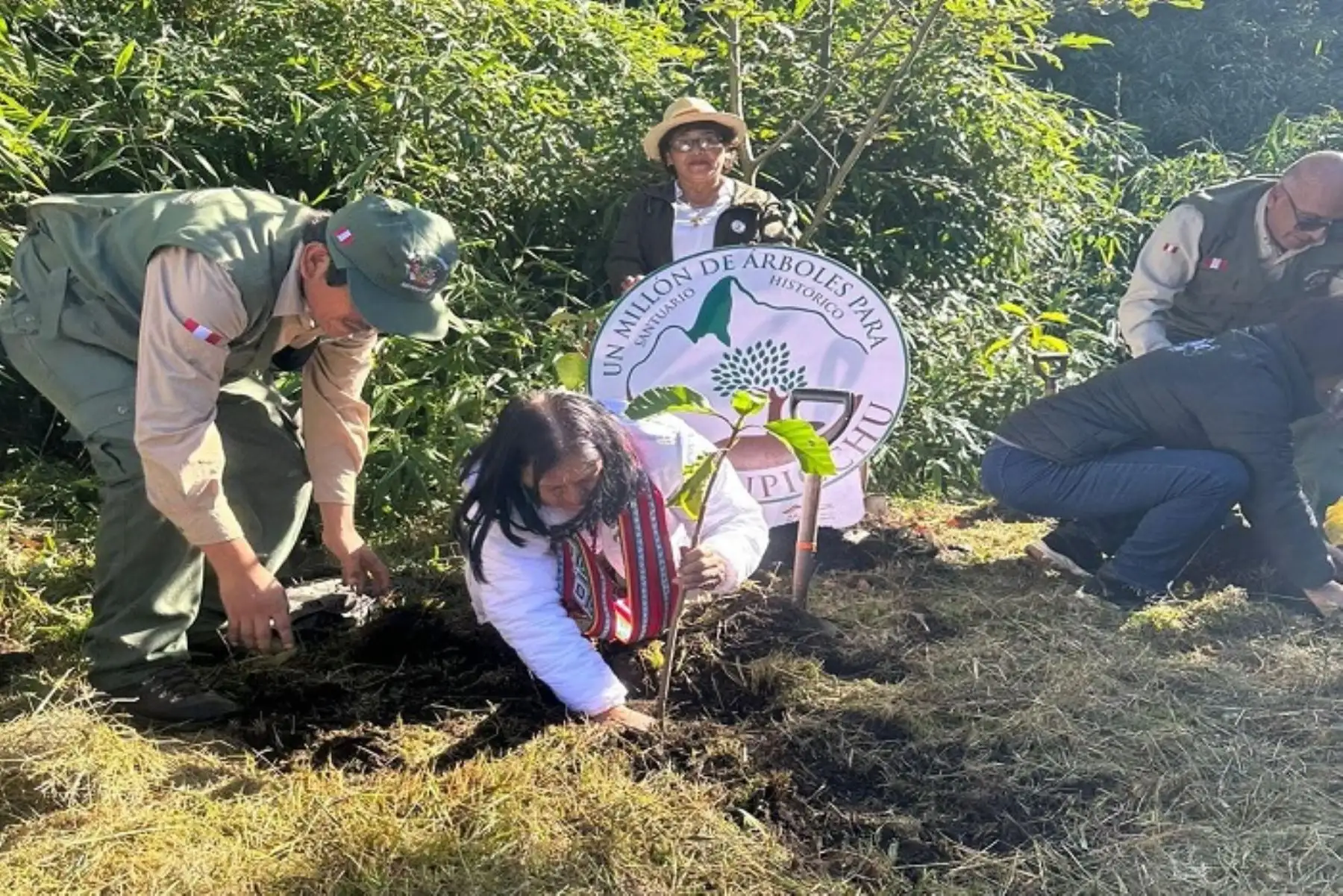
Native Species for Reforestation
The reforestation includes species such as alder, queuña, chachacomo, tara, and elderberry, selected for their ability to:
- Capture water and improve water regulation.
- Stabilize soils and prevent erosion.
- Restore habitats for local fauna.
- Contribute to climate change mitigation as carbon sinks.
The use of species native to the environment ensures the adaptation and permanence of the vegetation, maintaining the ecological characteristics of the protected area.
Strategy Open to Citizens
The Minam proposed the campaign as an open initiative, inviting communities, companies, and organizations to participate in planting and maintenance tasks. The goal is to expand the impact through the direct involvement of different sectors.
Sernanp leads the technical actions within the protected area, while Profonanpe contributes to resource management and partner coordination. The Regional Government of Cusco and local authorities participate in territorial articulation.
Cultural and Environmental Value of Machu Picchu
The Historic Sanctuary of Machu Picchu, globally recognized for its cultural and natural value, faces constant environmental pressures. The campaign seeks to reinforce its sustainability and ensure that this heritage is preserved for future generations.
The “One Million Trees” initiative represents a collective effort to restore degraded ecosystems and strengthen sustainability in one of Peru’s most emblematic spaces. The combination of native species, community participation, and institutional articulation makes this campaign a model of conservation and resilience against climate change.


