



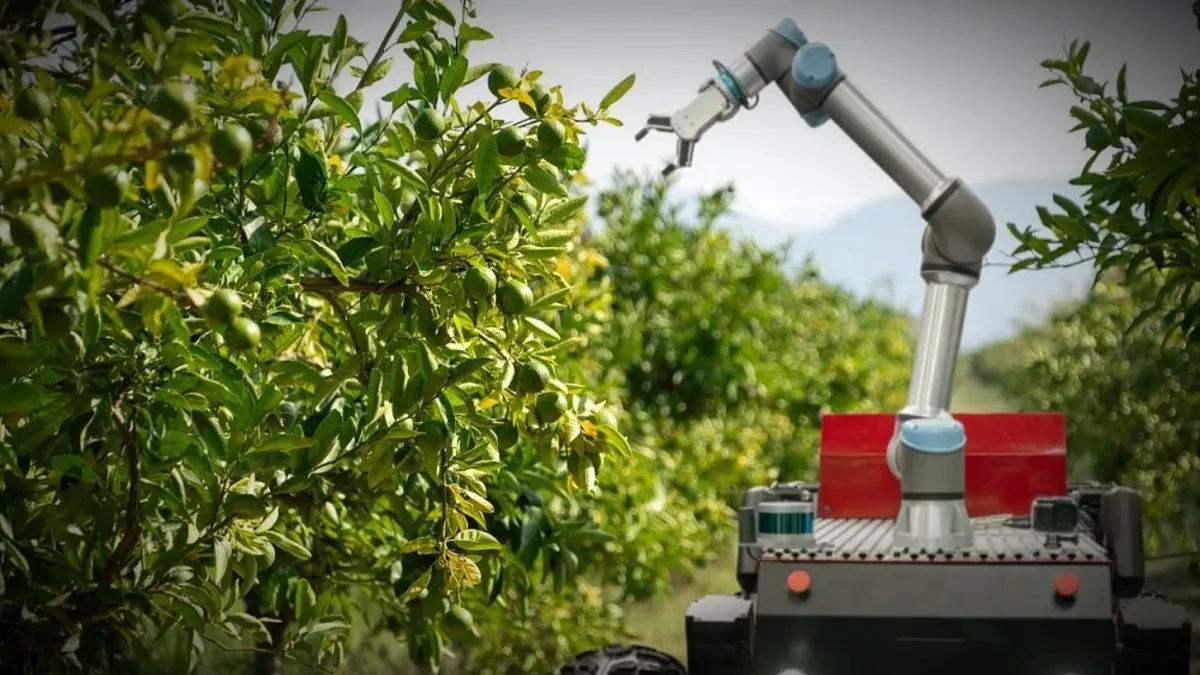
The CONICET scientist Pedro Bocca, from the Institute of Automation at the National University of San Juan, developed and patented an autonomous robot with artificial intelligence (AI) capable of detecting diseases in crops and applying the exact dose of pesticide.
The goal is to reduce annual agricultural losses caused by pests and diseases, optimizing the use of agrochemicals and decreasing environmental pollution.
Bocca explained that current systems spray massively, without distinguishing between healthy and diseased plants. His development, on the other hand, allows identifying the type of disease in real-time and precisely dosing the pesticide, achieving a 90% effectiveness in initial tests.
Functionality and Applications
After six years of work, the robot is ready for field tests mounted on a tractor. The technology allows mapping the terrain, detecting disease hotspots, and spraying in a localized manner, avoiding product waste. Currently, work is being done with a private company on its application in citrus fruits, although it can be adapted to all types of crops.
“With this tool, you can scan the field and spray at the same time, ensuring excellence processes and reducing atmospheric pollution,” Bocca noted.
Importance of Pest Control
Pest control in trees and crops is essential for:
- Protecting forest and urban health, preventing degradation and maintaining ecological balance.
- Preserving commercial value and agricultural productivity, as pests affect shoots and reduce the quality of wood and food.
- Ensuring safety in urban areas, preventing branch falls and the spread of diseases.
- Protecting biodiversity, reducing health and economic risks.
Integrated Pest Management (IPM) Methods
Bocca’s robot adds to the strategies of Integrated Pest Management (IPM), which combines cultural, biological, physical, and chemical methods to minimize damage:
- Cultural: selection of resistant species, sanitary pruning, environmental cleaning, and mulching.
- Biological: use of natural predators (ladybugs, lacewings), parasitoids, and bacteria like Bacillus thuringiensis.
- Physical and mechanical: adhesive traps, pheromones, trunk barriers, and manual removal.
- Chemical and organic: neem oil, potassium soap, and endotherapy (trunk injections).
- Constant monitoring: visual inspection and light traps to detect nocturnal pests.
Environmental and Social Impact
The innovation not only aims to improve agricultural productivity but also reduce the environmental impact of pesticides. By applying precise doses, air and soil contamination is avoided, protecting auxiliary fauna and ecosystems. Additionally, saving inputs represents an economic benefit for producers, who can optimize resources and increase profitability.
The autonomous robot developed by Pedro Bocca represents a unique technological advancement in the world, combining artificial intelligence with sustainable agricultural practices. Its application promises to save inputs, improve productivity, and reduce environmental impact, integrating into integrated pest management strategies.
This development demonstrates how Argentine science can provide innovative solutions to global problems, reinforcing the importance of uniting technology, sustainability, and scientific knowledge to face the challenges of modern agriculture.



