



The City of Buenos Aires was once surrounded by very different landscapes from the current ones. Before urban growth, the region combined Pampas grasslands, tala forests on the cliffs, and vegetation associated with the Paraná Delta, forming ecosystems rich in biodiversity.
However, less than two centuries of urbanization profoundly altered that natural balance. The expansion of buildings, avenues, and exotic plant species led to the disappearance of key environments for insects, birds, and small mammals.
Currently, biodiversity specialists warn that the loss of butterflies has become a visible sign of the ecological deterioration that affected Buenos Aires and its metropolitan area.

A city where several ecoregions coexisted
According to researchers and naturalists, the City of Buenos Aires is located at a point where different Argentine ecoregions converge. On one hand, there is the Pampas plain; additionally, there were ancient tala forests on the cliffs, and to the north, the influence of the Paraná Delta reached.
These environments allowed the development of a huge variety of native plants, naturally adapted to the region’s climate and soil. Thanks to this flora, butterflies, birds, pollinators, and other essential species thrived for the functioning of ecosystems.
However, much of these environments disappeared even before being recognized or valued. The logging of forests for firewood and the massive incorporation of exotic trees completely altered the original landscape.
At the same time, the urban imaginary also contributed to the problem. For decades, the idea that Buenos Aires was a bare plain without vegetation was established, making the biological richness that existed in the region invisible.
The butterfly effect and the loss of native plants
The disappearance of urban butterflies has become one of the most evident consequences of environmental degradation. According to specialists, these insects depend directly on native plants to reproduce and complete their life cycle.
In the past, numerous vacant lots preserved spontaneous vegetation native to the region. There, species used by butterflies to lay their eggs and feed their larvae grew.
With the advance of concrete and the replacement of native flora with imported ornamental species, these natural refuges progressively disappeared. As a result, many butterflies stopped being seen in Buenos Aires’ squares, gardens, and sidewalks.
Moreover, the predominance of exotic trees worsened the situation. Currently, most of the urban trees in Buenos Aires are composed of species from other continents, which provide less food and shelter for local fauna.
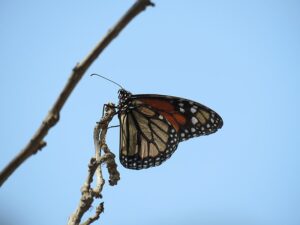
What factors led Buenos Aires to lose its butterflies?
Specialists agree that the loss of butterflies is due to multiple causes accumulated over decades. Among the main ones is the destruction of natural habitats due to urban growth and the reduction of biodiverse green spaces.
Additionally, the massive use of exotic plants altered the ecological relationships built over thousands of years between local flora and insects. Many butterflies can only reproduce in certain native plant species.
Another important factor was environmental fragmentation. The construction of avenues, neighborhoods, and large infrastructures isolated small green sectors, hindering the movement and survival of numerous species.
Furthermore, pollution, the use of pesticides, and the lack of biological corridors further reduced the possibilities of recovery. In response to this scenario, universities, nurseries, and environmental organizations are promoting projects to restore native vegetation in squares, sidewalks, and railway margins.
In parallel, interest in biodiverse gardens and urban biocorridors is growing. These initiatives aim to reconnect natural fragments within the City and once again favor the presence of butterflies, birds, and pollinators in Buenos Aires.



