



The ecological transformation has also reached the world of sports. In various countries, major stadiums have begun to incorporate sustainable technologies to reduce energy consumption, optimize resources, and reduce pollutant emissions. Thus, sports infrastructure has become a new stage for environmental innovation.
From Atlanta to Amsterdam, passing through Qatar and London, numerous venues are moving towards more efficient models. In addition to improving their daily operations, these initiatives aim to respond to a growing global demand for environmentally responsible constructions.
In turn, sustainable projects are no longer limited solely to architectural design. They currently include recycling systems, renewable energies, water reuse, and sustainable mobility plans that impact both inside and outside the stadiums.

Solar energy, recycling, and green roofs in the most innovative stadiums
One of the most notable cases is the Mercedes-Benz Stadium in Atlanta, in the United States. The venue achieved LEED Platinum certification thanks to its more than 4,000 solar panels, rainwater recovery systems, and advanced waste management.
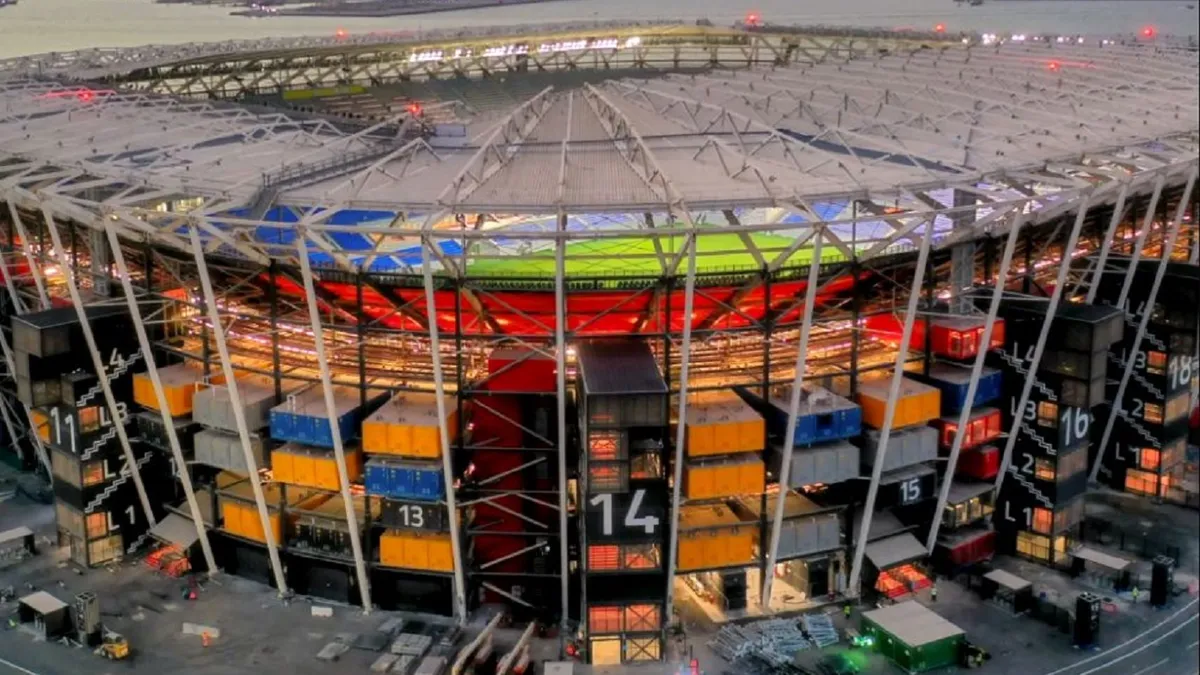
On the other hand, the 974 Stadium in Qatar revolutionized sports architecture by being built with 974 recycled shipping containers. This modular structure can be completely dismantled, reducing the use of materials and minimizing the environmental footprint.
Meanwhile, in the United Kingdom, the Forest Green Rovers has established itself as one of the most eco-friendly clubs on the planet. Its stadium operates on solar energy, uses rainwater, and maintains an organic field free of pesticides and chemical fertilizers.
In Santa Clara, United States, the Levi’s Stadium incorporated green roofs and more than 1,000 solar panels. Thanks to this, it manages to reduce energy consumption and reuse water resources during massive events.
Similarly, the Ajax stadium in Amsterdam is committed to clean heating powered by water from a nearby lake. This is complemented by thousands of solar panels and furniture made from renewable materials derived from sugarcane.
The environmental benefits of sustainable stadiums
The expansion of these projects generates multiple ecological and urban benefits. Firstly, they significantly reduce the carbon dioxide emissions associated with large sporting events and massive shows.
Additionally, the use of renewable energies decreases dependence on fossil fuels and reduces operational costs in the long term. Similarly, recycling and water reuse systems help to preserve natural resources in highly populated cities.
Moreover, these stadiums promote cultural changes among attendees. The promotion of public transportation, stations for electric vehicles, and the elimination of disposable plastics encourage more sustainable habits among millions of people.
Many of these constructions even serve as educational and urban models. Their success is beginning to influence new architectural developments, demonstrating that sports can also become a key ally in the face of the climate crisis.
International certifications set the new ecological standard
Environmental certifications play a central role in this transformation. Seals like LEED, TRUE Platinum, GSAS, and ISO 20121 validate the environmental commitment of the stadiums and ensure strict sustainability standards.
As a result, more and more cities and sports clubs seek to adapt their projects to these international standards. The trend reflects a profound change in the way of building and managing large infrastructures.
Thus, sustainable stadiums are beginning to establish themselves as symbols of a new era, where innovation, sports, and environmental care move in the same direction.



