



The MaRes Project, led by the Forum for the Conservation of the Patagonian Sea and Areas of Influence, concluded after three years of work in the Coastal and Marine Protected Areas of Chubut.
Its objective was to strengthen the resilience of these ecosystems against threats such as plastic pollution, combining research, management, governance, and awareness.
One of the most relevant components, coordinated by the ICB together with the Fundación Vida Silvestre Argentina (FVSA) and CONICET/CENPAT, focused on strategies to prevent and mitigate fishing-origin plastic waste.
The magnitude of the problem
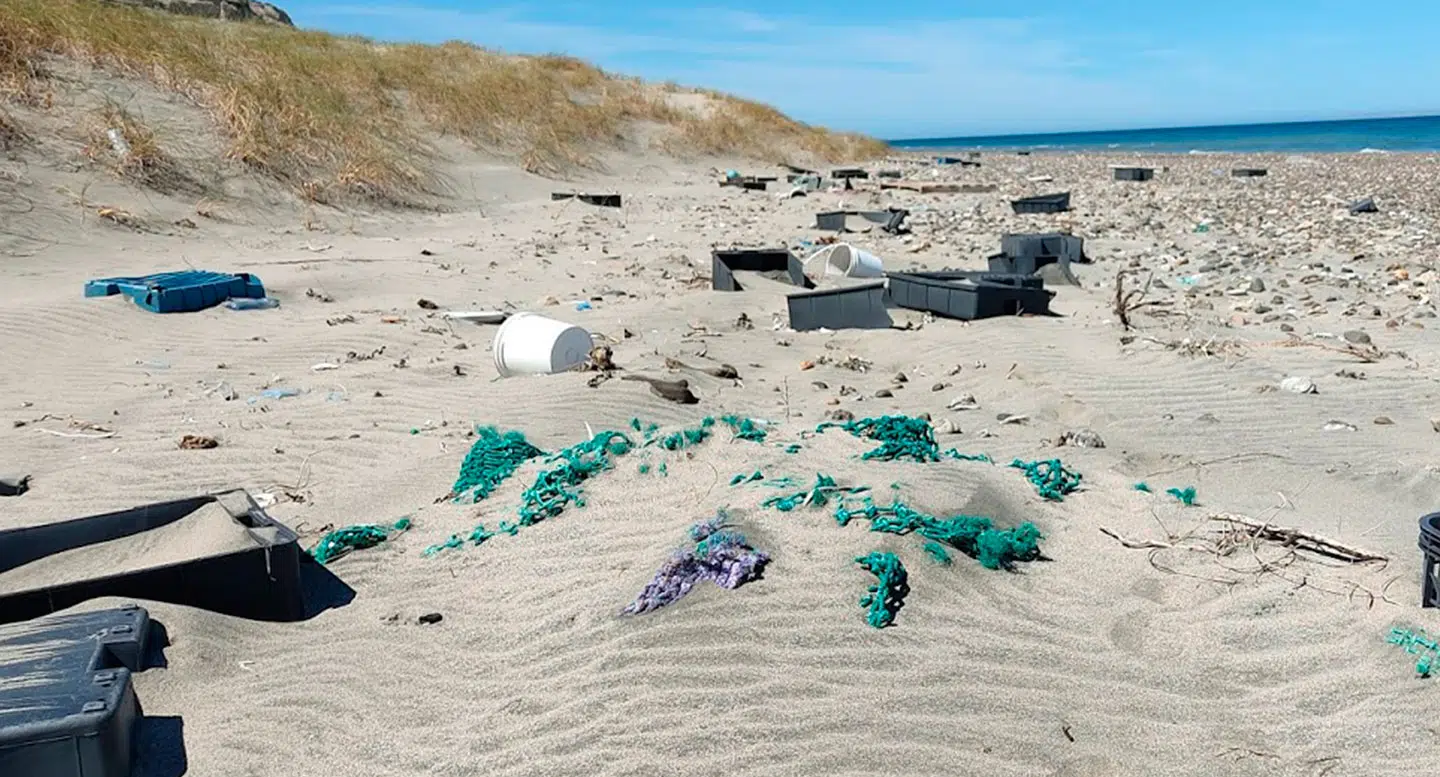
Globally, 80% of the plastics reaching the sea come from the continent. In Chubut, the proportion is reversed: more than 90% of the waste found in seven coastal cleanups comes from fishing activity. Among them are:
- Nets and ropes.
- Gloves and sulfite buckets.
- Fish crates, the main contaminant detected.
This phenomenon is directly linked to the growth of shrimp fishing, whose landings increased from 51.8% in 2013 (50 thousand tons) to 85% in 2024 (185 thousand tons).
Implemented strategies
The project was structured around five complementary axes:
- Aerial surveys: more than 1,329 km of coastline analyzed to identify critical waste accumulation areas.
- Oceanographic modeling and microplastics studies: key information to guide prevention actions.
- Inter-institutional cleanup operations: more than 20 tons of waste removed from sites like Playa Cormoranes, Isla Leones, and Caleta San Roque.
- Traceability and valorization: more than 95% of the plastics collected were fish crates, many reincorporated into recycling circuits.
- Cleaning Protocol in Protected Areas: presented to the provincial Technical Table for adoption and replication.
Work in ports and circular economy
In the Port of Rawson, a “Clean Point” was installed for differentiated waste reception and informative signage to promote good practices. These actions were coordinated with municipalities, local recyclers, and GIRSU systems.
The project also promoted the circular economy, with training sessions and alliances to valorize fishing plastics. Recommendations were worked on to:
- Improve waste management on board.
- Strengthen port reception and classification infrastructure.
- Advance in material traceability mechanisms.
Training and awareness
More than 350 people participated in workshops and training sessions aimed at the fishing sector, public agencies, and key stakeholders. Among them:
- Training at the National Fishing School.
- Workshops at the Port of Rawson.
- First meeting on good cleaning practices in Protected Natural Areas.
The work allowed identifying that awareness must be combined with concrete operational solutions to achieve sustained changes.
After three years, the MaRes Project leaves tangible results: scientific knowledge, infrastructure, pilot experiences, and inter-institutional agreements that strengthen Chubut’s capacity to face fishing-origin plastic pollution.
The challenge now is to sustain and scale these advances, integrating them into public policies and the daily operations of the fishing sector.



