



The city of Portland approved the total ban on the sale of foie gras, a measure that will take effect in seven months. With a narrow vote of 7 to 5 in the City Council, the initiative sets a key precedent in the defense of animals in the United States and consolidates years of work by activists and allied organizations.
Establishments that insist on marketing this product will receive severe economic sanctions, sending a clear message against one of the cruelest practices in the food industry.
What is foie gras and why is it banned?
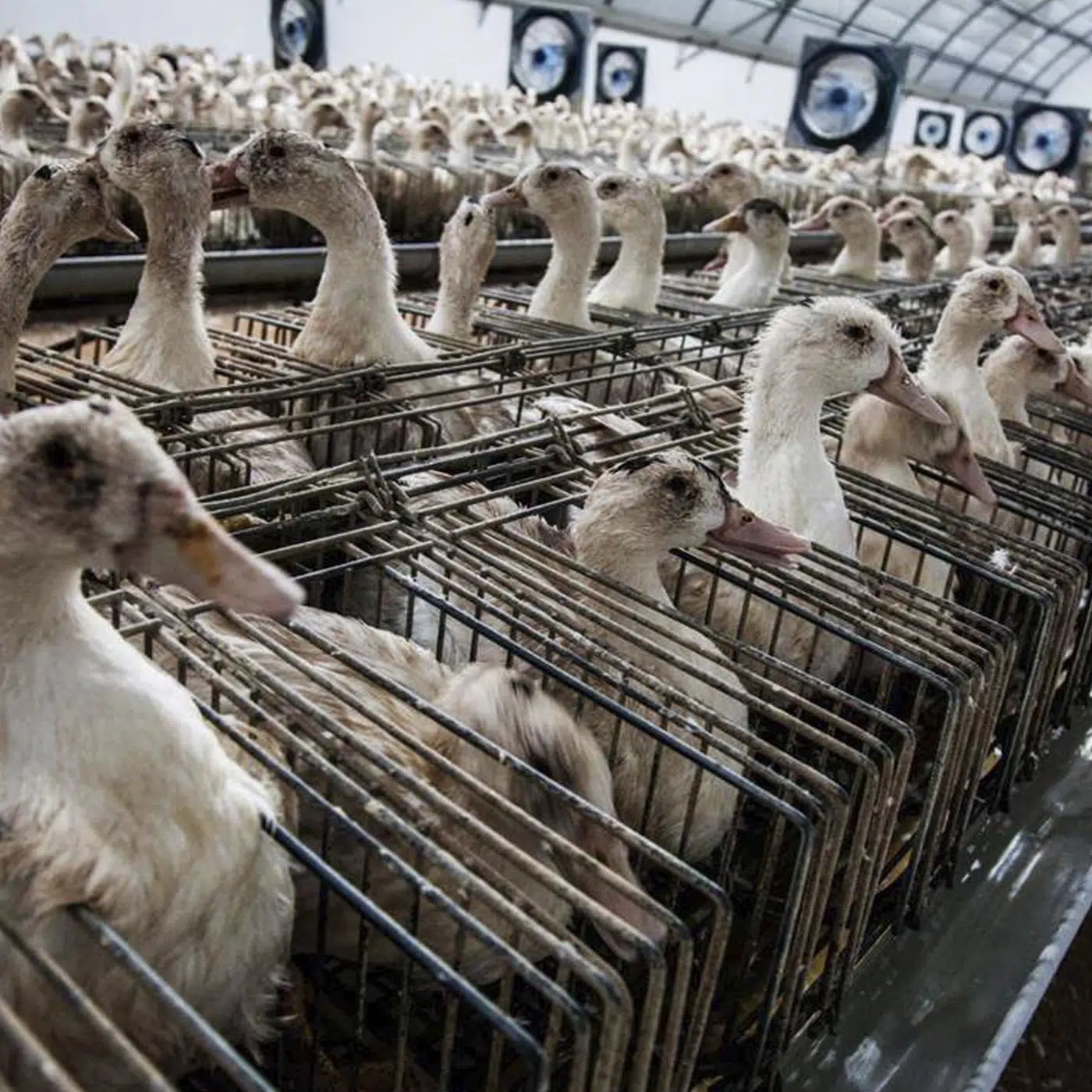
The production of foie gras depends on the forced feeding (gavage) of ducks and geese:
- Metal tubes are inserted into their throats to ingest large amounts of food.
- The goal is to induce hepatic steatosis, a disease that enlarges the liver up to nine times its normal size.
- The process causes esophageal injuries, breathing difficulties, and extreme suffering.
For these reasons, the scientific community, veterinarians, and animal rights advocates consider its production a form of systematic torture.
Campaign and social pressure
The triumph in Portland was the result of a phased advocacy strategy:
- 2021-2022: Animal Equality and Compassionate PDX launched citizen awareness campaigns.
- 2024: coalitions like Pro-Animal Oregon promoted candidates committed to the animal rights agenda.
- Final debate: organizations like Animal Policy Alliance, PETA, and DxE mobilized the community and presented key testimonies.
This process demonstrates how the combination of social pressure, political advocacy, and scientific support can defeat the commercial interests of industries that exploit animals.
Ethical and scientific arguments
The ban is based on three pillars:
- Animal cruelty: birds are subjected to severe physical pain and extreme stress.
- Global rejection: at least 18 countries have banned its production, including Germany, the United Kingdom, Italy, Austria, Switzerland, and Israel. In New York, its commercialization was also banned.
- Ethical alternatives: the ban encourages the creation of plant-based options like “faux gras,” made with mushrooms, cashews, or lentils, replicating the texture without animal suffering.
An international movement
Portland’s decision adds to global advances:
- In Latin America, Brazil banned foie gras.
- In the European Union, only five countries (Spain, France, Belgium, Bulgaria, and Hungary) maintain its production.
- In the United States, cities like New York have already ratified their ban.
The foie gras ban in Portland is more than a local measure: it is a symbol of the move towards ethical and cruelty-free food.
The resolution reflects a global trend that prioritizes animal welfare over economic gains and opens the door to innovative and sustainable gastronomic alternatives.


