



Desde 2015, más de 250 million people have been displaced by the climate crisis, according to reports from the Internal Displacement Monitoring Centre (IDMC) and the Migration Data Portal. This equates to about 70,000 movements daily on average.
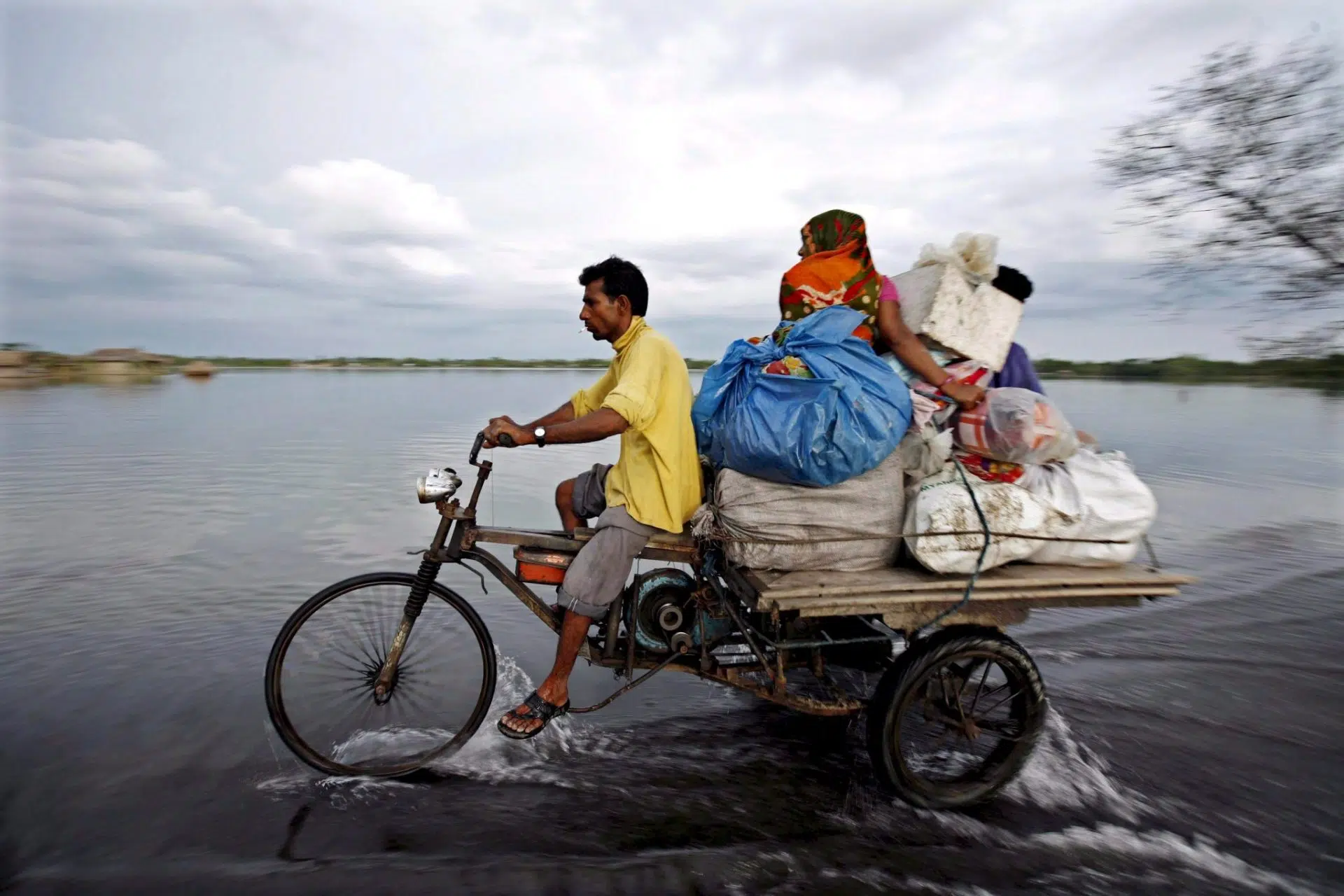
Forced migration due to climate change has established itself as a growing phenomenon, manifesting mainly within national borders, although it also generates cross-border flows when combined with poverty, conflicts, and institutional vulnerability.
In 2023, 26.4 million new displacements were recorded due to climate threats such as floods, storms, and fires, representing 56% of the total internal movements that year.
Recent Trends
- In 2024, displacements reached very high levels.
- In 2025, 29.9 million displacements due to natural disasters were recorded, within a total of 62.2 million internal movements.
- For the first time, displacements due to conflicts surpassed environmental ones.
- However, the number of people remaining in permanent displacement due to environmental disasters increased from 9.8 million in 2024 to 13.6 million in 2025.
Intersection between Climate and Violence
The UNHCR report “No Escape” warns that three out of four displaced persons live in countries highly impacted by climate change, and half of them in areas where environmental risks coincide with armed conflicts. Examples: Ethiopia, Haiti, Myanmar, Somalia, Sudan, and Syria.
Geographical Distribution
Asia: leads the statistics due to monsoons, floods, and storms in China, the Philippines, Bangladesh, India, and Turkey.
Sub-Saharan Africa: recurrent droughts in the Horn of Africa destroy livelihoods and exacerbate disputes over water and land.
America: hurricanes in the United States and the Caribbean, prolonged droughts in the Northern Triangle of Central America.
Small island states and Arctic communities: face existential threats from coastal erosion and rising sea levels.
Legal and Funding Gaps
International law still does not recognize the figure of “climate refugee”, although IOM and UNHCR agree that environmental degradation is a key driver of human mobility. Rural communities, indigenous peoples, women, and children in impoverished countries are the most affected, despite being the least responsible for greenhouse gas emissions.
Additionally, there is a severe funding gap: fragile states receive only 2 dollars per person in climate aid funds, compared to the 161 dollars allocated to countries considered stable.
Future Projections
- By 2050, climate change could displace at least 200 million people, with extreme scenarios exceeding 1 billion.
- By 2040, the number of countries exposed to severe climate risks will increase from 3 to 65.
- Refugee camps will have to endure double the number of days with temperatures dangerous to human health.
The climate crisis acts as a threat multiplier, intensifying vulnerability in poor regions and conflict zones.
Forced displacements due to environmental disasters already affect hundreds of millions of people, and projections show an even more critical future.
The lack of legal recognition and inequality in funding exacerbate the emergency, leaving millions unprotected.



