



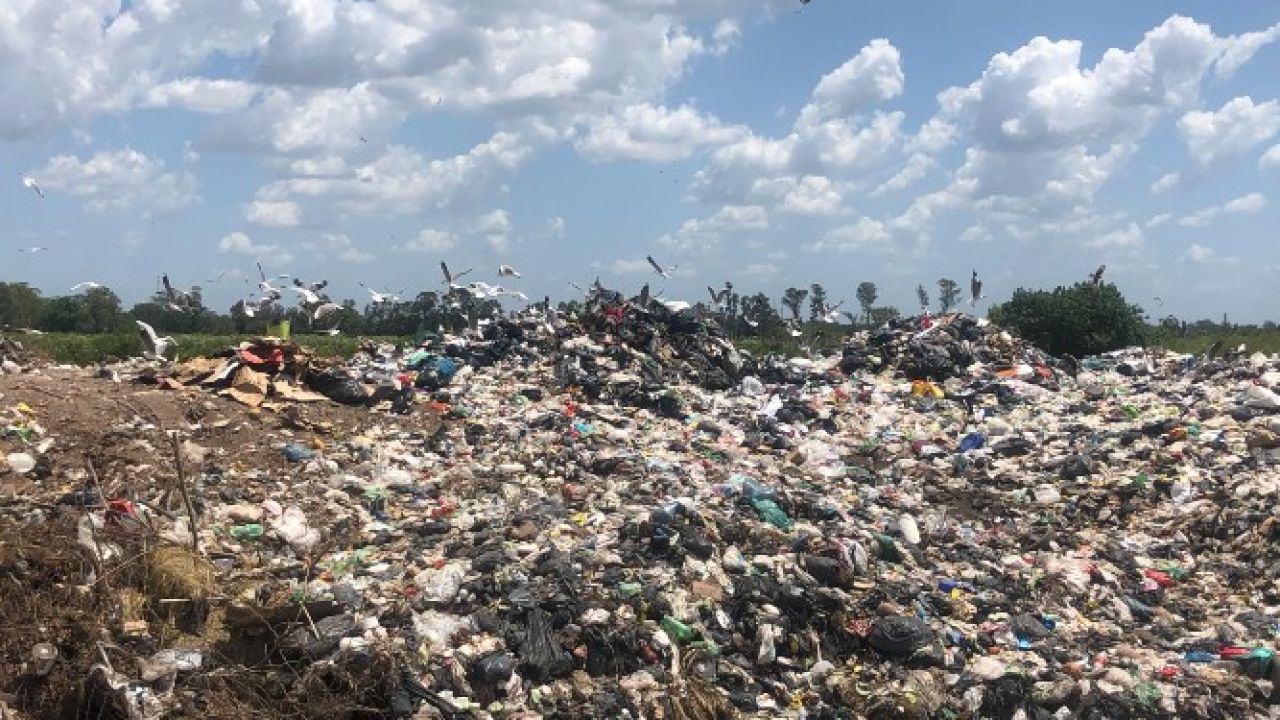
In July 2025, the municipality of Luján closed “La Quema,” considered the largest open-air dump in the country. The site, covering about 18 hectares, operated for more than half a century and accumulated waste mounds up to 20 meters high.
During its last years of activity, it received between 100 and 120 tons daily, equivalent to an annual volume of up to 44,000 tons. This level of accumulation made it one of the main environmental challenges in the province of Buenos Aires.
The environmental liability
Although the site stopped receiving waste, millions of tons of decomposing waste remain beneath the surface, which will continue to generate:
- Biogas (methane), a potent greenhouse gas.
- Leachates, toxic liquids that can seep into soils and aquifers if adequate control systems are not in place.
Therefore, specialists warn that closure works, gas capture systems, leachate management, and permanent monitoring will be necessary. The transfer of waste to CEAMSE resolved the immediate disposal, but it does not eliminate the need to recover the land.
Impact on health and the environment
Open-air dumps cause severe socio-environmental crises:
- Soil and water contamination due to leachate infiltration.
- Greenhouse gas emissions, accelerating climate change.
- Infectious hotspots that promote diseases transmitted by pests.
- Constant burning that deteriorates air quality and causes respiratory and neurological conditions.
- Social emergency, as many families work in conditions of extreme vulnerability, without protection or hygiene.
Provincial situation
The province of Buenos Aires generates about 40% of the country’s waste (around 20,400 tons daily) and still has at least 77 uncontrolled sites.
These sites directly affect the soil, air, and water, and represent a structural challenge for waste management.
Emblematic cases and progress
- Closure of Luján: “La Quema” ceased operations and began a definitive remediation process, along with a transition for informal workers.
- Remediation in the interior: municipalities such as Navarro, Salto, Benito Juárez, 25 de Mayo, and Pehuajó have advanced in site closures and the construction of controlled sanitary cells.
A sustainable future
The future of La Quema will depend on a sustained technical plan that includes:
- Periodic controls over soil, water, and emissions.
- Stable financing and defined responsibilities.
- Policies for waste reduction, recycling, and valorization.
The experience of Luján can serve as a reference for other municipalities still using uncontrolled disposal sites. The closure of the historic dump represents an important step towards a more sustainable management model, although environmental recovery will only be possible through works, continuous monitoring, and comprehensive public policies.



