



Giraffes are the tallest land animals in the world, but also the most threatened, as they face a serious crisis. Over the past years, this species has suffered an alarming decrease in their populations, caused by habitat loss, poaching, urbanization, and droughts provoked by climate change, leading the U.S. Fish and Wildlife Service to propose their inclusion in the list of threatened or endangered species.
As a result of this situation, giraffes, for the first time, would be under federal protection under the Endangered Species Act, marking an important step for the conservation of these species. According to this law, a species declared “endangered” faces an imminent risk of extinction, while “threatened” species are those that could be in danger in the near future.
Because of this, Martha Williams, director of the Fish and Wildlife Service, explained that federal protections would help preserve giraffes, promoting biodiversity and supporting ecosystem health. Furthermore, this protection would also help combat illegal wildlife trafficking and promote sustainable economic practices. “This action supports giraffe conservation and ensures that the United States does not contribute to their decline,” she added.
On the other hand, the Fish and Wildlife Service proposes to include three subspecies of northern giraffe on the endangered species list, whose populations have decreased by 77% since 1985. Similarly, reticulated and Masai giraffes from East Africa are proposed to be classified as threatened species.
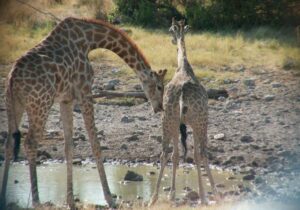 Giraffes could be included in the endangered species list.[/caption>
Giraffes, victims of the illegal animal market
Recently, the United States has become a key market for giraffe parts and derivative products, importing nearly 40,000 specimens over the last decade. For this reason, several American hunters have traveled to Africa to kill giraffes and take their parts as trophies.
Moreover, the increasing frequency of droughts in Africa has also severely affected giraffe populations, harming their survival and the living conditions of local communities.
If the regulation is approved, it would reduce illegal hunting and trade of giraffes, requiring permits to import parts of their bodies into the U.S. Additionally, funds for research and conservation of the species would be increased.
Since 2017, environmental groups have urged federal authorities to implement protections for giraffes. For this reason, the agency will receive public comments on the proposal until February 19, 2025, and expects to make a final decision within a year.
Do you already know our YouTube channel? Subscribe!



