



In the province of Entre Ríos, Argentina, the discovery and rescue of a puma yaguarundí cub, also known as a “gato moro” (moor cat), was recorded.
It was found on the roadside of National Route 18, near the city of Villaguay.
This event highlights the need to raise awareness about the conservation of native species and the risks they face due to human activity.
What is the puma yaguarundí like?
The puma yaguarundí (Herpailurus yagouaroundi) is a wild feline that inhabits from the south of United States to the north of Río Negro province, in Argentina.
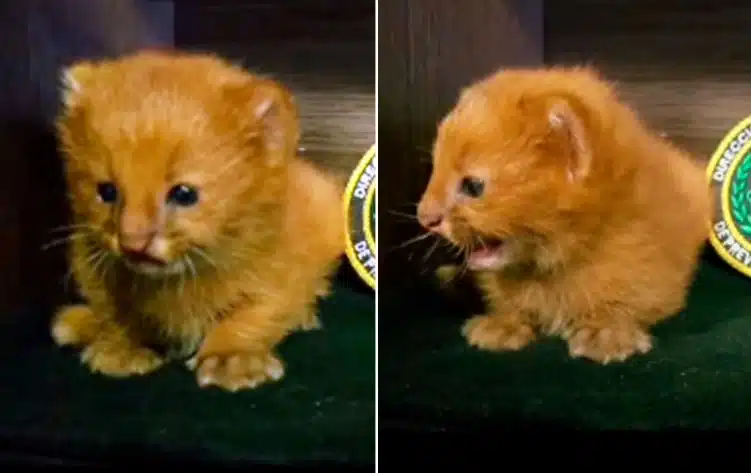 A puma yaguarundí cub was rescued in Entre Ríos. (Photo: El Once).
In Entre Ríos, it is one of the four species of wild felines present. It is characterized by its medium size, with a length of up to 80 cm plus 50 cm of tail, and its fur that can vary between black, dark gray (moor), and reddish.
Although not critically endangered, it faces threats such as habitat loss, road accidents, and poaching.
The yaguarundí plays a crucial role in ecosystems by controlling populations of rodents, birds, and small mammals. Its presence indicates a healthy and balanced environment, according to specialists.
However, its survival is compromised by urban expansion, habitat fragmentation, and lack of information about its biology and behavior.
What to do when sighting
 What the puma yaguarundí looks like. (Photo: Wikipedia).
When encountering a puma yaguarundí or any other wild feline in rural areas or near roads, it is recommended to:
-
Not approach or try to touch the animal, as it may feel threatened and react defensively.
-
Avoid direct eye contact and maintain a safe distance.
-
Observe its behavior from a safe place and record the location to inform the relevant authorities.
-
Do not feed the animal, as this can alter its natural diet and habitat dependency.
If you find an injured or at-risk specimen, contact local authorities or wildlife conservation organizations for rescue and rehabilitation.
In this sense, it is essential to promote environmental education and collaboration among the community, authorities, and conservation organizations to ensure the survival of these felines and ecosystem balance.



