



An ambitious wildlife survey managed to document the status of over 40 species of mammals in the Argentine Chaco region.
This was done using camera traps, a key tool for monitoring biodiversity without altering the animals’ behavior.
The project, led by the Patagonia Program of the Institute of Austral Diversity and Evolution (IDEAus–CONICET) in collaboration with Aves Argentinas, was carried out between 2022 and 2023 in four protected areas. It included El Impenetrable National Park, Copo National Park, Chaco National Park, and Loro Hablador Provincial Park.
Unprecedented Monitoring in the Argentine Chaco
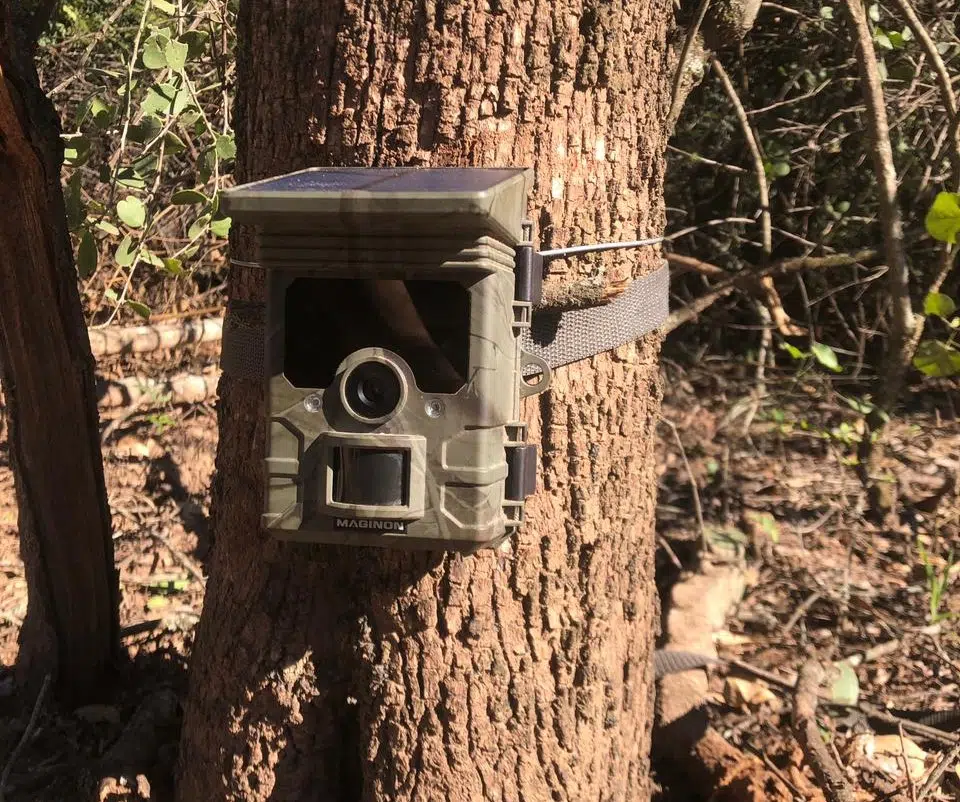 Camera traps in the Chaco region. (Photo: APN).
This is the most extensive and systematic camera trap survey to date in this ecoregion. 126 camera traps were installed at strategic points, capturing thousands of images that were analyzed to identify species, behaviors, and activity patterns.
The main objective was to update information on the mammals inhabiting the Chaco region, one of the areas most threatened by the advance of agriculture, habitat loss, and climate change.
The information obtained will help improve conservation strategies and management of these protected areas.
Iconic Species and Conservation Data
The survey confirmed the presence of highly valuable species for conservation such as the giant anteater, tapir, peccary, jaguar, ocelot, puma, bush dog, and maned wolf, among others.
Common species such as the armadillo, foxes, coatis, and pampas deer were also identified.
In addition to individual identifications, the camera traps recorded societal behaviors, feeding habits, and nocturnal movements, providing a more complete picture of the state of the Chaco ecosystems.
Science, Conservation, and Technology
This work represents a key advancement for science and conservation of biodiversity in Argentina. Camera traps provide reliable and long-term data, essential for identifying threats, assessing populations, and prioritizing protection actions.
The results of this study not only enrich the scientific foundations of conservation but also generate educational and awareness content for society at large, bringing the natural richness of the Chaco to a broader audience.
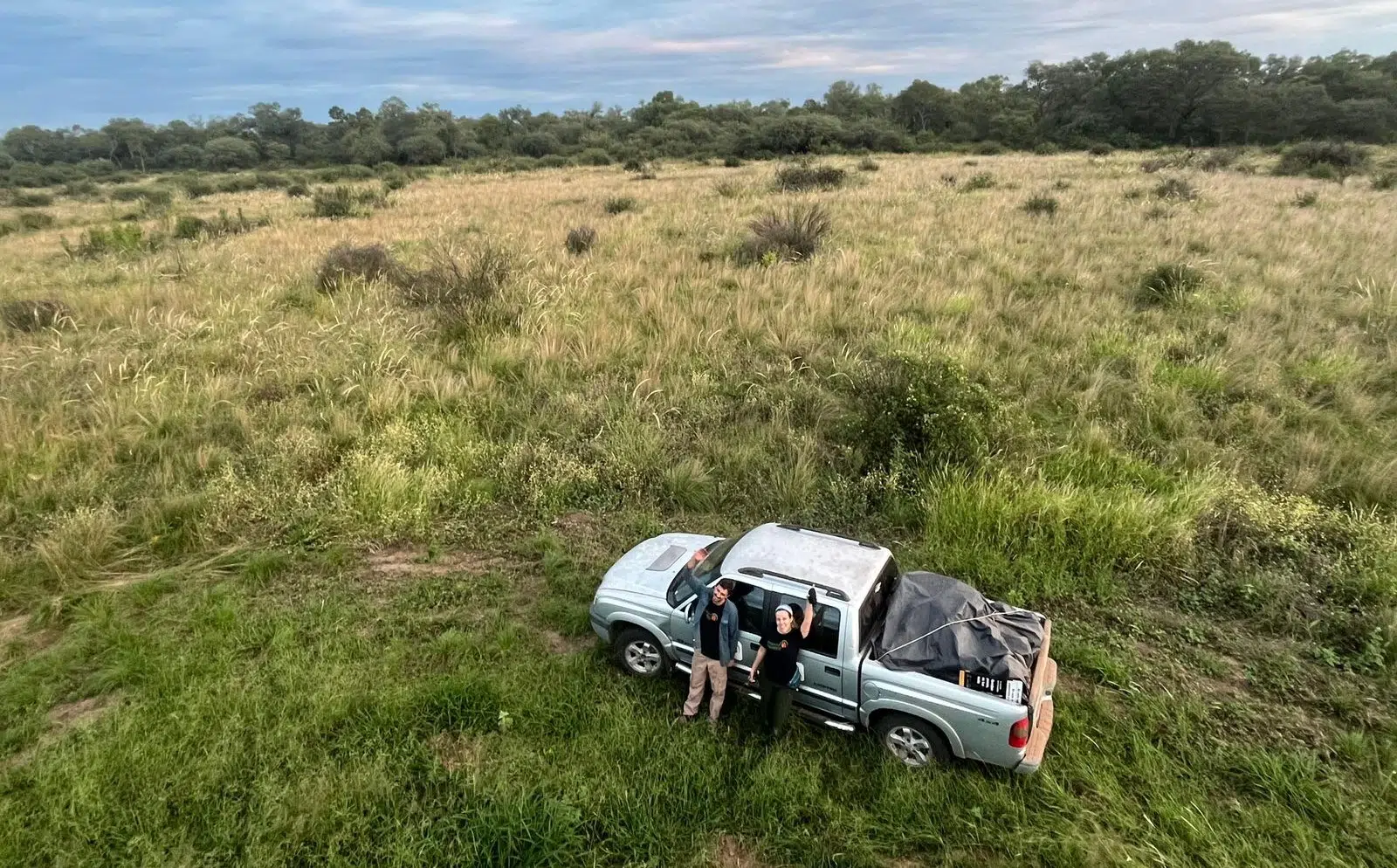 The operation in the Chaco region.
The project had the collaboration of the National Parks Administration, the Ministry of Environment and Sustainable Development, and the active participation of local communities, technical staff, and park rangers.
It also included training in camera trap monitoring techniques, strengthening local capacities for conservation.



