



Personnel from the Argentine National Gendarmerie (GNA) rescued a newborn deer in an operation carried out near the location of Corralito, close to the town of Pirané, in the province of Formosa.
They were being transported illegally in a backpack, without ventilation, aboard a long-distance bus coming from the provincial capital.
The discovery was made by the personnel of the “Pirané” Fixed Patrol, which operates under the 5th Squadron, at kilometer 1282 of National Route No. 81.
Newborn deer rescued from wildlife trafficking: how they were being transported
Upon inspecting the backpack, they found a small brown deer (also known as a brocket deer), visibly stressed and without access to food, water, or proper ventilation.
They provided care and assistance with professionals from the Delegation of Flora and Fauna of Misiones, who transferred it for veterinary care. The Directorate of Environmental Defense confirmed that it is a species protected by the National Law on Wildlife Conservation.
The intervention took place on Tuesday night, while the officers were conducting saturation controls in line with the directives of the National Ministry of Security. The focus was on the preservation of native wildlife and natural resources.
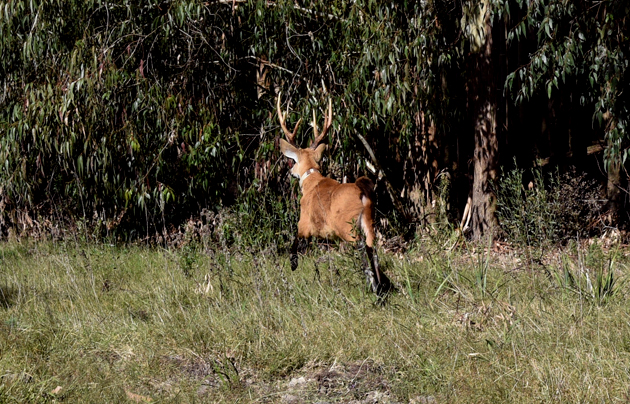 They were transporting a marsh deer on a bus.
During the inspection of the public passenger transport, the gendarmes detected unusual movements in the ultimately inspected backpack, which belonged to an adult woman.
Due to suspicion, they checked the hand luggage and found inside a live specimen of a marsh deer just a few days old. The animal, a species protected by national regulations, was being transported without authorization, in direct violation of the provisions of the Law 22,421 on Wildlife Conservation.
These types of crimes against wildlife are frequent in the Argentine Litoral region, where illegal animal trafficking networks still persist. Environmental authorities urge the population to report any suspicious activity that threatens biodiversity.
Wildlife trafficking: key facts to understand the issue
Wildlife trafficking generates between 15 and 20 billion dollars annually, making it the fourth largest illegal trade in the world.
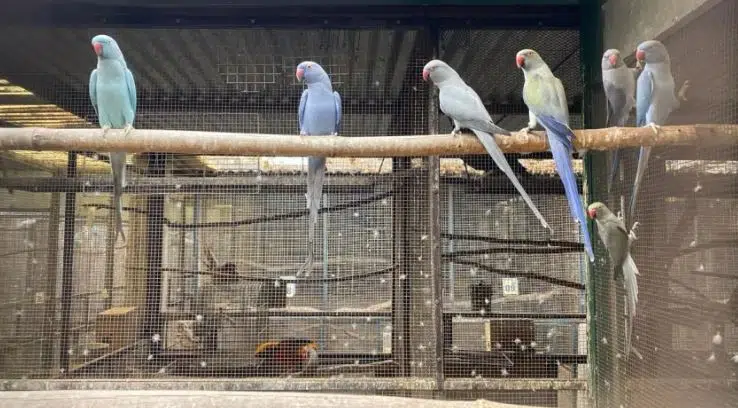 Wildlife trafficking in Argentina.
More than 100 species of birds, 20 reptiles, and 15 mammals in Argentina are impacted by this trafficking, with around 20 species in threat categories.
- Birds: cardinal, red-crested cardinal, toucan, and talking parrot.
- Reptiles: land, river, and pond turtles.
- Mammals: monkeys, felines, and deer.
- Exotic Species: Bengal tigers, eland antelopes, African ostriches, Fiji iguanas, Lear macaws, and cobras.
Trafficking is concentrated in regions with high biodiversity, and captured specimens are transported to large cities with high demand for birds, reptiles, and mammals as pets.
Wildlife trade is regulated and not prohibited. There are authorized facilities for breeding wildlife, controlled by environmental agencies. However, certain species are prohibited from commercial trade and transit.



