



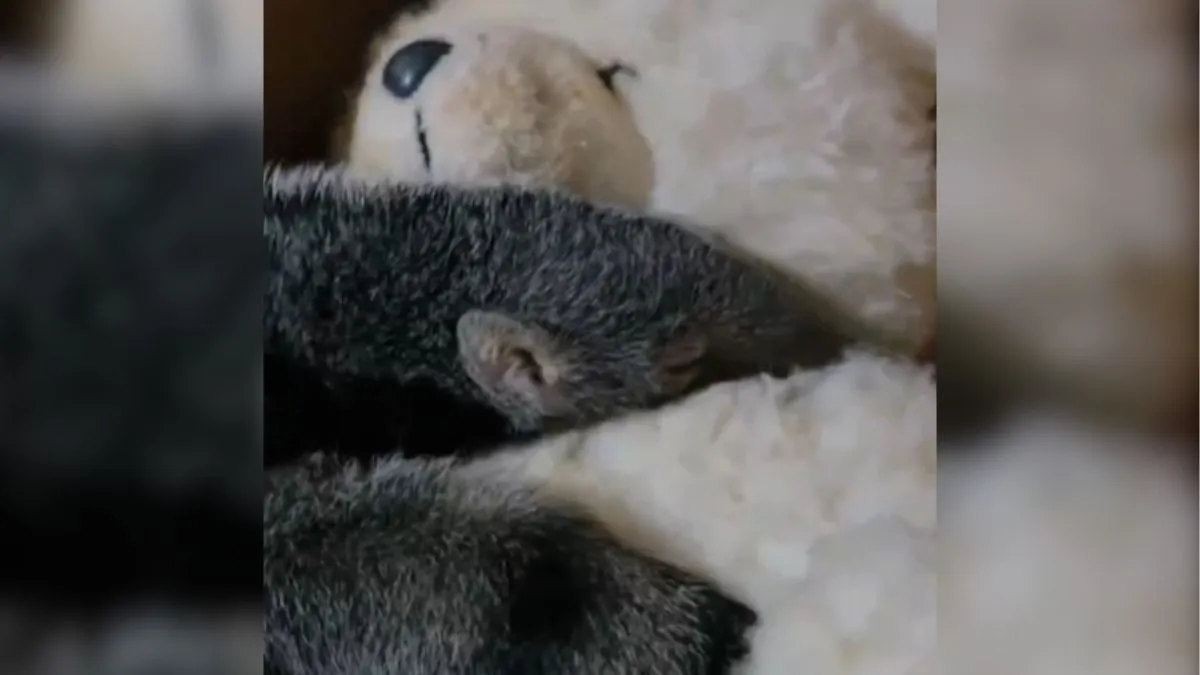
A baby anteater was orphaned in the town of Ledesma, Jujuy, and was rescued by the wildlife team of the Ministry of Environment and Climate Change. The young specimen, unable to survive on its own, was assisted by professionals who resorted to a resource as simple as it is effective: a teddy bear.
The teddy bear serves the function of partially replacing the mother’s body. The baby clings to it, sleeps accompanied, and feels protected while receiving veterinary care. This method helps reduce stress and increase the chances of recovery.
The rehabilitation process
The anteater will undergo a process of sanitary quarantine and controlled growth. Once it reaches the appropriate age and size, it will be reintroduced into its natural habitat, in a program scheduled to take place in the province of Corrientes.
The video released by the Ministry explains that the animal must go through a professional reintroduction program, which includes:
- Initial clinical evaluation.
- Complete sanitary quarantine.
- Training to recover natural behaviors.
- Transfer to a suitable protected area.
The role of the public
The state agency, which works in conjunction with the Rewilding Argentina Foundation, reminds that if wildlife is found, the public should not touch the animal.
It is recommended to immediately contact the wildlife team via WhatsApp at the number 3886080263, so that professionals can assess the situation and define the rescue procedure.
The anteater as an “ecosystem engineer”
The giant anteater (yurumí) is classified as vulnerable and performs essential ecological functions:
- Pest control: each specimen consumes thousands of ants and termites a day, acting as a natural pesticide.
- Soil health: by digging with its claws, it mixes nutrients and aerates the soil, promoting plant growth.
- Seed dispersal: by ingesting wild fruits and moving around, it contributes to plant regeneration.
- Environmental indicator: its presence reflects the health of ecosystems, such as grasslands and wetlands.
Threats and legal protection
The main threats to the anteater in Argentina are:
- Habitat loss due to agricultural expansion.
- Road accidents.
- Attacks by domestic dogs.
- Poaching and popular myths that consider it dangerous.
In Argentina, the species is protected by the National Law 22.421 and recovery projects like the Esteros del Iberá in Corrientes, where specimens have been successfully reintroduced.
The story of the baby anteater from Jujuy is an example of how science and empathy combine to save vulnerable species.
The use of a teddy bear as a maternal substitute shows that small gestures can make a difference in an animal’s survival.
Protecting the yurumí means preserving the health of ecosystems and ensuring that forests and wetlands continue to be refuges of biodiversity.


