



They propose a sanctuary for capybaras, a highly questionable idea, following the successful and widely publicized transfer of the elephant Kenya to the Global Elephant Sanctuary in Brazil.
The Secretary of Tourism, Environment, and Sports of the Nation, Daniel Scioli, has brought to the forefront a new and ambitious proposal: addressing the growing overpopulation of capybaras in the northern area of Greater Buenos Aires.
The plan, promoted by Scioli along with the Undersecretary of Environment, Fernando Brom, seeks the mass relocation of these rodents to a more suitable habitat within the Delta, generating expectations and, at the same time, a renewed discussion about the coexistence between wildlife and urbanization.
For years, the relationship between capybaras and homeowners in the exclusive gated communities of the region has been generally tense and complex.
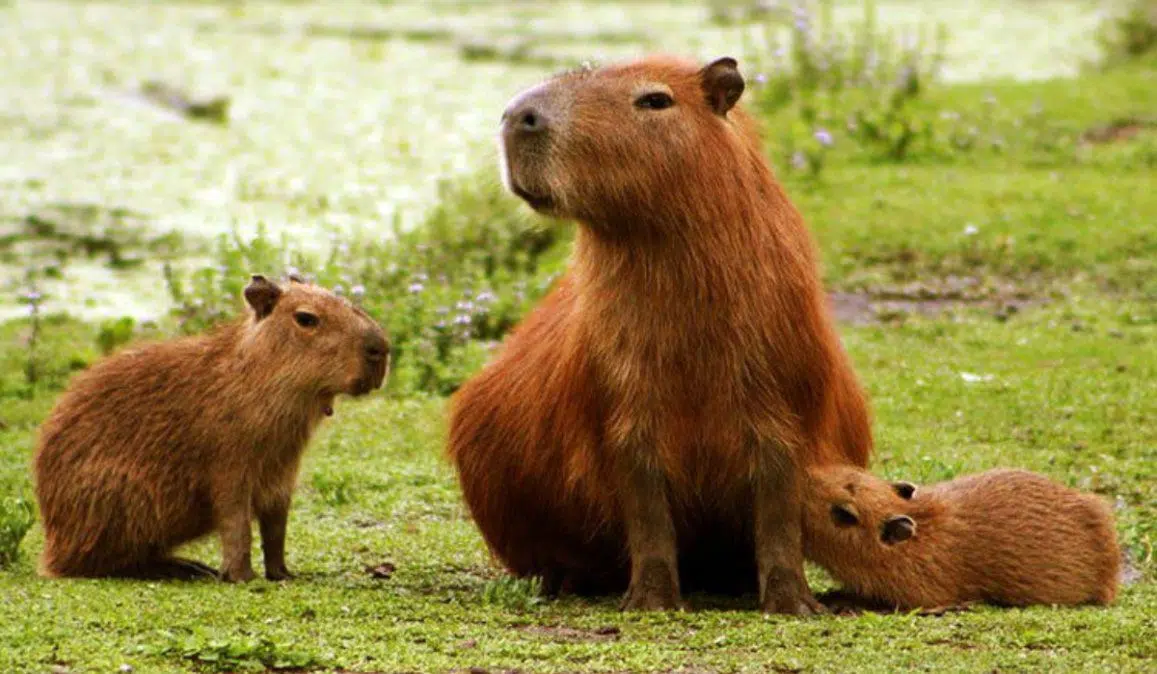
The current scenario is notably divided: on one side, there are those residents who feel a deep sympathy for these unique rodents and enjoy their presence, advocating for harmonious coexistence.
On the other hand, there is a considerable group of neighbors who openly reject them. This discussion context is marked by recurring complaints, where homeowners point out that capybaras injure their pets, destroy their gardens and plants, and there have even been reports of traffic accidents on the internal streets of the residential complexes.
A “Relocation Program”
In a recent statement, Daniel Scioli outlined the pillars of the governmental proposal: “Our idea is to launch a relocation program.
We want to take the capybaras to a place where they can abundantly feed on grass, relocate them to an island, which ideally can be in San Fernando or Tigre, and function as a kind of sanctuary”.
The choice of these areas in the Delta seeks to take advantage of the natural geography and provide a space that simulates a suitable habitat for the development of these animals.
“We understand that the measure does not respond to a species conservation situation, given that capybaras are not in a critical conservation state, and they have a broad distribution in the territory,” stated Sebastián Fermani, Conservation Director of Wildlife Foundation, for Environmental News.
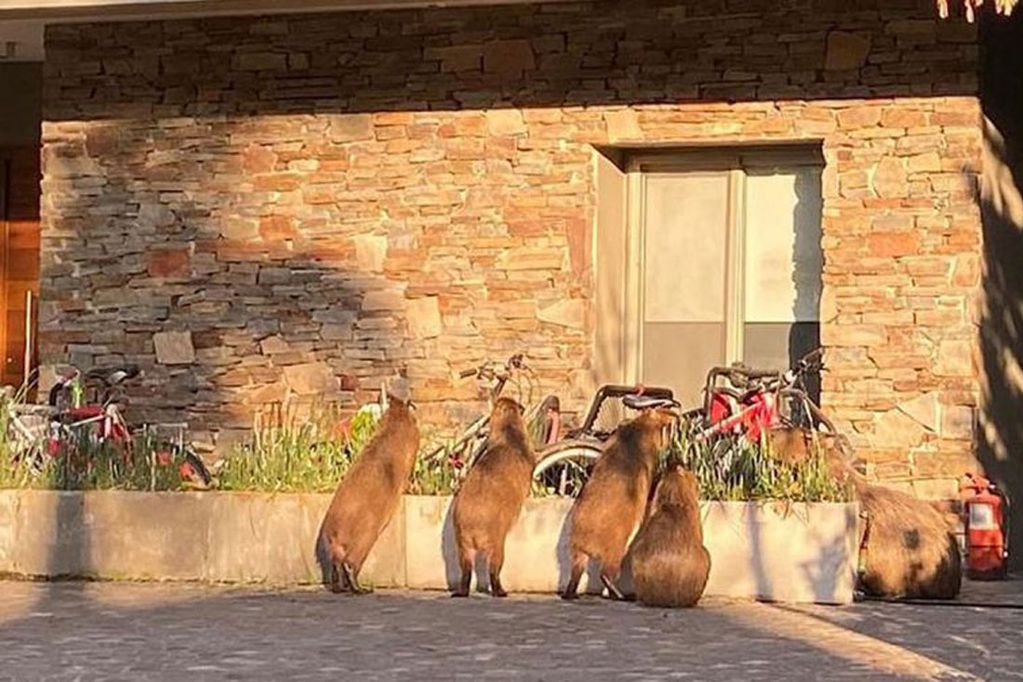
The issue of the presence of capybaras is not limited only to Nordelta, but it has expanded and become increasingly noticeable in other areas of northern Greater Buenos Aires.
Examples of this are the coast of the Río de la Plata, the banks of the Río Luján, and the yacht clubs of San Isidro, San Fernando, and Olivos.
According to unofficial data managed by authorities, it is estimated that more than 3000 capybaras currently inhabit these areas, and what is more concerning, they reproduce at an alarming rate, exacerbating the conflict.
At the center of the controversy, Nordelta, veterinarian Adrián Petta has documented and treated numerous cases directly related to living with these animals.
His records range from traffic accidents involving capybaras on internal streets, to episodes of serious bites and attacks on pets, data that were corroborated and mentioned by the Secretary of Tourism, Environment, and Sports.
The massive “intrusion” of capybaras in the national media agenda occurred in the midst of the pandemic, a period in which, due to lower human activity, these animals began to expand their presence and be more frequently noticed in the vicinity of houses located in the private neighborhoods of the locality.
This situation led Marcelo Canton, from the Nordelta Neighborhood Association (AVN), to detail the magnitude of the problem some time ago: “The population doubled in the last 12 months and it is expected to double again for the next year”, indicating the demographic explosion of the species in the area.
Involving the Community
One of the most striking aspects of Scioli’s proposal is the intention to actively involve the community in this relocation process.
“We are thinking that people familiar with this species can monitor them, see that they will be transferred to a better place, and can visit them.
This process will be done in agreement with the families,” added Scioli, suggesting a kind of “tourism” in the future capybara sanctuary.
This initiative aims to calm the anxieties of those opposed to drastic measures against the animals and ensure the transparency of the process.
Can the transfer of an elephant to a sanctuary be compared to more than 3000 capybaras?
The Secretary of Tourism, Environment, and Sports cited the successful transfer of the elephant Kenya, a complex operation that took her 3,600 kilometers from the Ecoparque de Mendoza to Brazil, as a replicable precedent.
Scioli hopes to emulate that success in the case of the capybaras, establishing a wildlife management model in urbanized areas.
“Their population dynamics generate a permanent movement, both in water and on land. From the Foundation, we recommend consolidating coexistence strategies with the species, seeking to strengthen an environmental planning of the territory to avoid similar situations in the future,” added Sebastián Fermani for Environmental News.
The initiative, as mentioned by the agency under the Vicechief of the Interior, pursues a dual objective: not only to preserve local wildlife and ensure their well-being, but also to reduce latent conflicts between humans and animals in areas that, paradoxically, were built on former wetlands, natural habitat of capybaras.
The proposal opens a new chapter in the challenge of finding a sustainable balance in urban growth.



