



A honey bear and another 34 specimens of wildlife regained their freedom in the north of the department of Punilla, Córdoba. The initiative was led by the technical team of Environmental Police, under the Ministry of Environment and Circular Economy.
The action became a new step to combat illegal trafficking, one of the main threats to biodiversity. The honey bear had been found in November in Villa Quilino, after a neighbor reported finding it in her yard.
After the rescue, the animal was transferred to the Tatú Carreta center, where it underwent a comprehensive rehabilitation period. With veterinary clearance, specialists evaluated the reintroduction area and confirmed that it met the conditions to ensure its survival.
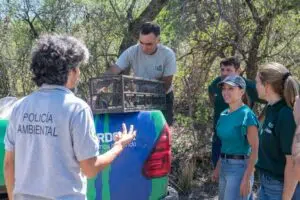
The return of 34 wild animals to their natural environment
Along with the honey bear, 34 rescued species were released in control operations. Among them were a wildcat and a large group of native birds. The birds included reinamoras, forest kings, small seed eaters, black-headed grosbeaks, and golden-billed saltators.
All the specimens had completed the mandatory sanitary quarantine. The reinsertion was carried out with the presence of environmental authorities and technical teams from MAyEC and Tatú Carreta. The operation also aimed to reinforce the message about the importance of reporting risk situations for the local fauna.
A key species for ecosystem balance
The honey bear, also known as tamandua, plays a fundamental role in the natural control of insects. Its presence contributes to the health of native forests and the balance of food chains. It is a species with solitary habits that depends on healthy and connected environments to survive.
In the country, the honey bear faces pressures from habitat loss, fires, and roadkill. Added to this is illegal extraction, which especially affects young specimens. Although it is not classified as a critically endangered species, its conservation requires sustained actions and permanent monitoring.
The rescue of animals that are disoriented, injured, or illegally retained is crucial for their recovery. Rehabilitation centers provide the necessary veterinary care for their reinsertion. These institutions function as the first line of defense against environmental crimes.

What laws protect wildlife in Argentina
The National Wildlife Conservation Law establishes the protection of wild animals. It prohibits the unauthorized hunting, capture, transport, and commercialization of native species. It is the legal basis that allows the sanctioning of illegal trafficking throughout the national territory.
Each province has its own regulations that reinforce controls. In Córdoba, the Environmental Police coordinates operations, transfers, and releases. This allows for quick action in response to reports from residents or risk situations.
Wildlife trafficking as a direct environmental threat
The trafficking of animals is one of the main causes of biodiversity loss. It removes reproductive individuals from their ecosystems and weakens entire populations. Citizen reporting is essential to stop these illegal networks.
If injured, sick, or endangered wildlife is observed, you can contact the Environmental Police via WhatsApp at 351-3108709. You can also notify the Environmental Patrol at 0351-4344163 or call 911. Early intervention reduces the risk to animals and nearby communities.

