



Thanks to a specific research project in Seville, Spain, a new species of exotic spider was discovered.
The study was led by King Juan Carlos University (KJCU) and revealed the presence of the species called Howaia mogera, of Asian origin.
The study is part of a research project led by Fernando Cortés-Fossati, a member of the Evolutionary Ecology Group in the Biodiversity and Conservation area of KJCU.
A new exotic spider species was discovered: what is known so far
Also involved in the research were the Autonomous University of Barcelona, the European University of Madrid, the Iberian Arachnology Group, and the Andalusian Association of Subterranean Explorations.
The main objective of this project was to analyze the native fauna of cave-dwelling arthropods in the underground aqueducts of Carmona (Seville), as there is a significant scientific gap regarding this type of ecosystems.
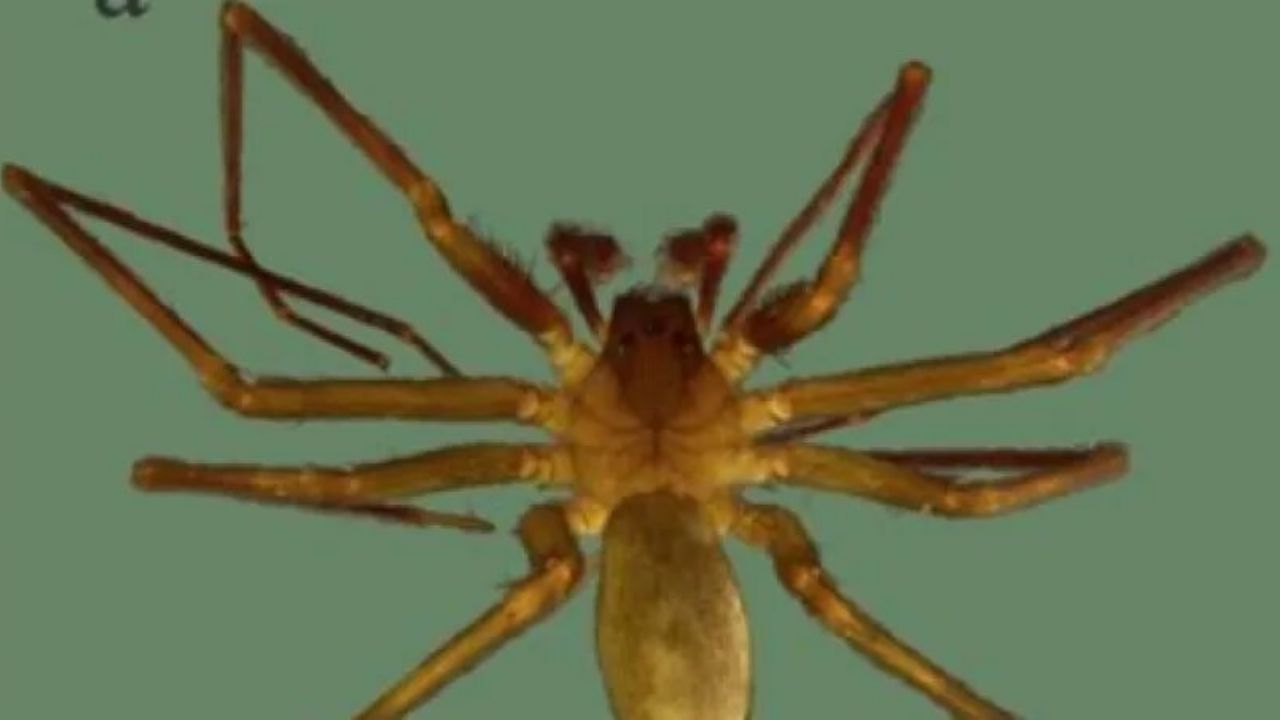 What this new spider species looks like.[/caption>
To address this situation, as reported by Europa Press, the team of specialists conducted an expedition to the Roman aqueducts.
These nesticidal spiders are known to inhabit humid places such as caves.
Since this location is part of the protected historical heritage, a meticulous manual capture strategy was designed to avoid damaging the monument’s structures.
This technique was carried out by two of the co-authors of the work, belonging to the Andalusian Association of Subterranean Explorations and the European University. Subsequently, a taxonomic analysis of the captured specimens was performed.
The results of this work, published in the international journal Arachnology, determined that it was Howaia mogera, a species of very small spider of Asian origin. They estimated that it is likely already established in the area.
According to this study, it has been expanding for over 50 years outside its native range, perhaps due to the flow of goods, which has allowed it to reach more than 13 countries worldwide.
The next steps to follow
“It is essential to closely monitor this species, as there are still unanswered questions,” stated Fernando Cortés-Fossati.
“One of the most important is to determine if it is an invasive species, that is, if it could have adverse effects on the ecosystems it is introduced to, or if it is simply exotic,” he added.
“It must be taken into account that our country has a large number of endemic subterranean species, several of which are threatened,” he concluded regarding the situation in Spain.


