



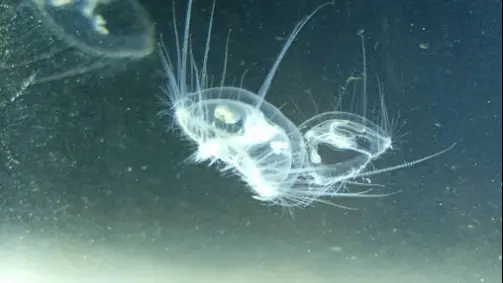
The appearance of an exotic freshwater jellyfish in various Patagonian lakes has raised environmental alarms and accelerated the debate on new biological control strategies in the region.
The expansion of the species Craspedacusta sowerbii, originally from China, prompted a legislative proposal aimed at strengthening public policies for prevention and monitoring in vulnerable aquatic ecosystems.
The initiative proposes to amend provincial law 4801, originally created to combat the spread of the didymo algae, known as “rock snot.” However, the new project seeks to expand the regulatory scope to include other biological threats capable of altering the ecological balance of Patagonian lakes and rivers.
The proposal was driven by legislator Daniela Agostino, after new specimens of this jellyfish were recorded in Laguna Los Huillines. Additionally, the species had already been detected previously in lakes Escondido and El Trébol during the years 2023 and 2024.
The ecological risk behind the species’ expansion
Specialists warn that the presence of Craspedacusta sowerbii can cause significant alterations in aquatic food chains. The jellyfish directly competes for food with native fish larvae, a situation that could affect the development of various local species.
This ecological imbalance can lead to a cascade effect within ecosystems, altering populations of fish and other aquatic organisms. Furthermore, the proliferation of invasive species often reduces biodiversity and modifies the natural functioning of lakes and wetlands.
The legislative initiative argues that the protection of the Patagonian natural heritage requires swift measures to prevent long-term environmental impacts. For this reason, the project proposes leveraging existing protocols for controlling didymo and extending them to new biological threats.
How they seek to curb the spread in Patagonian lakes
One of the central points of the proposal aims to strengthen controls related to nautical and fishing activities. Specialists believe that the spread of this invasive jellyfish is mainly favored by human action.
Therefore, the project establishes the mandatory application of the protocol “Remove, Wash, and Dry” for boats, fishing equipment, and recreational items used in lakes and rivers.
The goal is to reduce the possibility of transporting microscopic organisms between different bodies of water. Additionally, it is planned to finance monitoring and disinfection campaigns with resources from the National Fisheries Fund (FONAPE).
According to the proposal, five percent of these revenues would be allocated to prevention tasks and environmental control.

The ecological impact of this jellyfish outside its original ecosystem
The expansion of Craspedacusta sowerbii is not an exclusive phenomenon of Patagonia. In various regions of the world, this jellyfish has already managed to colonize lakes, ponds, and reservoirs far from its natural Asian habitat.
In Europe and North America, for example, its presence has generated concern due to the alterations it causes on small aquatic organisms essential for the ecological balance.
By feeding on zooplankton, the species modifies essential trophic chains and can indirectly affect fish, amphibians, and other forms of aquatic life. Additionally, biological invasions are often difficult to reverse once established, especially in closed ecosystems like lagoons and reservoirs.
For this reason, environmental organizations in different countries have begun to prioritize early monitoring programs and education campaigns to prevent the expansion of invasive species in sensitive aquatic environments.



