



In the Ansenuza National Park (Córdoba), an unprecedented event took place: for the first time in Argentina, a female maned wolf (Chrysocyon brachyurus) was equipped with a satellite collar to monitor her movements, diet, and reproductive behavior.
This advancement will provide unprecedented information about the species and strengthen conservation strategies in the region.
The Scientific Project
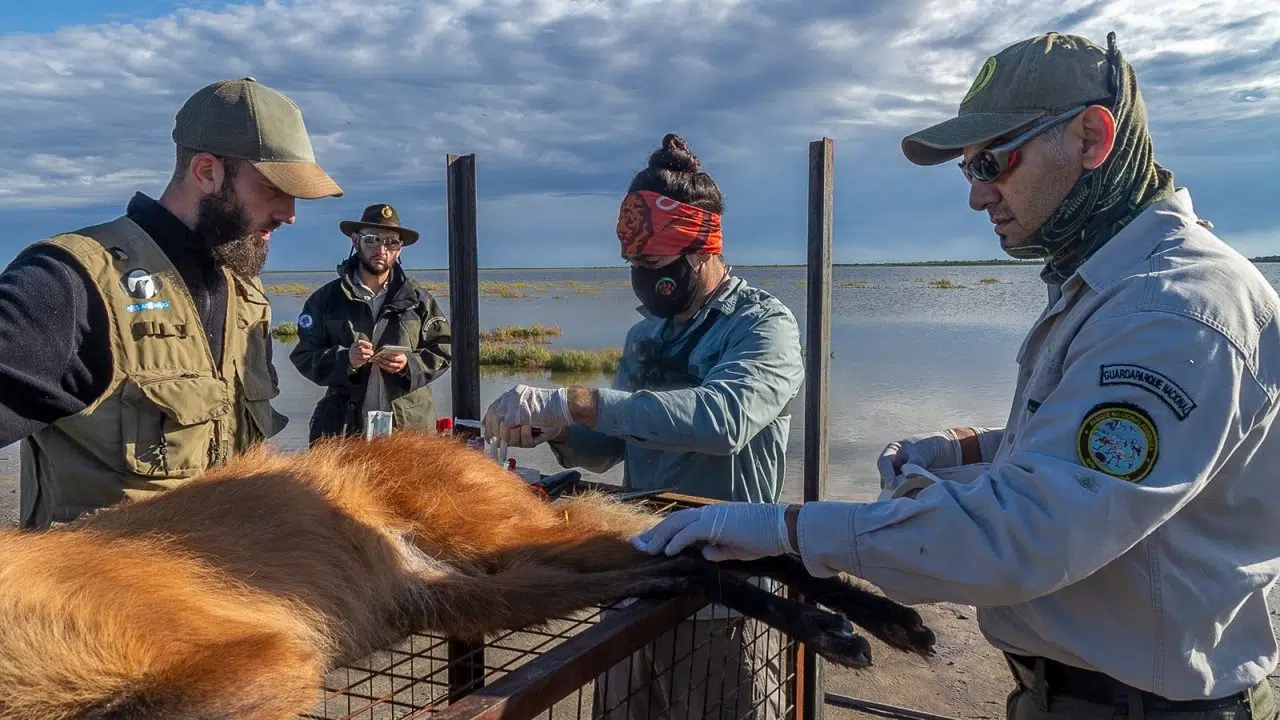
The initiative is driven by Aves Argentinas, the National Parks Administration, and the Córdoba Environment Secretariat. After a year of monitoring a pair of maned wolves in the protected area, specialists captured the female —about three years old— using trap cages designed to prevent harm.
Veterinary checks, biological sample collection, and general measurements were conducted. Once her excellent physical condition was confirmed, the animal was released in the same location with the satellite collar. Researchers highlighted that the device does not interfere with her natural behavior.
Key Ecological Role of the Maned Wolf
The maned wolf is the largest canid in South America, characteristic of grasslands, marshes, and wetlands. Its importance lies in:
- Seed dispersal through its frugivorous diet.
- Control of populations of small animals and rodents.
- Environmental indicator: its presence reflects well-preserved environments.
Conservation Status
The species is categorized as Vulnerable (VU) by SAyDS–SAREM. Its main threats are:
- Habitat loss due to agricultural and livestock expansion.
- Road collisions.
- Poaching and direct persecution.
- Pet trade and disease transmission from domestic dogs.
In Córdoba, the maned wolf was declared a Natural Monument, reinforcing its legal protection.
Conservation Actions
The satellite monitoring is added to other strategies:
- Rescue and rehabilitation of injured specimens.
- Work networks with Fundación Temaikèn and provincial organizations.
- Enforcement of national laws prohibiting its hunting and commercialization.
Importance of the Ansenuza National Park
The creation of the park was key for this type of project. The protected area offers a safe framework for monitoring and researching native species, as well as ensuring the preservation of wetlands and grasslands that sustain the biodiversity of central and northern Argentina.
The satellite tracking of the maned wolf in Ansenuza represents a historic advancement for science and conservation in Argentina. The information obtained will allow for better protection strategies and ensure the survival of this umbrella species, whose care ensures the preservation of entire ecosystems.



