



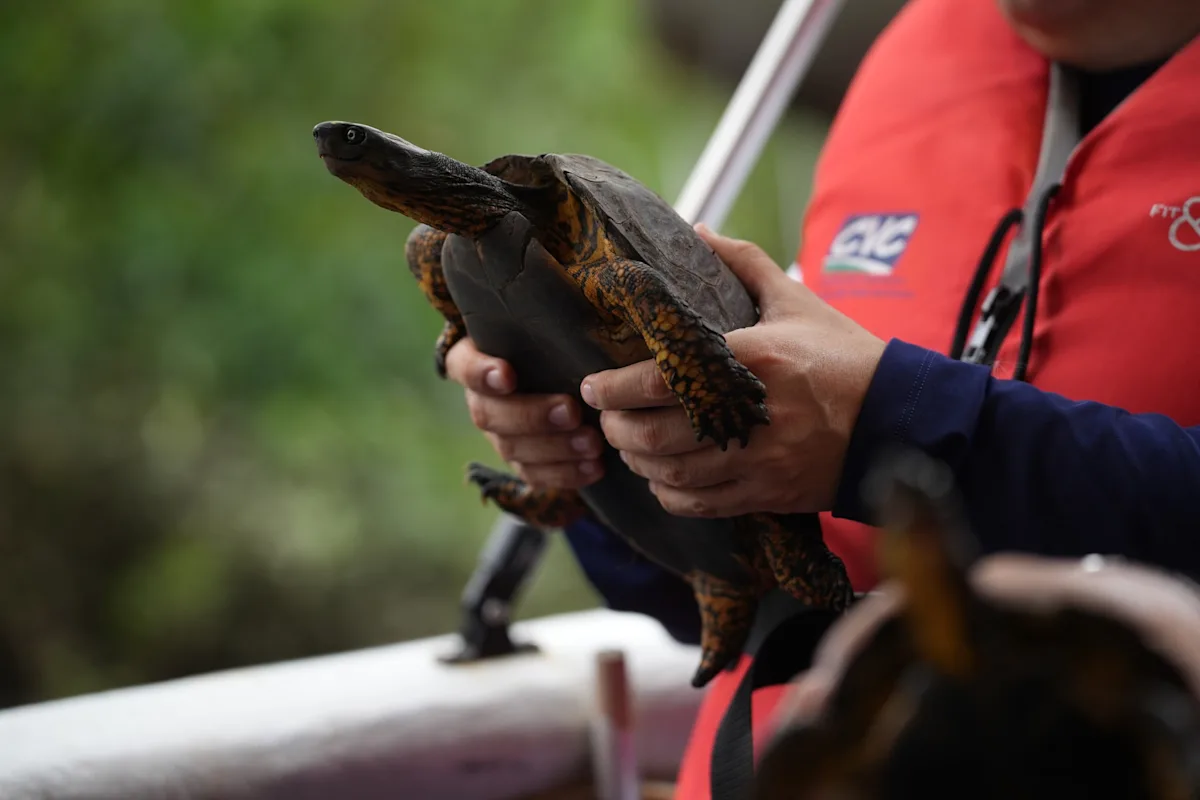
Environmental authorities released 47 wild animals —including turtles, caimans, and boas— in a rural area of Buenaventura, in the Colombian Pacific, which had been rescued from illegal trafficking.
The director of the Regional Autonomous Corporation of Valle del Cauca (CVC), Marco Antonio Suárez, explained that the specimens underwent care, assessment, and recovery processes before being returned to their habitat. “Today we are releasing 42 animals of our wildlife, 18 boas, 18 turtles, and six caimans,” he detailed to the EFE agency.
Technical teams transported the animals in special containers, designed to reduce stress and facilitate their adaptation to the natural environment. One by one, they were released in areas of vegetation and bodies of water consistent with their biological conditions, under the supervision of veterinarians and biologists.
Rescue Balance in 2025
During this year, the CVC care center received 3,715 wild animals:
- 1,548 have already been released.
- 40 relocated.
- The rest are still in the recovery process.
The increase in the number of animals attended to is due to greater community collaboration, which reports cases of wildlife at risk.
Authorities reiterated the call to not keep wildlife as pets and to report any cases of trafficking or illegal possession, practices that endanger both the animals and the ecosystems.
Ecological Importance of the Colombian Pacific
The wildlife of this region is crucial due to its immense biodiversity and the ecosystem services it offers:
- Climate regulation: mangroves and forests act as carbon sinks.
- Ecosystem health: pollination, seed dispersal, and forest regeneration.
- Ecosystem services: provision of fresh water, food, and medicines.
Cultural and Social Dimension
The Colombian Pacific is home to Afro-descendant and indigenous communities, for whom fauna and flora are a fundamental part of their traditions and spirituality.
- Wildlife is a source of sustenance and food.
- Conservation supports sustainable food systems.
- Ecotourism and bird watching projects generate income and strengthen local governance, offering peaceful alternatives to extractive activities.
Unique Biodiversity
The region is one of the most biodiverse on the planet, with unique and endemic species:
- Humpback whales.
- Numerous species of terrestrial and marine birds.
- Reptiles, amphibians, and lush flora in forests, mangroves, and rivers.
Threats and Conservation
The Pacific faces threats from illegal activities, poverty, and conflicts that endanger its biodiversity and local communities. However, institutions, NGOs, and communities work on education, restoration, and sustainable development programs to protect this natural treasure.
The release of 47 animals in Buenaventura is more than an operation: it is a symbol of the fight against illegal trafficking and the importance of conserving the biodiversity of the Colombian Pacific. The region, with its ecological and cultural wealth, is a pillar for environmental and social resilience, and its protection is key to the country’s future.



