



The detection of dead whales on Mexican coasts has become a recurring phenomenon for environmental authorities.
From 2013 to 2025, the Federal Attorney for Environmental Protection (Profepa) has documented 149 cases of stranded dead cetaceans, attended under the National Protocol for the Stranding of Marine Mammals, published by Semarnat in June 2014.
Main incidence areas: Baja California Sur leads the records
According to official data obtained through transparency, the states with the highest number of strandings are:
- Baja California Sur: 74 cases
- Sinaloa: 29 cases
- Baja California: 21 cases
- Nayarit: 14 cases
- Chiapas and Sonora: 3 cases each
- Yucatán: 2 cases
- Colima, Jalisco, and Michoacán: 1 case each
These events require specialized intervention, both for the final disposal of the remains and for the investigation of the causes of death.
National protocol: mandatory application throughout the territory
Article 1 of the protocol establishes that its application is mandatory for federal, state, and municipal authorities, as well as for volunteer support groups.
The Semarnat, through Profepa, coordinates its execution, with the participation of other agencies according to their competence.
The protocol includes safe disposal of the remains, either through controlled burial or deposition on the seabed, always under technical and sanitary criteria.
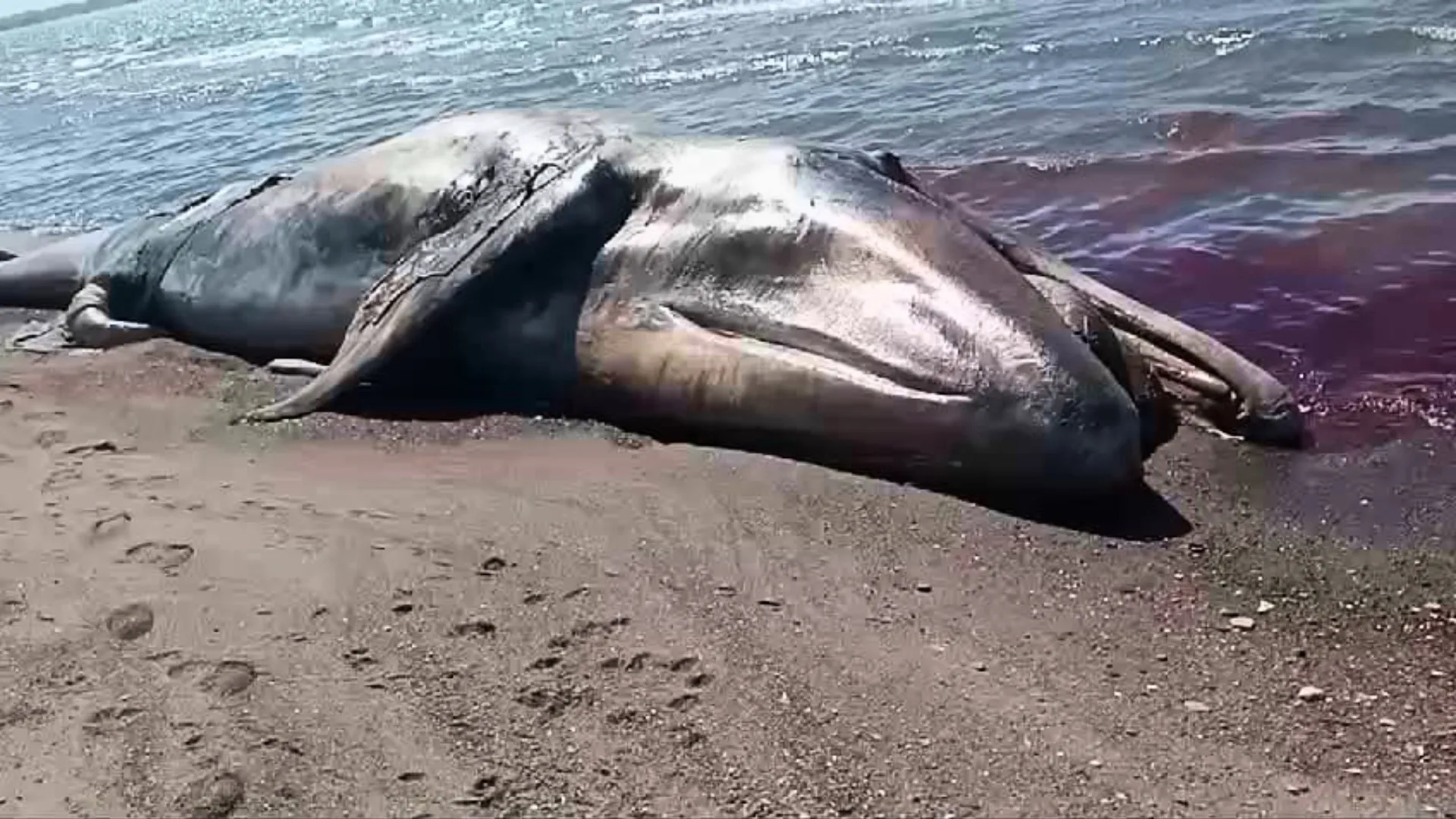
Causes of death in whales: human activity as a recurrent factor
Several official reports document indications of anthropogenic damage:
- January 2013: Gray whale calf found in San Lázaro, Baja California Sur, with marks of entanglement by fishing line
- December 2021: Humpback whale stranded in Cabo San Lucas with wounds compatible with boat propeller
- September 2018: Pygmy sperm whale (Kogia sima) found in Las Pacas, with a fractured jaw, developing embryo, and signs of drowning due to severe malnutrition
These studies allow to determine causes of death, evaluate human impacts, and enhance prevention and response strategies.
Final disposal: public health and environmental protection as priorities
Depending on the body condition and environmental conditions, whale remains can be:
- Buried in controlled areas
- Deposited on the seabed
- Analyzed through scientific necropsies
These actions aim to prevent public health risks, preserve the coastal environment, and generate technical knowledge about the species and its conservation status.
An interinstitutional and community challenge
Managing these events involves:
- Technically trained teams in necropsy and marine fauna handling
- Collaboration between environmental, port, and tourism agencies
- Citizen participation in the detection and reporting of strandings
Each finding is an opportunity to enhance institutional response, strengthen scientific research, and raise awareness about human impact on marine life.



