



The worldwide population of **elephants** has suffered a **drastic reduction** in the last one hundred years, dropping from approximately **12 million** to just **400,000 individuals**.
This figure, revealed by [**WWF Spain**](https://www.wwf.es/) within the framework of the **World Elephant Day (August 12th)**, reflects the **serious decline** these **iconic species** are facing.
Three species, one common threat: the silent collapse
Currently, there are **three species of elephants**: the **African savanna elephant**, the **African forest elephant**, and the **Asian elephant**. According to WWF data, in just **30 years**, **90% of forest elephants** have disappeared, while in **50 years**, **60% of savanna elephants** have been wiped out.
The situation in Asia is also critical: the population of **Asian elephants** has dropped below **40,000 individuals**. Subspecies such as the [**Borneo elephants**](https://noticiasambientales.com/animales/las-3-especies-de-elefantes-estan-rumbo-a-la-extincion-por-el-marfil-y-la-perdida-de-su-habitat/) barely reach **1,000 individuals**.
Ivory remains a death sentence
Although international **ivory trade** was banned in **1989** by the **CITES Convention**, it is estimated that **around 20,000 elephants** are **killed each year** to extract their tusks, according to **World Animal Protection** data.
The demand for ivory as a **status symbol** in **Southeast Asian countries** has fueled a new **wave of illegal hunting since 2008**, generating impacts even at a **genetic level**. Elephants with larger tusks have been systematically hunted, leading to a **progressive reduction in tusk size** in new generations.
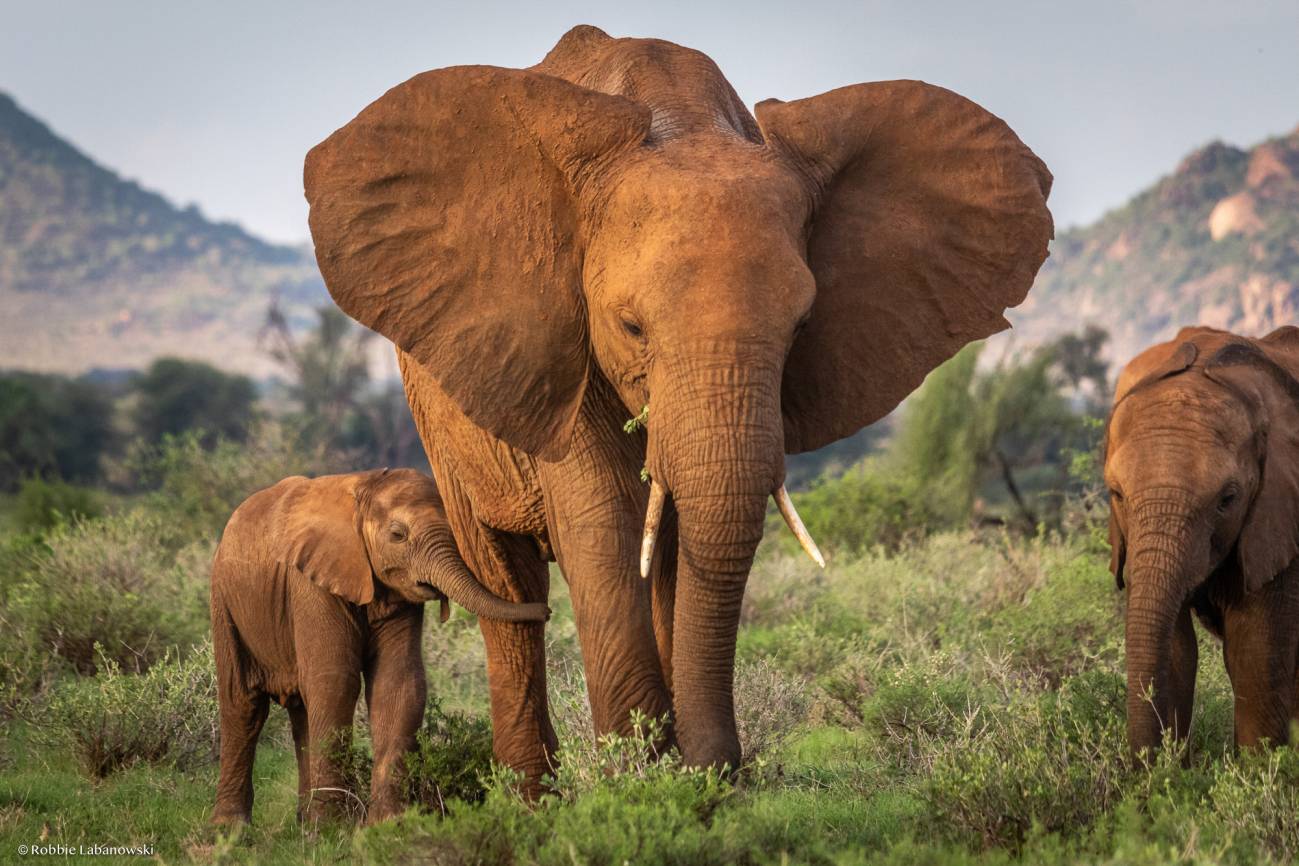 Elephants are facing a critical situation[/caption>
Open routes and weak sanctions: trafficking persists
Despite international efforts, **trafficking routes remain active**. Countries like **Mozambique** and **Uganda** continue to be **key corridors** for illegal wildlife trade.
According to **Luis Suárez**, Conservation Coordinator at WWF Spain, it is urgent to **strengthen sanctions**: “It cannot be that trading in wildlife is more profitable than trafficking weapons or drugs.”
Elephants: forest gardeners and biodiversity guardians
Elephants are not only majestic but **essential for ecological balance**. They act as **natural pruners**, **seed dispersers**, and **habitat regenerators**. “We call them the **great gardeners** for their ability to renew ecosystems,” explains Suárez.
This role is particularly relevant in regions like **Sumatra**, where the Asian subspecies faces a **50% decline** since 1985, mainly due to **habitat loss**.
Genetic conservation and breeding programs
At the **Madrid Zoo Aquarium**, six Sumatran elephant specimens are part of the **European Endangered Species Programme (EEP)**. It is an initiative that seeks to **preserve genetic diversity** and ensure a **viable long-term population**.
According to **Agustín López Goya**, the zoo’s Biology Director, these programs are essential to prevent the **silent extinction** of species that, although visible, are rapidly disappearing.
Protecting giants to save the invisible
“If we are not able to protect these **great colossi**, how will we care for the species that go unnoticed?” reflects Suárez.
The conservation of elephants is not only a matter of **biological preservation** but also of **ethical and cultural responsibility**.



