



The International Fund for Animal Welfare (IFAW), along with the Cape Cod National Seashore, led a rescue and release operation of eleven common dolphins (Delphinus delphis) after a mass stranding event at multiple points in Wellfleet, Cape Cod (United States).
The mission, carried out between September 14 and 15, involved technical personnel, volunteers, and veterinarians, in an urgent response to a high-risk situation.
Challenging Geography and Swift Response
The characteristics of the Wellfleet coast favor strandings, demanding immediate action.
The alert was activated before 8:00 in the morning when the presence of dolphins was reported at Chipman’s Cove, an area known for its hook-shaped geography, shallow bays, and extensive tidal flats that disorient marine life.
With low tide approaching, the IFAW teams mobilized, facing high temperatures, changing tides, and challenging terrains.
“Every minute is crucial for the animals’ survival,” highlighted Nicole Hunter, IFAW’s Rescue Manager.
Veterinary Care and Release in Deep Waters
The dolphins were stabilized in a mobile unit after stranding and were released at Herring Cove Beach.
Seven of the twelve dolphins were stranded at different points along the coast. They were transported to the dolphin rescue mobile unit, where they received intravenous fluids and supportive care. Subsequently, they were taken to Herring Cove Beach (Provincetown) and released into deep waters, facilitating their movement.
The following day, the remaining five dolphins were spotted at Herring River Gut. One had died, but the other four were rescued and released at the same location.
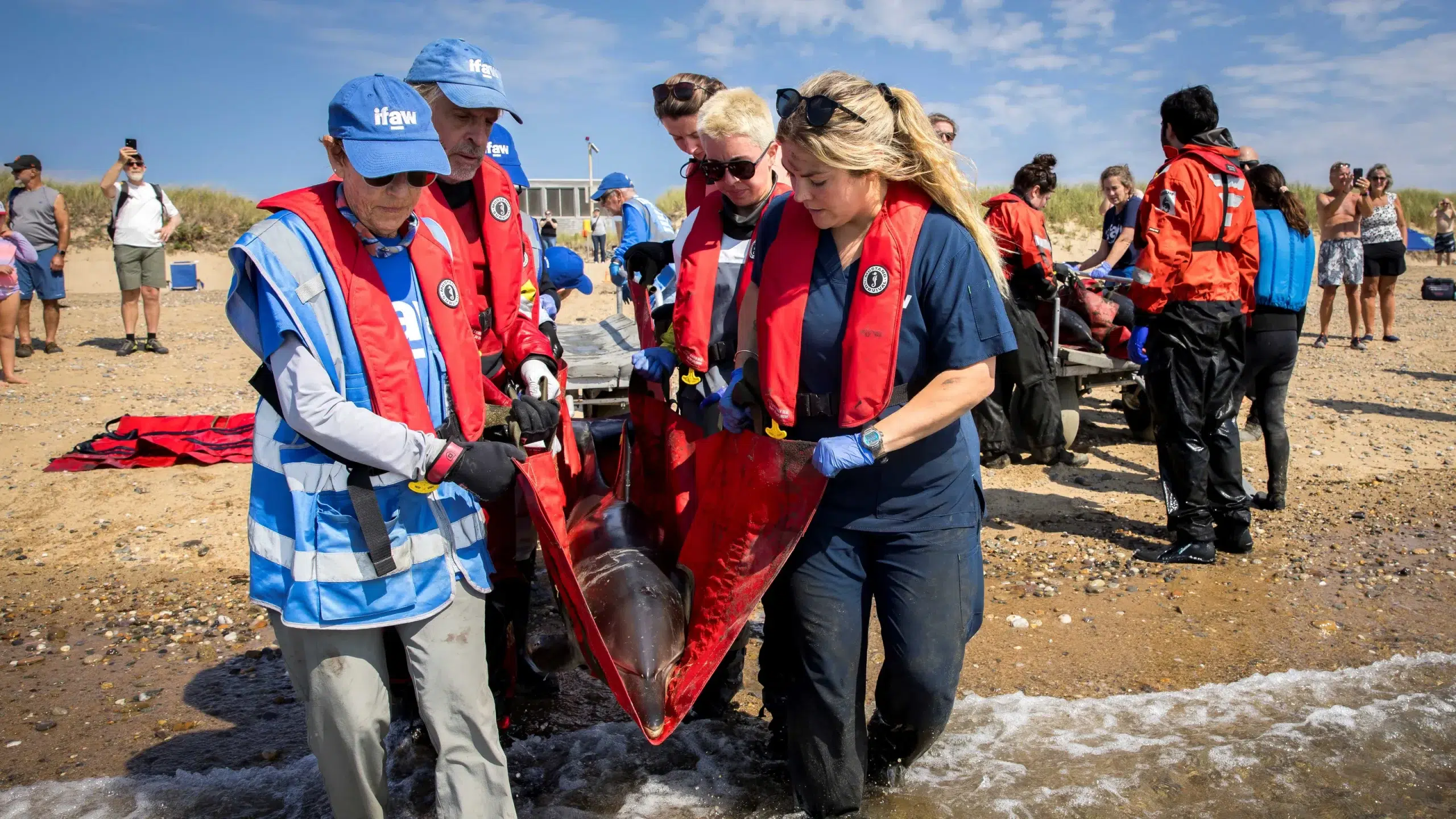 Dolphin stranding and rescue in the United States
Satellite Monitoring and Post-Release Tracking
Tracking tags allow studying the movement patterns of cetaceans.
To ensure scientific monitoring, a satellite tag was placed on one individual per day, allowing the collection of data on their adaptation and movement after release.
All dolphins exhibited appropriate swimming behavior, indicating a successful reintegration into the marine habitat.
A Common and Vulnerable Species in Cape Cod
The common dolphin is common in the region but faces geographical and environmental risks.
The rescued group included six males and six females, with juvenile, subadult, and adult individuals. This species is common in Cape Cod waters, making it susceptible to strandings in high-incidence areas like Wellfleet.
Active Conservation and Community Engagement
This event adds to a significant number of rescues carried out by IFAW in Cape Cod and southeastern Massachusetts. The operations require rapid mobilization, trained personnel, and specialized equipment to maximize survival.
“Seeing them swim back to the sea is what motivates us,” expressed Hunter. More than saving individual lives, these actions reinforce the commitment to marine conservation and collective hope.


