



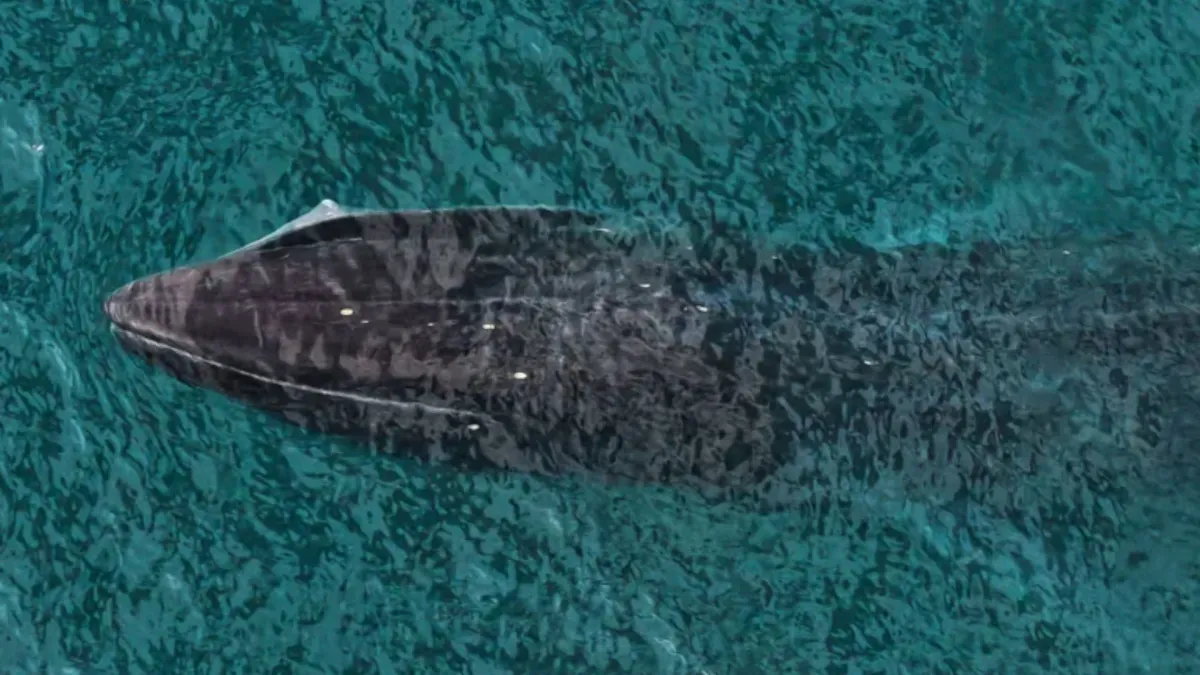
Un grupo de investigadores registró la presencia de una fin whale en the São Sebastião channel, São Paulo. This finding is extraordinary because the species usually inhabits cold and temperate waters, and its appearance on the Brazilian coast occurs very occasionally.
The sighting surprised experts and reinforces the importance of scientific monitoring in the region.
The specimen was identified by the captain of the Ximanguinho vessel during a tourist navigation. Its characteristic features —slender body, length over 25 meters, and asymmetrical pigmentation on the lower jaw— facilitated immediate recognition.
Main characteristics of the fin whale
- Colossal size: adults between 21 and 27 meters, weighing 40 to 80 tons.
- Unique asymmetry: dark left lower jaw and bright white right side.
- Speed: reaches up to 30 km/h, being one of the fastest whales.
- Feeding: feeds on krill, small fish, and squid through filtration with baleen.
- Global distribution: present in all oceans, with notable populations in the southern hemisphere, Chile, and Antarctica.
Ecological importance
The fin whale fulfills vital functions in the balance of the oceans:
- Nutrient pumping: by feeding at depth and defecating at the surface, it fertilizes the waters and stimulates phytoplankton production.
- Carbon capture: sequesters large amounts of CO₂ during its life and deposits it on the seabed upon death, helping to mitigate climate change.
- Biological indicator: its presence reflects the health of marine ecosystems.
Oceanographic context
The arrival of cold currents explains these sporadic approaches to the Brazilian coast. Oceanographic phenomena raise nutrients from the seabed to the surface, increasing food availability and modifying the behavior of large cetaceans.
These processes are essential to understanding the dynamics of migratory species and their relationship with climate change.
Conservation and threats
Historically decimated by commercial hunting, the fin whale is protected by international laws but still listed as a vulnerable species. Its main current threats include:
- Collisions with vessels.
- Acoustic pollution.
- Climate change, which alters the distribution of its food.
- Entanglement in fishing nets.
Scientists take advantage of each sighting to collect data that can improve conservation plans and ensure the survival of this emblematic species.
The sighting of a fin whale in Brazil constitutes an exceptional event that reminds us of the richness and fragility of our oceans.
Beyond the scientific surprise, this encounter reinforces the need to strengthen marine conservation and value the role of large cetaceans in the fight against climate change and biodiversity loss.



