



The planet’s forests play a silent but vital role: they absorb about 30% of greenhouse gases. However, their ability to retain carbon could be at risk. Fires, deforestation, and degradation accelerate a process that threatens to turn these ecosystems into net CO₂ emitters.
In 2024, tropical megafires set a record in emissions, confirming that the world’s climatic balance largely depends on the fate of the forests. Keeping them standing is one of the most urgent tasks of the 21st century.
The challenge is not only environmental but also economic. While a degraded forest can generate benefits from its logging or subsequent reforestation, a healthy forest does not always represent immediate profitability. Changing that logic is the central purpose of a new global fund to be presented at COP30 in Brazil.

The Tropical Forest Forever Fund: a new global strategy
The Tropical Forest Forever Facility (TFFF) seeks to shift environmental financing. Its goal is simple but ambitious: to make conservation more valuable than destruction. To achieve this, it proposes an international financial mechanism based on bonds and conservation payments.
The fund would mobilize 125 billion dollars contributed by governments and private investors. With these resources, tropical countries that manage to keep their forests standing and reduce deforestation will be rewarded. For each preserved hectare, they will receive 4 dollars, while forest losses will reduce the allocated amount.
What is innovative about the TFFF is its redistributive approach. At least 20% of the funds must be directly allocated to rural and indigenous communities, recognizing their role as historical guardians of ecosystems. Additionally, payments will be linked to public policies, not isolated projects, aiming to ensure a national and sustained impact.
How it should be carried out to ensure real results
The success of the TFFF will depend on its transparency, governance, and local participation. Satellite monitoring systems must ensure verifiable information on forest cover and land use. Traceability will be key to avoiding fraud or unjustified compensations.
It will also be essential to empower local communities. Indigenous peoples and rural populations must participate from the design of policies to the management of resources. They are the ones who inhabit, know, and protect the forests for millennia.
Finally, the fund cannot become a purely financial business. The benefits must prioritize conservation, environmental justice, and the well-being of communities over investor profitability. If this balance is respected, the TFFF could mark a paradigm shift in the relationship between economy and ecology.
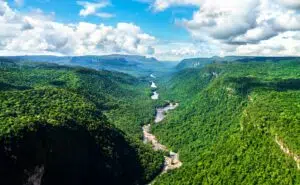
Environmental and social benefits of a standing forest
A well-preserved forest not only captures carbon. It regulates the climate, stores water, maintains soil fertility, and harbors millions of species. In tropical regions, these ecosystems sustain half of the planet’s biodiversity and are a source of life for thousands of communities.
Strengthening local management will allow for the conservation of biological and cultural diversity, as well as reducing fires and uncontrolled agricultural expansion. Tropical forests act as natural shields against climate crises and guarantee long-term water security.
Each preserved hectare is an investment in the future. If the TFFF manages to channel funds equitably, it can become a powerful tool to curb global warming and restore the connection between humanity and nature.
A new value for nature
The launch of the fund at the COP30 represents a historic opportunity. It’s not just about raising billions, but redefining the value of the living forest. In a planet where capital is often measured in immediate profitability, the true challenge will be for environmental and social well-being to become the new indicator of wealth.
If the TFFF fulfills its promise, forests will cease to be the last threatened refuge and become the center of a regenerative economy, where conservation is not a cost, but a way to thrive.


