



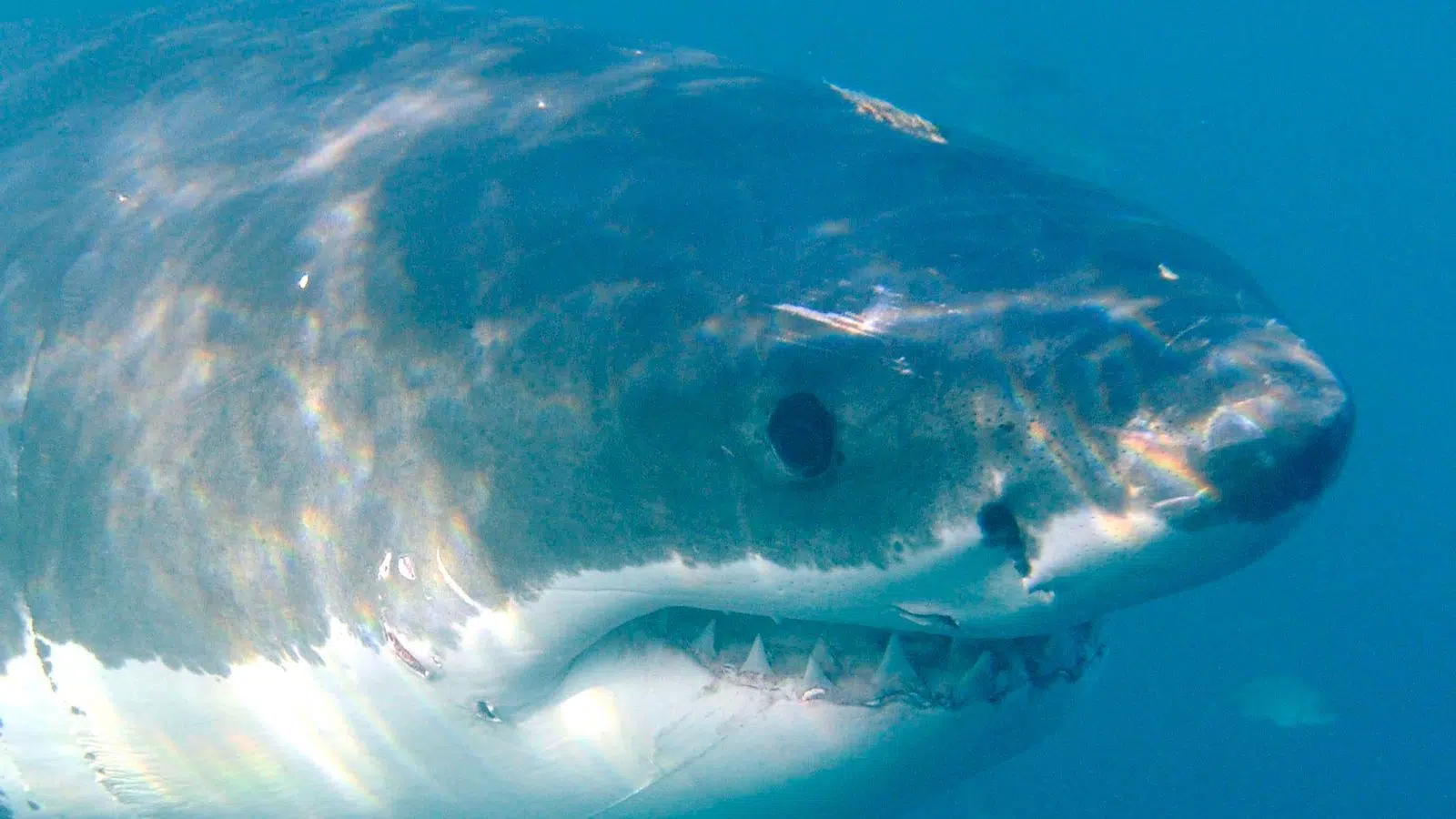
In April 2023, researchers from the Spanish Institute of Oceanography (IEO-CSIC) and the University of Cádiz (UCA) confirmed the presence of a juvenile great white shark (Carcharodon carcharias) approximately two meters long in Spanish Mediterranean waters.
The finding, published in Acta Ichthyologica et Piscatoria, is one of the few verified records in recent decades.
The identification was made through genetic analysis, providing solid evidence about the distribution of this emblematic species, which is classified as vulnerable in the western Mediterranean.
Historical Context of the Finding
The research team reviewed records from the mid-19th century, confirming that the great white shark maintains a persistent but extremely infrequent presence in Spanish waters.
The low detectability explains why sightings are so rare.
Scientific Importance
The fact that the specimen is juvenile is key to understanding the demographic structure of the species. Although it is still too early to claim that there are breeding areas in Spanish waters, this record opens the door to long-term monitoring programs.
The researchers emphasize that there is no evidence of a population recovery; rather, the finding reflects improvements in monitoring systems and communication with the fishing sector.
Safety and Public Perception
Over more than 160 years of records in Spanish waters, incidents with people have been exceptionally rare, confirming that the great white shark does not pose a significant risk to the coastal population.
Ecological Role
Beyond its emblematic nature, the great white shark plays an essential role in marine ecosystems:
- Top predator that regulates populations of fish and marine mammals.
- Migratory species that connects different oceanic regions.
- Indicator of marine health, as its presence reflects the good state of trophic chains.
Global Distribution
The great white shark inhabits temperate and warm waters of almost all oceans:
- Pacific: Alaska, California, Hawaii, Mexico, Japan, Chile, Australia.
- Atlantic: Maine, Caribbean, Gulf of Mexico, South Africa.
- Mediterranean: confirmed presence, although rare. Prefers coastal waters of the continental shelf between 12 and 24 °C, although it can dive up to 1300 meters.
The discovery of a juvenile great white shark in the Spanish Mediterranean is a scientific milestone that reinforces the need for conservation and monitoring programs. More than a risk, its presence is a sign of the importance of protecting marine ecosystems and advancing towards evidence-based management.


