



In an unprecedented operation in the country, the Temaikèn Foundation set up an emergency room at its Escobar facilities to receive more than 700 fish and marine invertebrates.
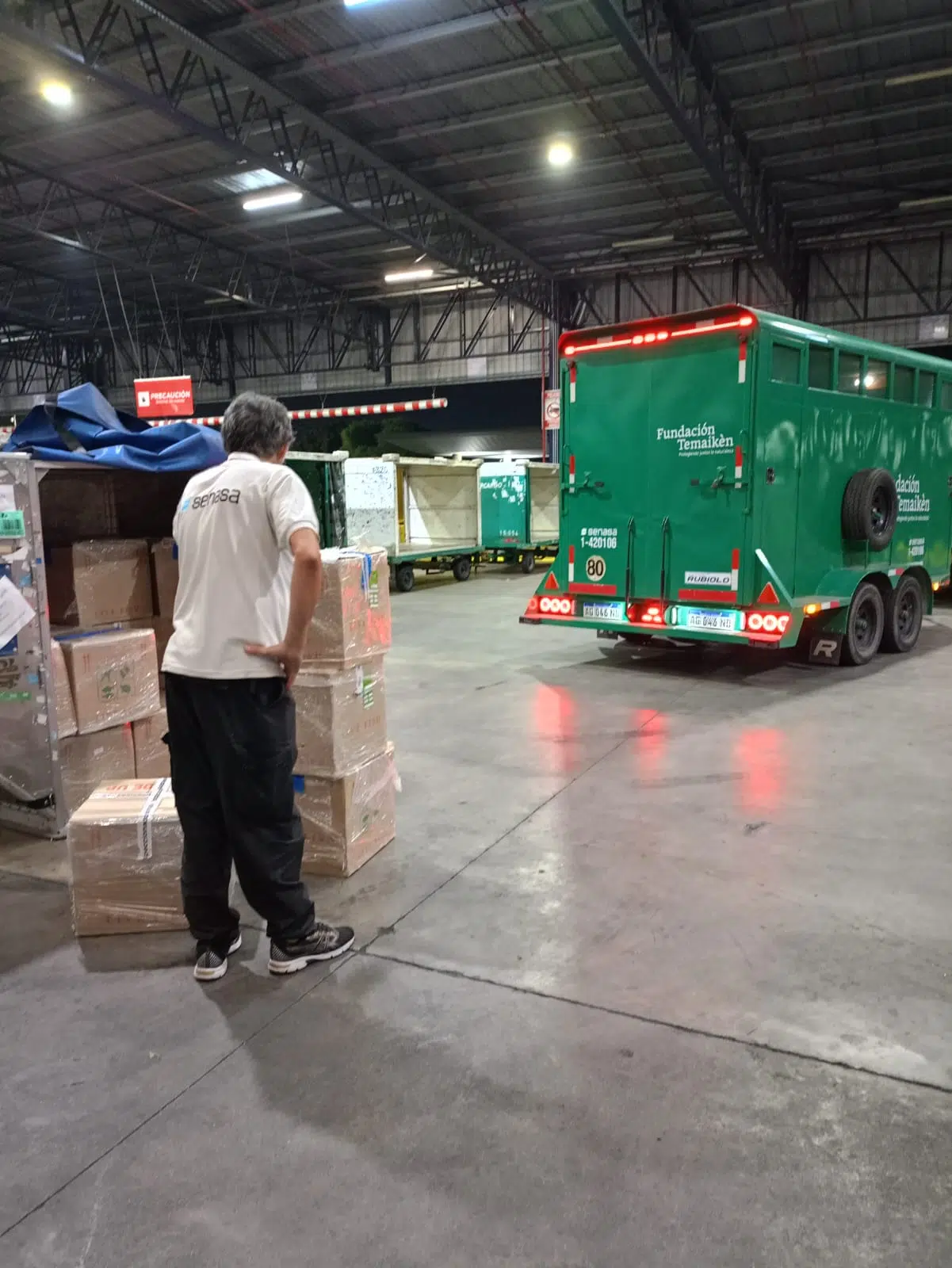
The specimens had been seized at the Ezeiza International Airport following an attempt of illegal trafficking for their commercialization as ornamental species. The animals arrived in critical condition due to the severe conditions of the transport.
The rescue operation and the affected species
The emergency procedure was led by the Environmental Control Brigade of the National Subsecretariat of Environment, along with the General Directorate of Customs and SENASA, with the support of Temaikèn.
Among the seized tropical organisms, 102 species were identified, including:
-
Surgeonfish, pufferfish, lionfish, and butterflyfish.
-
Octopuses, crabs, and starfish.
Due to spending several days traveling and being held at the cargo terminal, many specimens arrived lifeless, while the survivors showed shock and a severe compromise of their animal welfare. Being the only institution in Argentina equipped to receive this fauna,
Temaikèn faced more than 28 continuous hours of work to adapt its systems and enable ten additional tanks with specific life support (heating, filtration, and water conditioning).
“Many specimens were extracted from reef ecosystems and reached the limit of survival… Each organism required individual adaptation procedures to reduce the transport shock,” explained Cristian Gillet, director of fauna at the foundation.
The stabilization process and the context of trafficking
The technical team applied a triage system to classify the animals and performed hundreds of drip adaptation procedures one by one, achieving a gradual transition to regulate temperature, salinity, and water quality.
The foundation warned that the trade of exotic pets and ornamental species is a growing issue.
In fact, this represents the third seizure of exotic aquatic organisms received by the institution in less than a year.
For this operation, there was also international support from IFAW and SeaWorld & Busch Gardens Conservation Fund, whose donations allowed the acquisition of key equipment that will now strengthen the country’s capacity against future environmental crimes.
The operation in numbers
-
+700 marine organisms seized.
-
102 different species from tropical ecosystems.
-
120 hours of confinement in bags since their departure from Africa.
-
+28 continuous hours of veterinary and technical work.
-
+500 drip adaptation procedures.
-
10 additional life support tanks installed.
-
3 seizures of exotic marine fauna in less than a year.



